



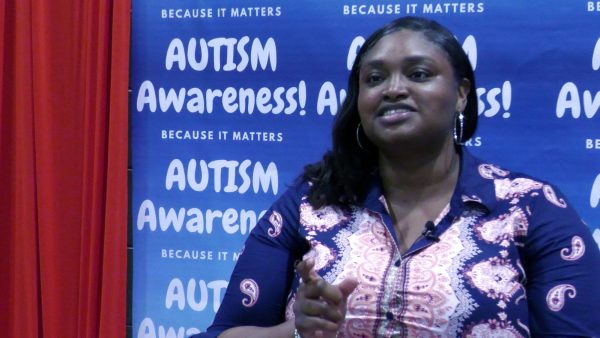
A new initiative from the Mississippi Department of Mental Health is promoting community resources for Mississippians with autism, while its director says adult support remains one of the biggest gaps in care.
While Shavvone Williams and the rest of Mississippi’s Division of Autism Services plan to eventually expand autism resources in the state, she said the division is currently focused on building relationships with clinicians and increasing public awareness of current services.
“We’re still in the baby steps phase of everything and just working things out and figuring out what would be best for Mississippi,” Williams said.
One potential area for improvement is adult-focused treatment. While there are resources in the state for both children and adults with autism, Williams said adults have far less support.
“A lot of adults get left behind when it comes to their autism diagnosis and support … kids have some support — it could be more — but adults have very little,” Williams said. “Mississippi could possibly be one of the first states to have a clinic or therapy center focused on adults.”

Williams said the division also could improve public understanding of autism in Mississippi and help Mississippians better understand the resources already available.
What is autism?
Clinicians generally recognize autism as a spectrum disorder with three levels of support. Symptoms include persistent social difficulty and restrictive and repetitive patterns of behavior. Symptoms vary widely, and treatment is tailored to the individual rather than their level of support needs.
Williams, an applied behavior analysis therapist for 10 years, said one of the biggest misconceptions around autism is the belief that it manifests the same way in everyone.
“Just because you meet three people with level three autism doesn’t mean they are going to be the same,” Williams said. “If you meet one person with autism, you just meet that one person. It’s literally different in everybody.”
Tony Norwood is a poet and volunteer with The University of Southern Mississippi’s Institute for Disability Studies who was diagnosed with level one autism at age 3. Norwood requires a low level of support and only needed speech and occupational therapy as a child. Now, Norwood has published a poetry collection and has five more book-length projects in progress.

Norwood explored the intersection of his identities as Black, neurodivergent and a member of the LGBTQ community in one of his first poems, “Triple Minority.”
“(The poem) started out with, ‘I come from the best of three worlds, there’s no need for me to choose a side,’ meaning … I’m proud to celebrate all different types of holidays such as Black History Month, Kwanza, Juneteenth, Pride Month, Autism Awareness Month … all the things I can celebrate to allow people to get to know me because there are so many layers of who I am,” Norwood said. “No one is one-dimensional.”
He volunteers with the institute’s Empowering Pathways to Independence in Communities program, which seeks to teach financial and life skills to adults ages 18 to 40 with intellectual disabilities. During his time as a student at USM, Norwood benefited from the institute’s services.
“They gave me the tools and tips to advocate for myself while also advocating for others,” Norwood said. “They’re like a second family to me.”
With the guidance of the institute, Norwood applied for and received tutoring and test-taking accommodations that helped him graduate with a bachelor’s degree in 2025.

“I don’t know what I would have done without those resources. I don’t think that I would have graduated with my graduating class without that extra help,” Norwood said.
Resource fair connects providers
As part of its outreach, Mississippi’s Division of Autism Services hosted a resource fair on April 28 at the Mississippi Trade Mart in Jackson. Williams said the fair connected Mississippians with autism resources and clinicians.
“It’s what’s needed. People don’t know about the resources that we already have, so let’s bring it to them,” Williams said. “Having an opportunity to connect with providers is the perfect first step to take.”
The event featured many service providers from across Mississippi, including Youth Villages, SPARK and The Puzzle Box. Desmeon Thomas, a community liaison for Living Independence for Everyone of Mississippi, spoke to the potential benefits of events like the resource fair.
“There’s nothing better than all of us coming together to make things better,” Thomas said. “I think that the more we come out to show our faces and show support services that we have for children and adults with autism, the more resources are going to come out of it. We’re just happy to be part of that change.”
Norwood said the division could help more people understand autistic Mississippians are active members of their communities.
“It will open up people’s eyes that autism is here to stay,” Norwood said. “It’s a very good step in the direction to let people know that there are individuals with autism that are capable of living a normal life.”
Contributor: Gaven Wallace
