


I first visited Ocean Springs with my mother in 2010. She accompanied me on a trip to New Orleans to check out some graduate schools, and we wandered down the coast and into the Walter Anderson Museum of Art. This was a very busy time of life for me, full of change and possibility. I don’t remember very much about that trip other than the Community Center murals, but I was caught up in the beginning of an unexpected turn.
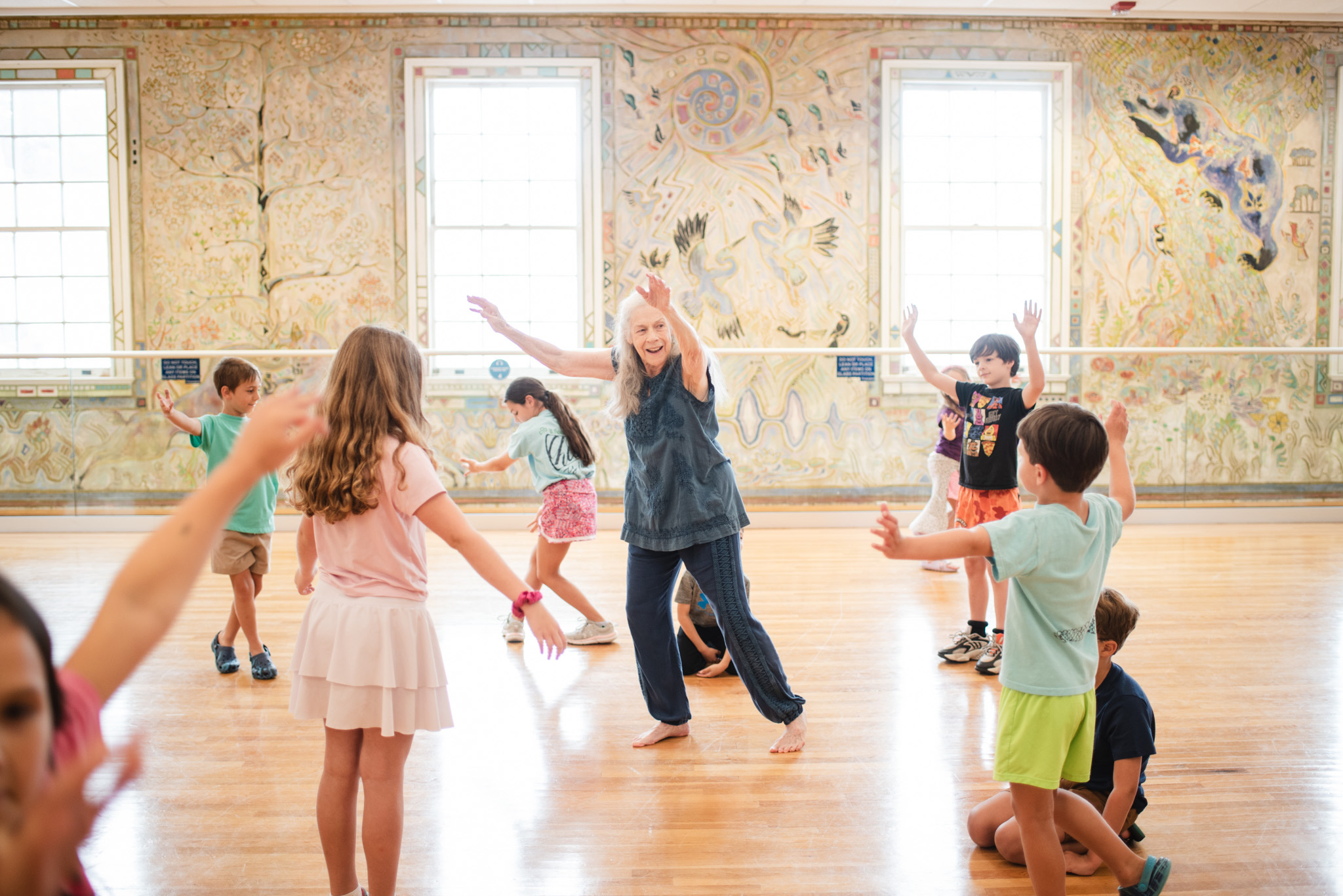
Walter Anderson painted the Community Center murals in the early 1950s as a gift to his community. He was inspired by public art he saw on an impromptu trip to China, a departure that seems like its own outward loop. The trip was perfectly timed to allow Walter to miss his big opening in Brooklyn.
I have heard Leif Anderson recall taking dance lessons in the Community Center while her father painted the murals. Walter envisioned inviting schoolchildren to come and help him paint, but that circle never fully formed. He was misunderstood by his community and even at a young age, Leif knew that her father was different from other fathers. He began painting at night to avoid onlookers with questions and possible rude comments. At some point, there was even a campaign to whitewash the walls—an attempt to break the motion entirely.
I would often return to the coast with my daughter on day trips from New Orleans. My husband and I even daydreamed about retiring in Ocean Springs one day. Years later, the spiral brought me back. In 2024, we visited the coast with friends from Memphis. They’d never been to Ocean Springs and were somehow unfamiliar with Walter Anderson. So of course, I insisted we visit the museum. One evening at dinner, as the sun set and children ran in widening loops around us, I felt the turn complete. It was summer then, and by the fall we were driving the moving truck to Ocean Springs.
The spiral was a favorite motif of Walter Anderson’s, but it also appears across cultures and time as a symbol of change and connection—a pattern of return that is never quite repetition. We circle back to places and moments, each time with new understanding.
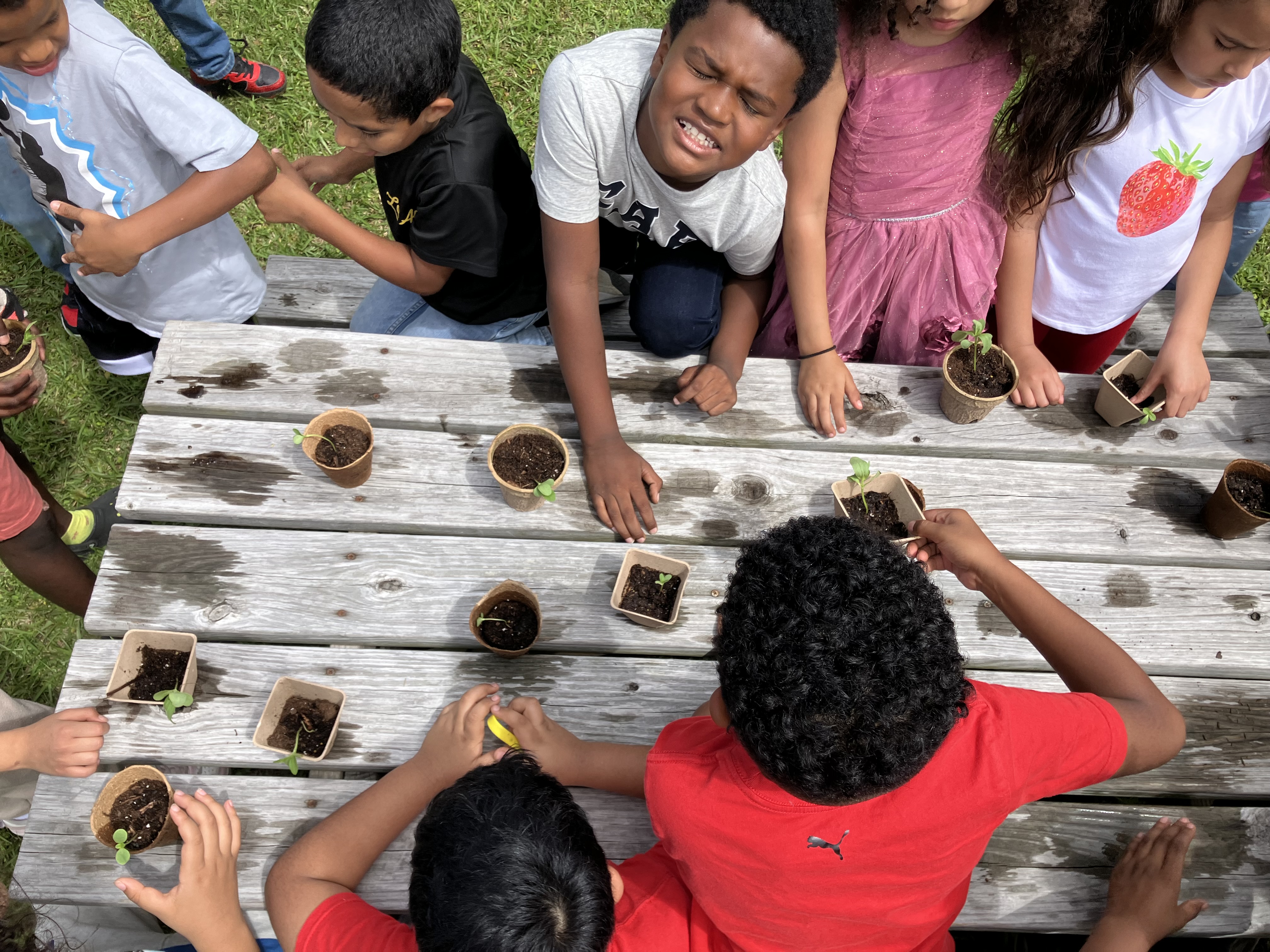
In my first year at the Museum as Manager of School and Family Programs, I’ve come to understand Walter more deeply as an artist, storyteller, naturalist, and explorer, but also as a human. Sitting in the Community Center during student performances and art shows, I think about the limits he faced, and how the space has continued to turn beyond them. As a museum visitor recently said, “life is a road, not a parking lot.” Here, as children’s art, voices, and movement fill the room, the spiral continues—his vision still expanding outward.
So, if you’ve never visited the Walter Anderson Museum of Art, I invite you to come. (Seriously, you’ve got to see these murals!) And what you may find, beyond a collection of beautiful art and objects, is the story of humanity– full of adventure, love and loss, and connection. I invite others to visit again, to circle back with new understanding, and see how the Anderson family legacy continues to grow in ways that create meaningful and lasting impact in the community.
Written by Katy Simmons-Carroll, Manager of School + Family Programs
