



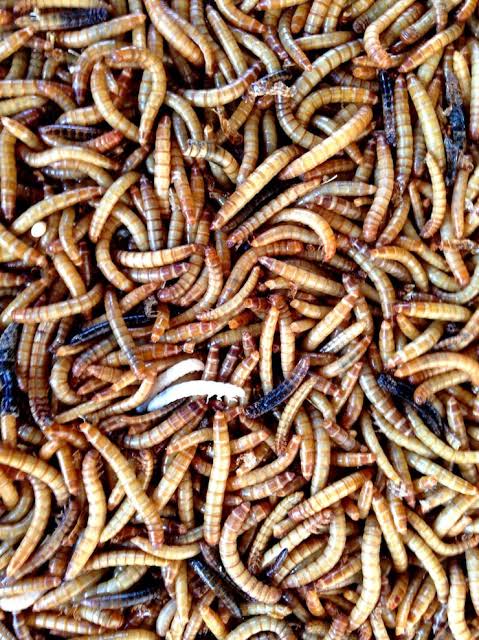
Poor maggots, they get no respect. Even my trusty Webster’s Dictionary includes a reference to them found usually in filth. Yes, some are found there, like the ubiquitous house fly, but so many others live in other places. Some can do us harm, but most live in anonymity. All of them, including those in so-called filth, have a purpose. Bear with me as I attempt to elevate their status from, “Eww”, to “OK fine”. Stay with me!!!
The term maggot generally refers to the legless larva of flies, members of the Order Diptera – two-winged insects. Maggots vary in form from the torpedo-shaped garbage-can varieties that we are most familiar with, to mosquito larvae, with their upturned siphon through which they breathe. Some, like rat-tailed maggots have extremely long, extendable siphons. Many are consumers of dead tissues and organic matter, but others live as herbivores, parasites, and even carnivores.
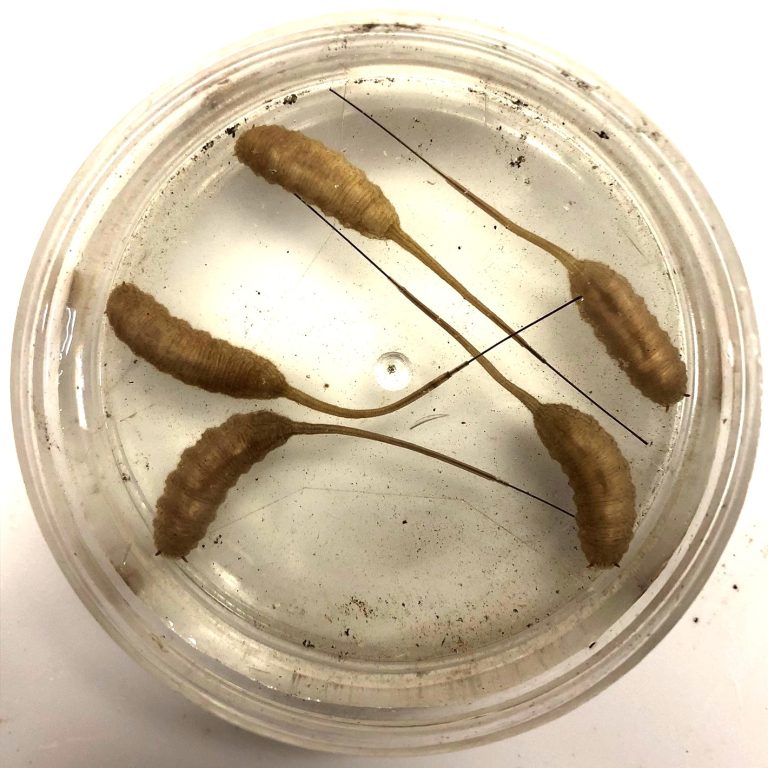 Rat-tailed Maggots
As an entomologist, I have encountered many maggots and studied a few, including those of mosquitoes, long-legged flies, and no-see-ums. I have also encountered a maggot that, well, didn’t look like a maggot. The flat, disc-shaped larvae of ant flies live in ant nests, devouring ant larvae and pupae. So, yes, many maggots are far from your garbage-can varieties and eat meat!
The larvae of the long-legged flies and no-see-ums that I studied, live in the muds of marshes and are predators of small species of worms and nematodes. They serve to transfer organic matter in the form of their prey to the terrestrial part of their habitat, when they emerge as adults. They are important links between these elements and go on to support other parts of the food chain.
Of course, some maggots or their adult forms are pests and parasites of humans, like mosquitoes, biting flies, botflies, and screwworms. And although they are not pleasant, they are part of our world. We may not appreciate what they do to us, but as a self-centered species, we label the whole group as bad. Well, some of us label all vegetables as bad, but that does not mean they are not important.
My reason for this testament to maggots is simple enough. Most are part of the background in our world, that we do not even know are there. Even those we do see, like garbage-can maggots, serve us in a way we do not value. They eat up the bits and pieces of our diet that end up in the trash, by our own hands. They are important recyclers of organic matter.
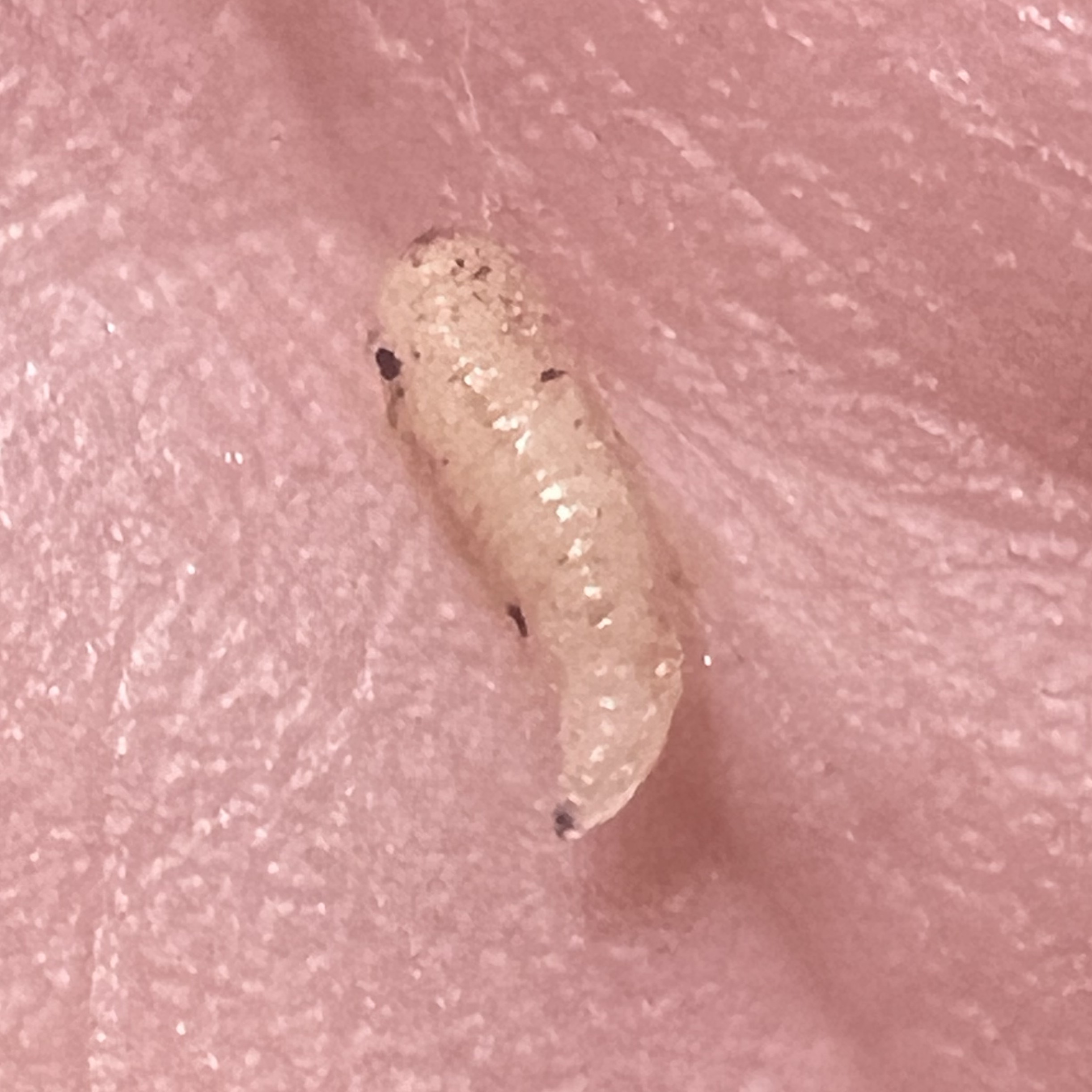
On the fun side of things, adult flies in our home provide cheap entertainment for our cat who runs them down on the windowsills. It reminds me of my grandmother’s skill of smacking flies with her bare hands, nonchalantly, as she went about her day. She would hold her hands apart, approach a resting fly, and anticipate its trajectory where it would end up flat against one of her palms. She could do the same as one flew by. She was adept at this skill, one that I continue to try to master. Don’t fret folks, a quick wipe on your pant leg is all it takes to clean up, or you could use soap and water, if you must.
But let me leave you with this tidbit. My Webster’s dictionary included a second definition of maggot: an odd notion or a whim. So, let’s just say that I had a maggot to speak for maggots.
Hope to see you in our great outdoors!
