


Skip to content
Close Menu

    Subscribe to Updates

    Get the latest creative news from FooBar about art, design and business.

    Most Viewed

    The Old Farmer’s Almanac Has Spoken on Mississippi’s Fall Forecast

    July 25, 2025

    Old Sayings Say It Best

    May 22, 2024

    Actor Jeremy London Calls Mississippi Home

    August 1, 2024

    The Julep Room: A Hole in the Wall with History

    January 8, 2024
    Facebook X (Twitter) Instagram
    Wednesday, April 1, 2026
    Trending
    • You Can Leave Mississippi, But It Doesn’t Leave You
    • April at Your Library: Events + Library Week Fun!
    • Marissa Badenhorst Named Refinery Director at Pascagoula and Pasadena (Texas) Refineries
    • Harrison County Libraries Offer Free Blood Pressure Monitoring Kits
    • S3 Camps offer Informal STEM Learning During School Breaks
    Facebook X (Twitter) Instagram YouTube TikTok
    Login
    Our Mississippi HomeOur Mississippi Home
    • Living

      Moss Point Celebrates 125th Birthday with Festival

      March 27, 2026

      The Hummingbirds Return

      March 25, 2026

      41 Years Strong: Kosciusko’s Beloved Easter Passion Play Continues

      March 24, 2026

      Helping Others Gain Independence: A Mission Rooted in Strength and Support

      March 24, 2026

      I Thought I Loved Snow… Until This Mississippi Girl Moved to Boston

      March 23, 2026
    • Arts / Culture

      Southern Miss A Cappella Group, Spirit of Southern, Wins ICCA Quarterfinal, Advances to Semifinals

      March 26, 2026

      41 Years Strong: Kosciusko’s Beloved Easter Passion Play Continues

      March 24, 2026

      More Than Theater: The Impact of Jayna Young

      March 19, 2026

      Screamin’ Eagles Guitar Festival Returns to the Hub City

      March 4, 2026

      Theatre MSU Brings the Heat, Razor-Sharp Wit to 2026 Season

      February 5, 2026
    • Entertainment

      Eaglepalooza Returns to Downtown Hattiesburg April 24 with Headliner Houndmouth

      March 25, 2026

      Long Beach Radish Festival returns April 18

      March 18, 2026

      Moss Point Proud: Daniel Stallworth Sings His Way Into American Idol’s Top 20

      March 16, 2026

      WMSV The Junction Listeners ‘Rise and Ring’ With On-Air Bulldog Talent

      January 29, 2026

      Where Faith, Family, and Music Meet: Shay and Michi Guess of Mantachie

      January 14, 2026
    • Food & Dining

      From Sound to Shell: The Story of Mississippi Oysters

      March 29, 2026

      From Hard Times to Po-Boys: The Flavors of Old Biloxi

      March 22, 2026

      Mississippi Pot Roast: The Slow Cooker Recipe That Took the Internet (and Our Kitchens) by Storm

      March 15, 2026

      MSU’s Food Science, Culinology Students Cooking Up Success at National Competition

      March 10, 2026

      The Best Things I Ever Ate on the Mississippi Gulf Coast

      March 8, 2026
    • Environment

      S3 Camps offer Informal STEM Learning During School Breaks

      March 30, 2026

      Organ Pipe Mud Daubers Make Beautiful Nests

      March 28, 2026

      Moss Point CCT Program is Nationwide Finalist for AI Program

      March 26, 2026

      The Hummingbirds Return

      March 25, 2026

      Spring Foraging in Your Yard

      March 23, 2026
    • Lagniappe
      • Business
      • Sports
      • Education
      • Health & Wellness
      • OurMSVoices
      • People
    Subscribe
    Our Mississippi HomeOur Mississippi Home
    Home»Environment»Qu’est Que C’est»Longleaf Pine – Living with Fire
    Qu’est Que C’est

    Longleaf Pine – Living with Fire

    Mark W. LaSalle, Ph.D.By Mark W. LaSalle, Ph.D.February 1, 20254 Mins Read32 Views
    Share Facebook Twitter Pinterest LinkedIn Tumblr Reddit Telegram Email
    Longleaf Pine Tree squared
    Longleaf Pine
    Share
    Facebook Twitter LinkedIn Pinterest Email Copy Link

    There are three common species of large pines that live within the so-called pine belt of the southeastern U.S. This swath of land stretches from the coast of North Carolina, Georgia and Florida, westward to eastern Texas. Of these, Longleaf historically dominated this landscape. It evolved to not only tolerate fire but depend on it. In many ways, it is also one of the most elegant.

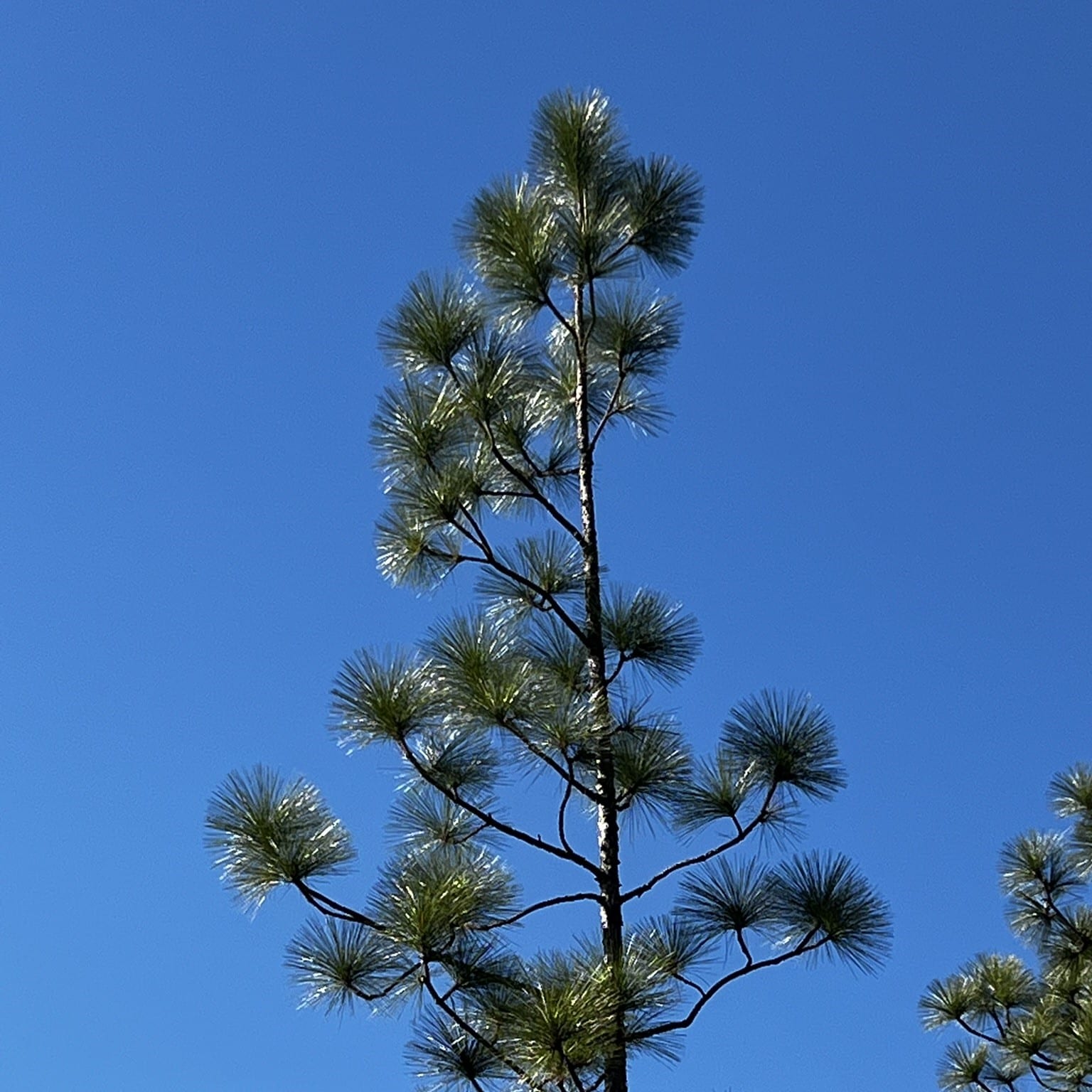
    Longleaf Pine (Pinus palustris) can be the easiest to identify compared to its close relatives Slash Pine (Pinus elliottii) and Loblolly Pine (Pinus taeda). As the name implies, Longleaf has the longest needles, reaching upwards of 12 inches. It also has the largest cones. But the most striking of its characteristics is its habit (shape), especially how needles are arranged on its branches.

    Needles in pines are held together in bundles called fascicles. In Longleaf, there are three needles per bundle that are situated at the tip of robust branches, forming a ball. If you view the tree as a whole, this arrangement resembles a candelabra, with the balls of leaves held upward from the tip of each branch. Liberace would be proud.
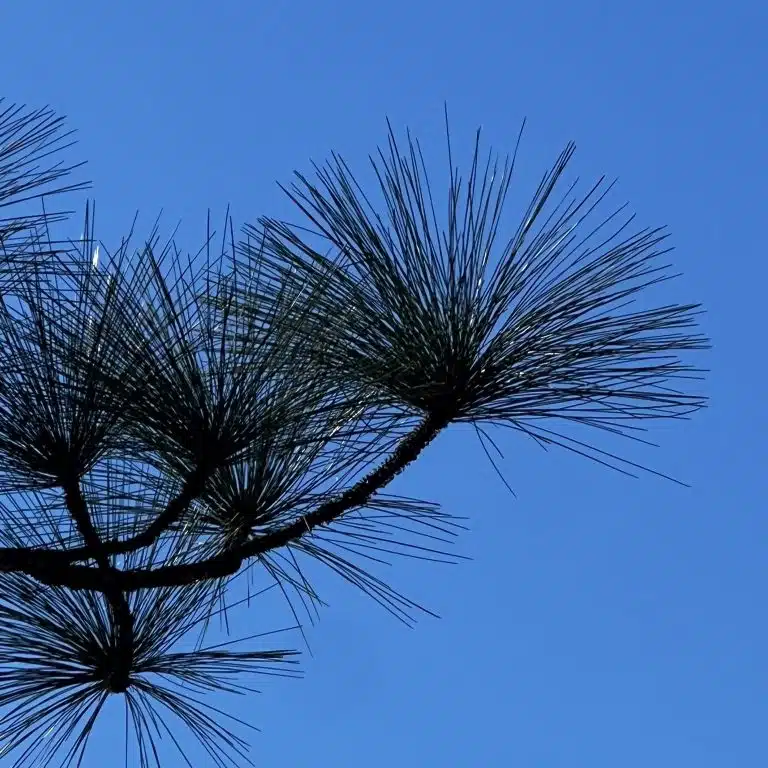
    Loblolly Pine needles are also in bundles of three, but much shorter (5-7 inches). Slash Pine needles are intermediate in length (7-10 inches) but usually with only 2 needles per bundle, but sometimes three – the sneaky devil. But unlike Longleaf, needles on these trees are more scattered along the branches, in some cases looking more like a fan at the tip of branches.

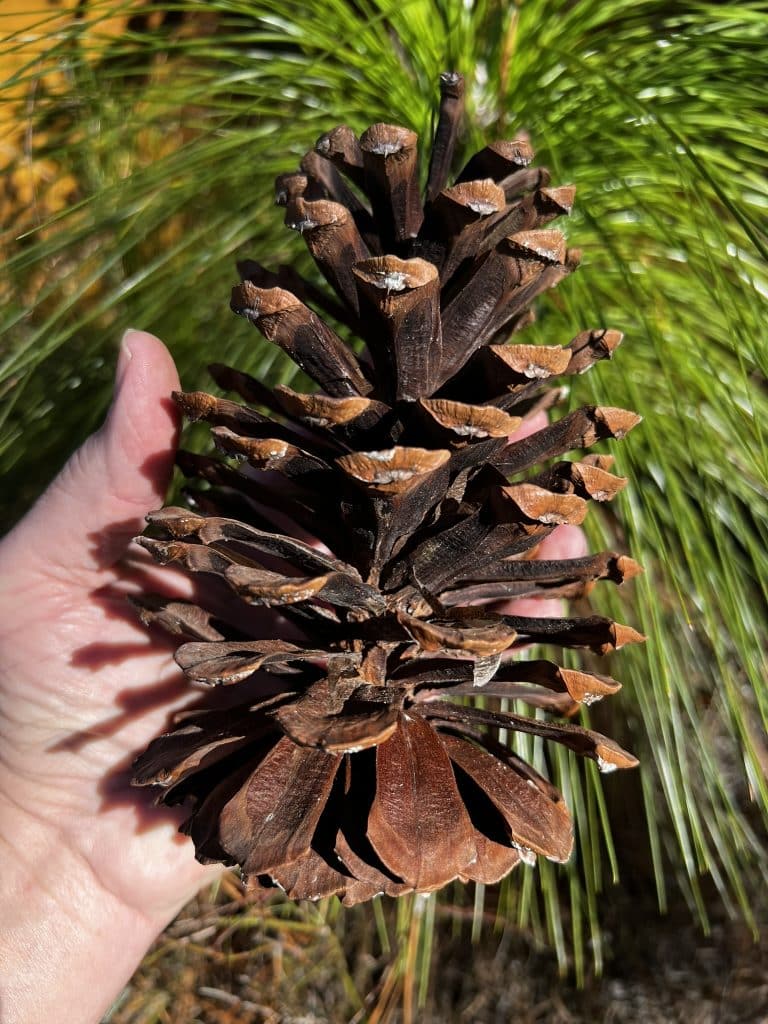
    When it comes to the size of cones, Longleaf also takes the prize, with the largest (8-10 inches). Cones of Slash Pine are shorter (6-8 inches) with Loblolly Pine having the smallest (4-6 inches). The cones of Loblolly also persist in the tree for years, making it easier to spot.
    But one of these characteristics of Longleaf Pine explains its ability to survive fire, especially in its early years. Fire is a naturally occurring factor in the southeastern pine belt, historically occurring every 3-5 years. Pines dominate here because they have fire-resistant bark and needles, both of which only burn under persistent flames. Flames of natural fires last only a minute or two at any one spot, allowing bark and some needles to survive.

    Longleaf takes this strategy a step further, especially for small saplings that hug the ground in the early years. These small trees are called grass-stage pines, for their resemblance to tuffs of grass – in this case a ball of long needles that protect the central growing tip of the tree. This is when having long needles pays off. These long, fire-resistant needles keep flames away long enough to keep fire away from the growing tip.
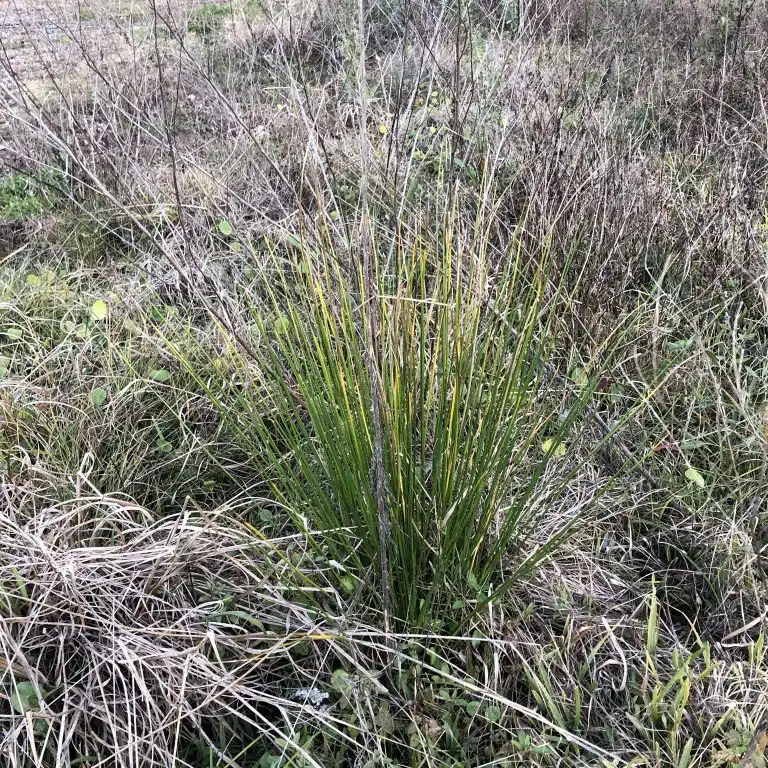
    The grass stage lasts a few years, during which the plant builds a deep tap root and robust trunk, covered with fire-resistant bark. Once the small tree does begin to grow taller, the larger diameter trunk also protects it from fire. This is not the case for Slash or Loblolly pines that shoot up quickly with small diameter trunks that are susceptible to fires in the first years of growth.

    This adaptation to fire early in life explains the historical dominance of Longleaf Pine in upland forest and wet pine savannas across the pine belt. In pre-European forests, the only tree in these habitats were Longleaf, with biologically diverse grasslands beneath the canopy, also having adaptations to fire. Humans have altered that cycle.

    But the queen of pines remains, if not in its former glory, certainly around enough to give our pine forest an elegant look.

    Hope to see you in our great outdoors!

    fire Longleaf Pine Slash Pine
    Previous ArticleMississippi High School Bowling Champions
    Next Article Delicious Italian Recipes for Carnival Season
    Mark W. LaSalle, Ph.D.

    Mark is a naturalist and wetland ecologist, providing expertise on wetlands, water quality and environmental impacts of humans. He has also developed and conducted a number of environmental education programs and workshops for youth, teachers, realtors, and the general public on a variety of subjects including wetlands, natural history, and environmental landscaping. Mark is a graduate of the University of Southwestern Louisiana (B.S. and M.S. degrees) and Mississippi State University (Ph.D.). Mark is the recipient of the Chevron Conservation Award, the Mississippi Wildlife Federation Conservation Educator Award, the Gulf Guardian Award, and the Boy Scouts of America Silver Beaver Award.

    Related Posts

    Qu’est Que C’est

    Organ Pipe Mud Daubers Make Beautiful Nests

    March 28, 2026
    Qu’est Que C’est

    Spring Foraging in Your Yard

    March 23, 2026
    Qu’est Que C’est

    Let’s Not Mow in March Y’all

    March 14, 2026
    Add A Comment

    Comments are closed.

    Stay In Touch
    • Facebook
    • YouTube
    • TikTok
    • Twitter
    • Instagram

    Subscribe to Updates

    Get the latest good news happening in Mississippi!

    Most Popular

    The Old Farmer’s Almanac Has Spoken on Mississippi’s Fall Forecast

    July 25, 20258K Views

    Old Sayings Say It Best

    May 22, 20247K Views

    Actor Jeremy London Calls Mississippi Home

    August 1, 20247K Views
    Our Picks

    You Can Leave Mississippi, But It Doesn’t Leave You

    March 31, 2026

    April at Your Library: Events + Library Week Fun!

    March 31, 2026

    Marissa Badenhorst Named Refinery Director at Pascagoula and Pasadena (Texas) Refineries

    March 31, 2026

    Subscribe to Updates

    Get the latest good news from Our Mississippi Home.

    Our Mississippi Home
    Facebook X (Twitter) Instagram YouTube TikTok RSS
    • About OurMSHome
    • Advertise
    • Community Partners
    • Privacy Policy
    • Guidelines
    • Terms
    © 2026 Our Mississippi Home. Designed by Know_Name.

    Type above and press Enter to search. Press Esc to cancel.

    Ad Blocker Enabled!
    Ad Blocker Enabled!
    Our website is made possible by displaying online advertisements to our visitors. Please support us by disabling your Ad Blocker.

    Sign In or Register

    Welcome Back!

    Login to your account below.

    Lost password?