



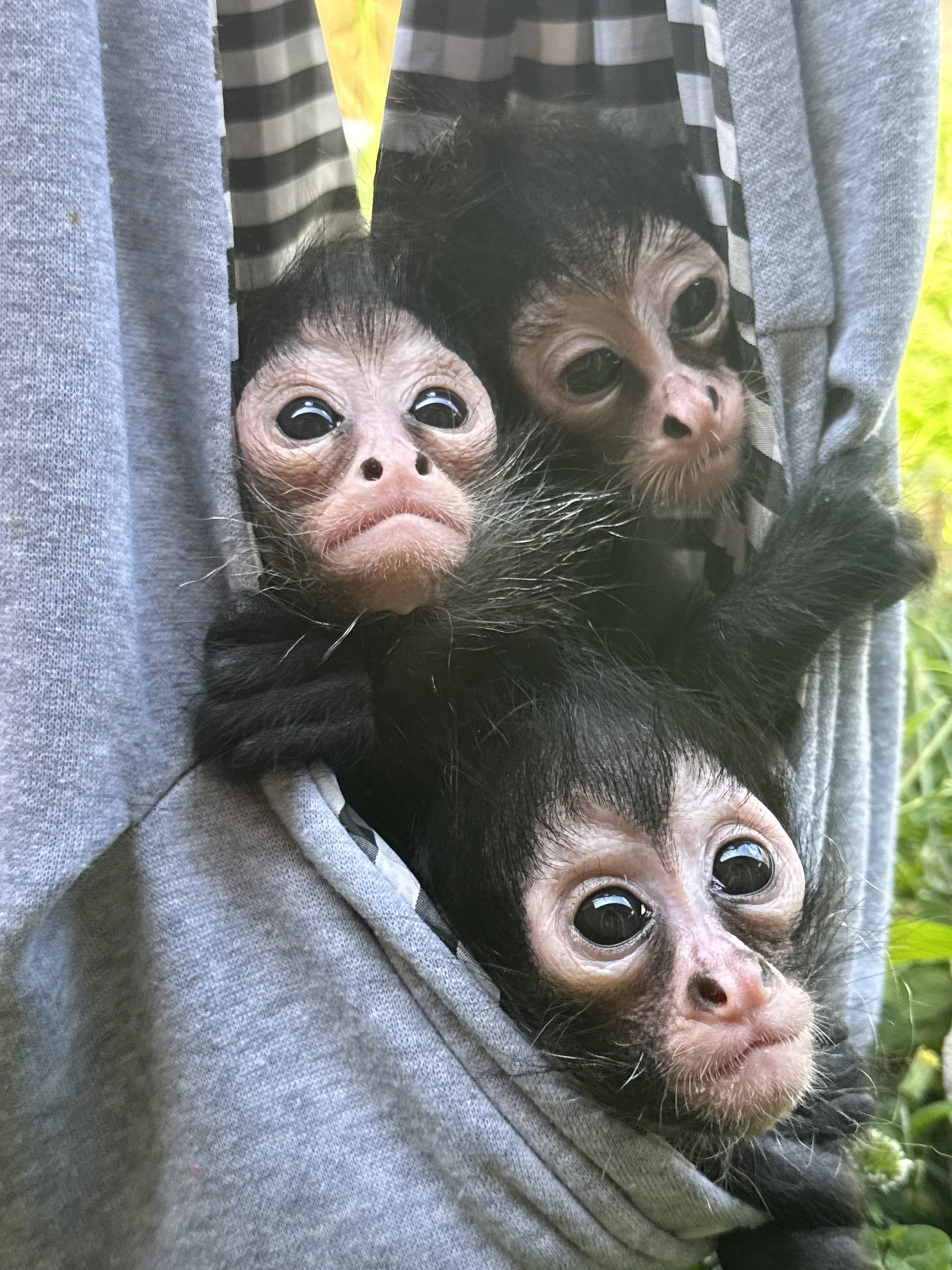
The Hattiesburg Zoo is thrilled to introduce its newest residents to guests beginning tomorrow: three baby spider monkeys named Cider, Holly and Juniper.
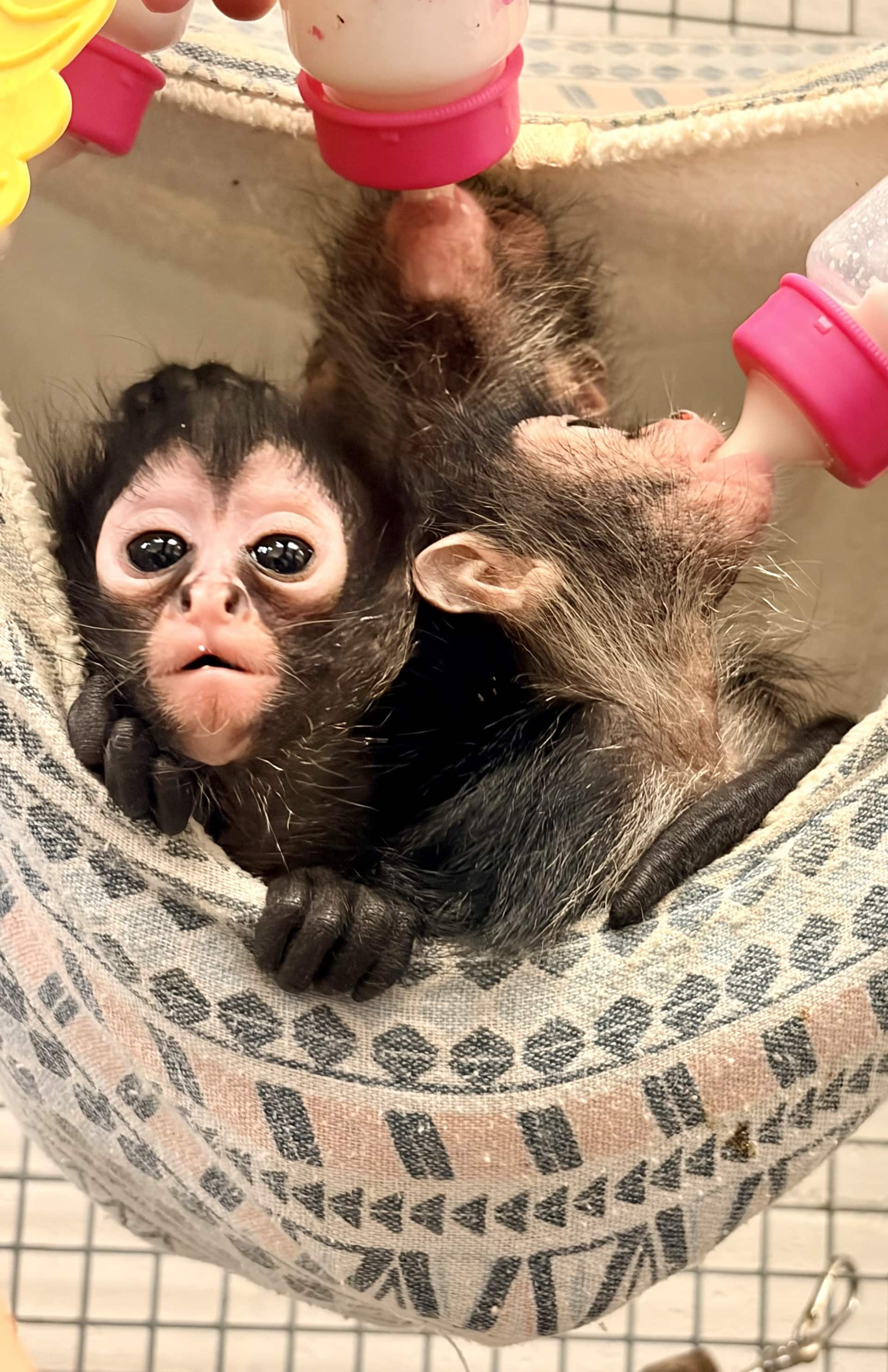
The three female spider monkeys arrived at the zoo in late 2025 and have spent the past several months receiving care in the zoo’s dedicated quarantine facility. During this time, the babies have been closely monitored by the zoo’s animal care and veterinary teams to ensure healthy growth, social development, and a smooth transition to their new home.
“When they first arrived, each baby was smaller than a sweet potato,” said Kristen Moore, Director of Wildlife. “They required bottle feedings five times a day when they first arrived, as well as consistent observation and individualized care to help them grow stronger every day.”
Today, the babies have grown significantly and are now roughly the size of a pineapple, with each monkey increasing from between 500 – 525 grams upon arrival to their current weights which are between 1100-1200 grams.
Their daily care routine has included:
- Scheduled bottle feedings and gradual introduction to solid foods
- Frequent weight checks and health assessments
- Enrichment activities to encourage climbing, gripping, and coordination skills
- Socialization with their care team to build trust and confidence
- Veterinary wellness exams to monitor growth milestones and development
The zoo’s animal care and veterinary team have played a critical role in raising the infants through this delicate stage of life. From preparing specialized formula feedings to conducting routine health checks and creating enrichment plans that mimic natural spider monkey behaviors, the teams have worked collaboratively every day to help the babies thrive.
Beginning tomorrow, guests will be able to see Cider, Holly and Juniper in an indoor glass viewing area at the Asbury Discovery Center, where the young monkeys will continue adjusting to their surroundings. This special viewing space will help the babies gradually become comfortable seeing zoo guests and hearing the sounds of daily zoo activity, as up to this point they have only interacted with members of their dedicated care team.
“It’s an important step in their development,” said Moore. “This environment allows them to safely experience new sights, sounds and faces while continuing to feel secure.” The zoo staff would like to remind guests visiting this habitat not to tap, knock or bang on the glass as the monkeys’ ears are very sensitive.
It will be many months before the babies are large enough to join the zoo’s newly established spider monkey troop, including juveniles Elsie, Messy, Delgado, Duende and the elder statesman, Rico — in their outdoor habitat along the South America Boardwalk.
The zoo anticipates that this slow and carefully managed introduction process will ensure the young monkeys are physically ready and socially prepared for life with the full troop.
Guests are encouraged to stop by the Asbury Discovery Center beginning tomorrow to meet the zoo’s most adorable new arrivals.
