


Skip to content
Close Menu

    Subscribe to Updates

    Get the latest creative news from FooBar about art, design and business.

    Most Viewed

    The Old Farmer’s Almanac Has Spoken on Mississippi’s Fall Forecast

    July 25, 2025

    Old Sayings Say It Best

    May 22, 2024

    Actor Jeremy London Calls Mississippi Home

    August 1, 2024

    The Julep Room: A Hole in the Wall with History

    January 8, 2024
    Facebook X (Twitter) Instagram
    Tuesday, April 21, 2026
    Trending
    • MSU’s T.K. Martin Center Hosts Express Yourself! Art Auction in May
    • The World’s Largest Weenie Dog Race Lives in Starkville (Yes, Really)
    • More Active in Mississippi: MSU Extension launches Magnolia Moves Activity Challenge on April 20
    •  Amtrak Mardi Gras Service Nears 100,000th Passenger, Marking Major Milestone for Coastal Mississippi Connectivity 
    • Hattiesburg Zoo Introduces Three Baby Spider Monkeys to Guests Beginning Tomorrow
    Facebook X (Twitter) Instagram YouTube TikTok
    Login
    Our Mississippi HomeOur Mississippi Home
    • Living

      Kids Markets Eyes Southeast Mississippi Expansion

      April 17, 2026

      More Than Maps: Why Kids Need the Outdoors

      April 17, 2026

      Lily Faith is Cruising The Gulf Again

      April 15, 2026

      A Bream By Any Other Name, Still Smells Like A Fish

      April 14, 2026

      Lessons from the Pond…and One Stubborn Lawn Chair

      April 8, 2026
    • Arts / Culture

      MSU’s T.K. Martin Center Hosts Express Yourself! Art Auction in May

      April 21, 2026

      A Weekend of Music Comes to Brookhaven

      April 16, 2026

      A League Where Everyone Gets to Play: Miracle League of McComb

      April 16, 2026

      Where the Coast Finds Its Canvas: Emily Lang’s Pascagoula-Inspired Art

      April 13, 2026

      Southern Miss School of Music to Present “Made in America” Concert on Gulf Coast

      April 10, 2026
    • Entertainment

      Nearly Sold Out: Air Supply 50th Anniversary Coming to MSU Riley Center

      April 17, 2026

      The Forrest County Fair will return to Hattiesburg beginning April 17

      April 13, 2026

      Sip, Stroll, and Stay Awhile in Ocean Springs

      April 8, 2026

      First Concert Coming to Sumrall’s Beam Park Amphitheater on April 11

      April 7, 2026

      Eaglepalooza Returns to Downtown Hattiesburg April 24 with Headliner Houndmouth

      March 25, 2026
    • Food & Dining

      Sip, Stroll, and Stay Awhile in Ocean Springs

      April 8, 2026

      From Sound to Shell: The Story of Mississippi Oysters

      March 29, 2026

      From Hard Times to Po-Boys: The Flavors of Old Biloxi

      March 22, 2026

      Mississippi Pot Roast: The Slow Cooker Recipe That Took the Internet (and Our Kitchens) by Storm

      March 15, 2026

      MSU’s Food Science, Culinology Students Cooking Up Success at National Competition

      March 10, 2026
    • Environment

      A Bream By Any Other Name, Still Smells Like A Fish

      April 14, 2026

      Lyreleaf Sage – Adding a Blue Splash of Color in Spring

      April 11, 2026

      Menhaden Season Brings the Scents and Sounds of Summer on the Coast

      April 3, 2026

      The Bees Beneath Your Feet: Why Mississippi’s Native Pollinators Matter

      April 3, 2026

      Free, Family-Friendly Earth Day Festival Celebrates Community and Conservation in Moss Point

      April 2, 2026
    • Lagniappe
      • Business
      • Sports
      • Education
      • Health & Wellness
      • OurMSVoices
      • People
    Subscribe
    Our Mississippi HomeOur Mississippi Home
    Home»Environment»Eating Greenbriers Before They Eat You!
    Environment

    Eating Greenbriers Before They Eat You!

    Mark W. LaSalle, Ph.D.By Mark W. LaSalle, Ph.D.May 10, 20194 Mins Read647 Views
    Share Facebook Twitter Pinterest LinkedIn Tumblr Reddit Telegram Email
    Share
    Facebook Twitter LinkedIn Pinterest Email Copy Link

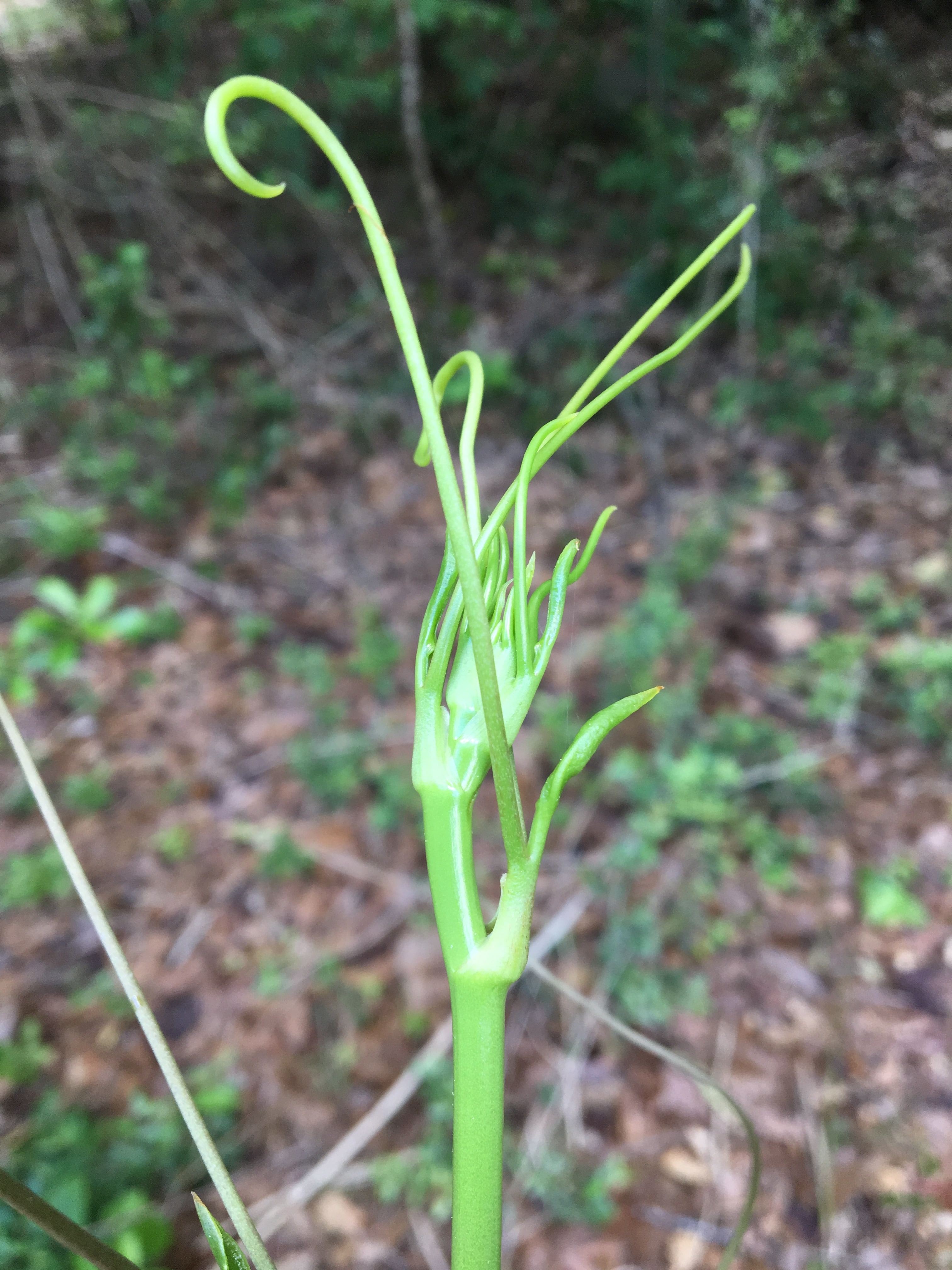
    Few native edible plants are as satisfying to eat than greenbrier. For one thing, the tender shoots emerging from the hard tubers in the spring are a tasty treat whether eaten raw, steamed, or sautéed in butter. For those of us that encounter this plant in its mature and thorny state, this is also payback for the many scratches and scars that these vines can inflict.

    Known as greenbrier, catbrier, prickly ivy, and my favorite name, “wait-a-minute plant” this thorny vine is the bane of gardeners and those of us that frequent local trails and wild places where we are tripped up or as I like to say “attacked” by the vines lying in wait for someone to come along. The sharp thorns along the stems of these vines, and in some species the sharp spines on the leaves, give this group of plants their common name. I am convinced that this plant has “eyes” that see me coming and muscles that flick them across my path. I have tumbled many times in less than flattering ways. Dignity is suspended when dealing with greenbriers. They hurt!!!

    So yes, I was delighted to learn many years ago that you could eat the young tender shoots and that the tubers were also rich in starch and other chemicals that Native Americans used to treat a wide range of maladies and in cooking. Also known as wild asparagus, the shoots are of course the easiest to collect and eat. The tubers take a bit of time to process (they are rock hard!), but the results can be interesting. Native Americans used the dried starchy flour as a thickening agent in cooking and blended it with honey to make a sweetened jelly. But not all of the seven species common to our area are as tasty or have large enough shoots or tubers to make them a target of our revenge.
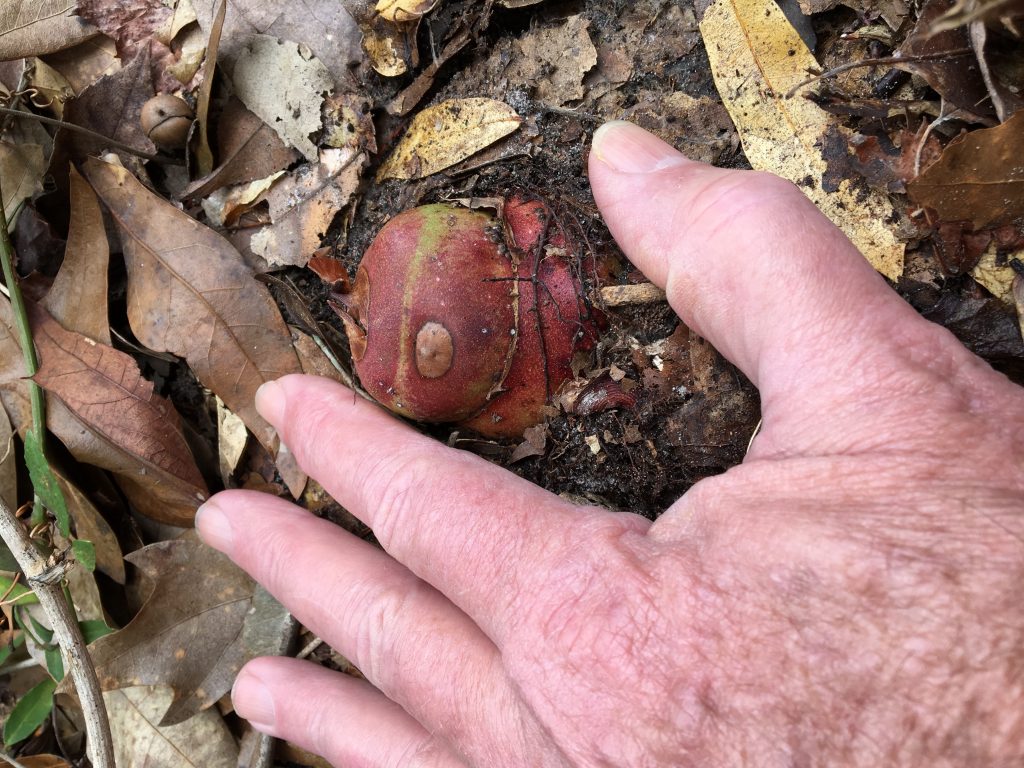
    The largest and easiest to find, collect, and eat is Laurel Greenbrier, Smilax laurifolia. This species has large tubers in clusters that can cover quite a bit of space and produce thick new shoots each year. Some of these shoots can be as much as a quarter to half of an inch in diameter and can grow to reach several feet in height in a single season. This species is common in our wet pine savannas and pine flatwoods where the shoots can be free-standing. This is my favorite to eat because of its relatively mild flavor and size.
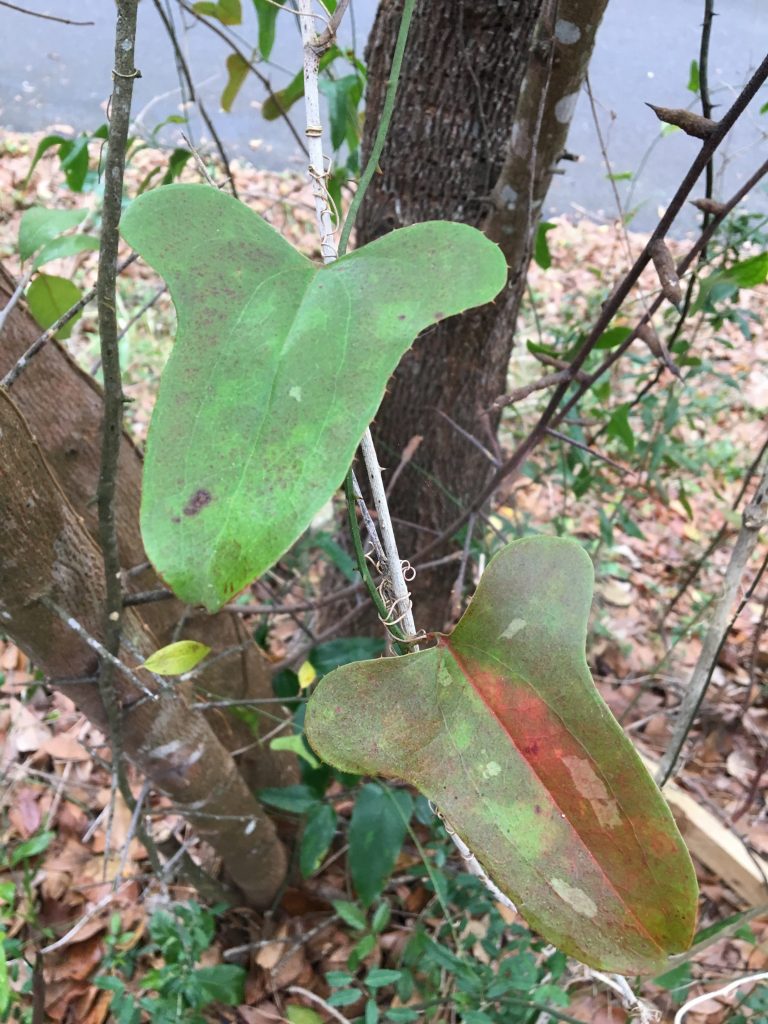
    Smilax Leaves

    Other large to mid-size species include Lanceleaf Greenbrier (Smilax smallii), Cat Greenbrier (Smilax glauca), Earleaf Greenbrier (Smilax auriculata) and Saw Greenbrier (Smilax bona-nox). The shoots of Saw Greenbrier are the smallest of these and can be on the bitter side. This species is also the thorniest of them all with numerous sharp thorns on the shoots and equally sharp spines on the edges and main veins of the leaves. Coral Greenbrier (Smilax walteri) is a mid-size species that grows in swamps and Sarsparilla Vine (Smilax pumila) is the smallest species, occurring largely as a ground cover in pine woodlands and has no thorns or spines. These last two species also have small tubers. Kudos to my friend Janet Wright for documenting this group across south Mississippi. Visit her project called Vines of the Pascagoula Basin at iNaturalist.org.

    For be it for me to leave you with a wholly negative view of greenbriers, for the pattern of their leaves can be quite beautiful. The berries of these native vines are an important source of food for birds and wildlife. Just be aware of those eyes and step carefully. Good luck!

    Hope to see you all in our great outdoors!!!

    environment food plants
    Previous ArticleGas Station Foodie
    Next Article Florida Officials Visit Jackson County for Hurricane Michael Recovery Advice
    Mark W. LaSalle, Ph.D.

    Mark is a naturalist and wetland ecologist, providing expertise on wetlands, water quality and environmental impacts of humans. He has also developed and conducted a number of environmental education programs and workshops for youth, teachers, realtors, and the general public on a variety of subjects including wetlands, natural history, and environmental landscaping. Mark is a graduate of the University of Southwestern Louisiana (B.S. and M.S. degrees) and Mississippi State University (Ph.D.). Mark is the recipient of the Chevron Conservation Award, the Mississippi Wildlife Federation Conservation Educator Award, the Gulf Guardian Award, and the Boy Scouts of America Silver Beaver Award.

    Related Posts

    Environment

    A Bream By Any Other Name, Still Smells Like A Fish

    April 14, 2026
    Qu’est Que C’est

    Lyreleaf Sage – Adding a Blue Splash of Color in Spring

    April 11, 2026
    Community Picks

    Menhaden Season Brings the Scents and Sounds of Summer on the Coast

    April 3, 2026
    Add A Comment

    Comments are closed.

    Stay In Touch
    • Facebook
    • YouTube
    • TikTok
    • Twitter
    • Instagram

    Subscribe to Updates

    Get the latest good news happening in Mississippi!

    Most Popular

    The Old Farmer’s Almanac Has Spoken on Mississippi’s Fall Forecast

    July 25, 20258K Views

    Old Sayings Say It Best

    May 22, 20247K Views

    Actor Jeremy London Calls Mississippi Home

    August 1, 20247K Views
    Our Picks

    MSU’s T.K. Martin Center Hosts Express Yourself! Art Auction in May

    April 21, 2026

    The World’s Largest Weenie Dog Race Lives in Starkville (Yes, Really)

    April 21, 2026

    More Active in Mississippi: MSU Extension launches Magnolia Moves Activity Challenge on April 20

    April 20, 2026

    Subscribe to Updates

    Get the latest good news from Our Mississippi Home.

    Our Mississippi Home
    Facebook X (Twitter) Instagram YouTube TikTok RSS
    • About OurMSHome
    • Advertise
    • Community Partners
    • Privacy Policy
    • Guidelines
    • Terms
    © 2026 Our Mississippi Home. Designed by Know_Name.

    Type above and press Enter to search. Press Esc to cancel.

    Ad Blocker Enabled!
    Ad Blocker Enabled!
    Our website is made possible by displaying online advertisements to our visitors. Please support us by disabling your Ad Blocker.

    Sign In or Register

    Welcome Back!

    Login to your account below.

    Lost password?