



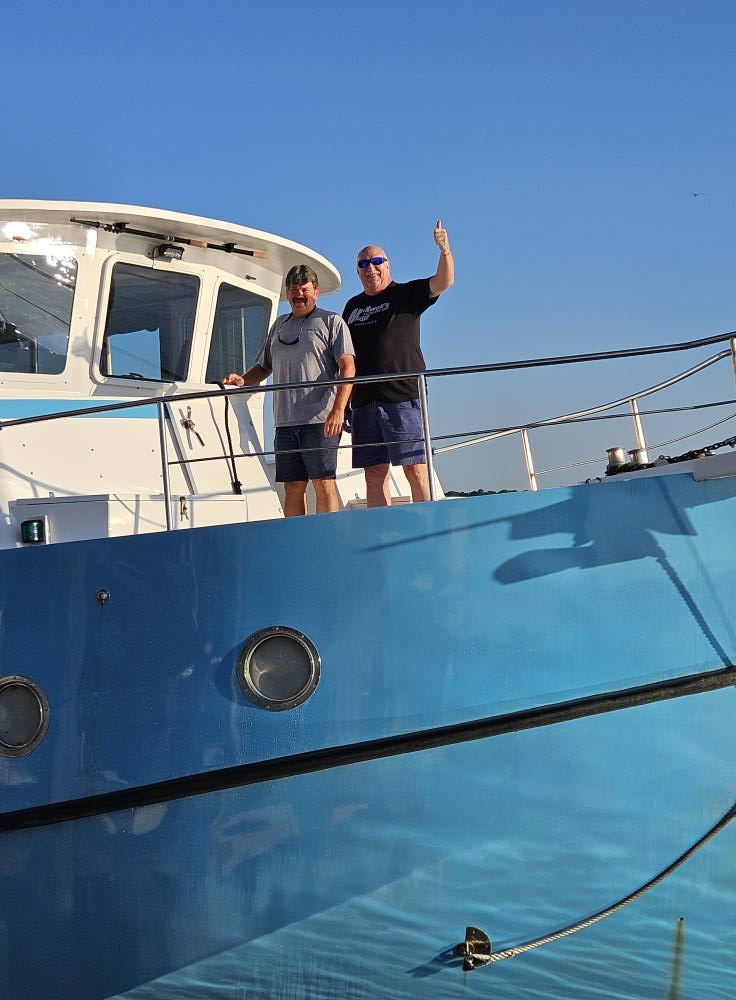
MOSS POINT—Untying from the safe harbor of Beardslee Lake in Moss Point marked the beginning of an adventure that was 20 years in the making.
He doesn’t really remember who first told him about the Great Loop, but Lennie Sheffield remembers that it was on his bucket list, but family responsibilities kept it at bay. Once he retired, he knew that the time was right to set out on this adventure.
The Great Loop consists of waterways that circumnavigate the eastern portion of the United States through mostly protected inland waterways. The Great loop follows the southern Intracoastal Waterway, the Eastern Intracoastal Waterway, Chesapeake Bay, New York Canals, Great Lakes and the Mississippi and Tennessee-Tombigbee Waterways. In all, the entire loop stretches nearly 6,000 miles.
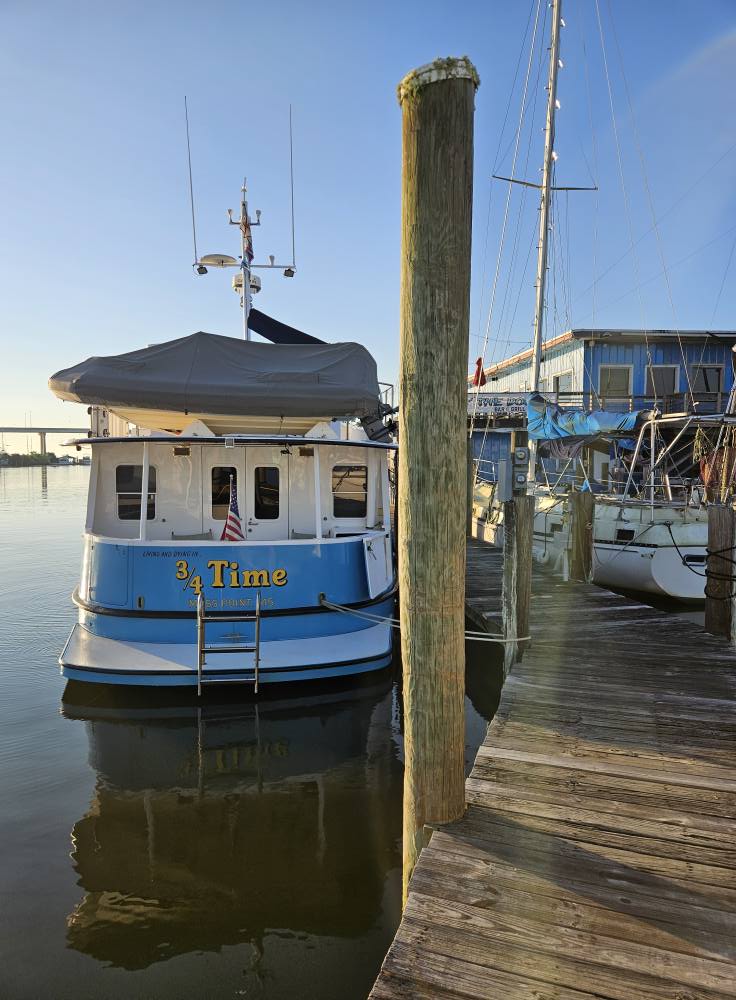
Growing up on the Mississippi Gulf Coast, Sheffield was no stranger to the water and boating, but most of his time had been spent on fishing vessels. He knew that tackling The Great Loop would require a more substantial vessel that would include a galley, bunks, and other comforts of home. He spent time researching vessels available, traveled to look at a few, but knew he had found the perfect boat when he came upon the Great Harbour, G.H. 37 built in 2000.
“I just knew it when I saw it,” Sheffield said as he remembered seeing the vessel in Brunswick, Georgia. “It was exactly what I knew I needed for this trip.”
There was one thing that didn’t seem quite right though—its name. In Sheffield’s mind, this was to be a slow-moving cruising vessel that should resonate with that easy, laid-back feeling through its name.
“I changed the name to the M/V ¾ Time that was taken from a line in the Jimmy Buffet song “Nautical Wheelers” Sheffield said. “The boat only runs about 7.5 MPH, so the line goes ‘living and dyin’ in ¾ time.’”
But another thing he needed was training. He had never captained a vessel of this type or attempted to make a voyage of this magnitude, so he and longtime friend, Jim Roe, took a practice cruise on the vessel from Jacksonville, Florida, around the tip of the peninsula to Ft. Myers, Florida with Captain Joe Senn at the helm. They said the cruise provided valuable experience and knowledge of piloting the vessel with an experienced captain while getting their sea legs on an extended trip.
Sheffield and Roe brought the boat home to Moss Point, Mississippi, alone. The duo said they had mostly smooth sailing except for one night crossing.
“The 20-hour night crossing of the Gulf from Tarpon Springs to Carabelle, Florida was not smooth,” Sheffield said, recalling that he had checked the weather before proceeding. “The weather forecast called for less than one-foot seas turned into a night of four to five-foot seas.
“We became comfortable with the workings of the boat and its mechanics,” Sheffield added. “This trip gave me the confidence to begin my adventure.”
Generally, the Great Loop can take up to a year to complete, but setting out, Sheffield said he was in no hurry and didn’t plan any further out than the next day keeping a flexible schedule. He kept watching the weather, enjoyed crock pot meals, and met amazing people along the way.
“About half of the time I was alone onboard the ship, and the other half of the time I welcomed friends and family,” he said, looking at his 8-year-old son Leo. “If we saw something we wanted to explore more closely, we would. Some days we traveled many miles, and other days not so many.”
His Great Loop journey took him along the gulf coast states and down to the Bahamas for a two-week island-hopping tour where the crew learned the price difference of some must-have cruising items, specifically the cost of a case of beer was $100. He then made his way up the east coast before his winter break.
The vessel was winterized in City Island, New York, in the Bronx. He said City Island is outside of New York City Proper, and he learned that contrary to some opinions, New York has some of the nicest people.
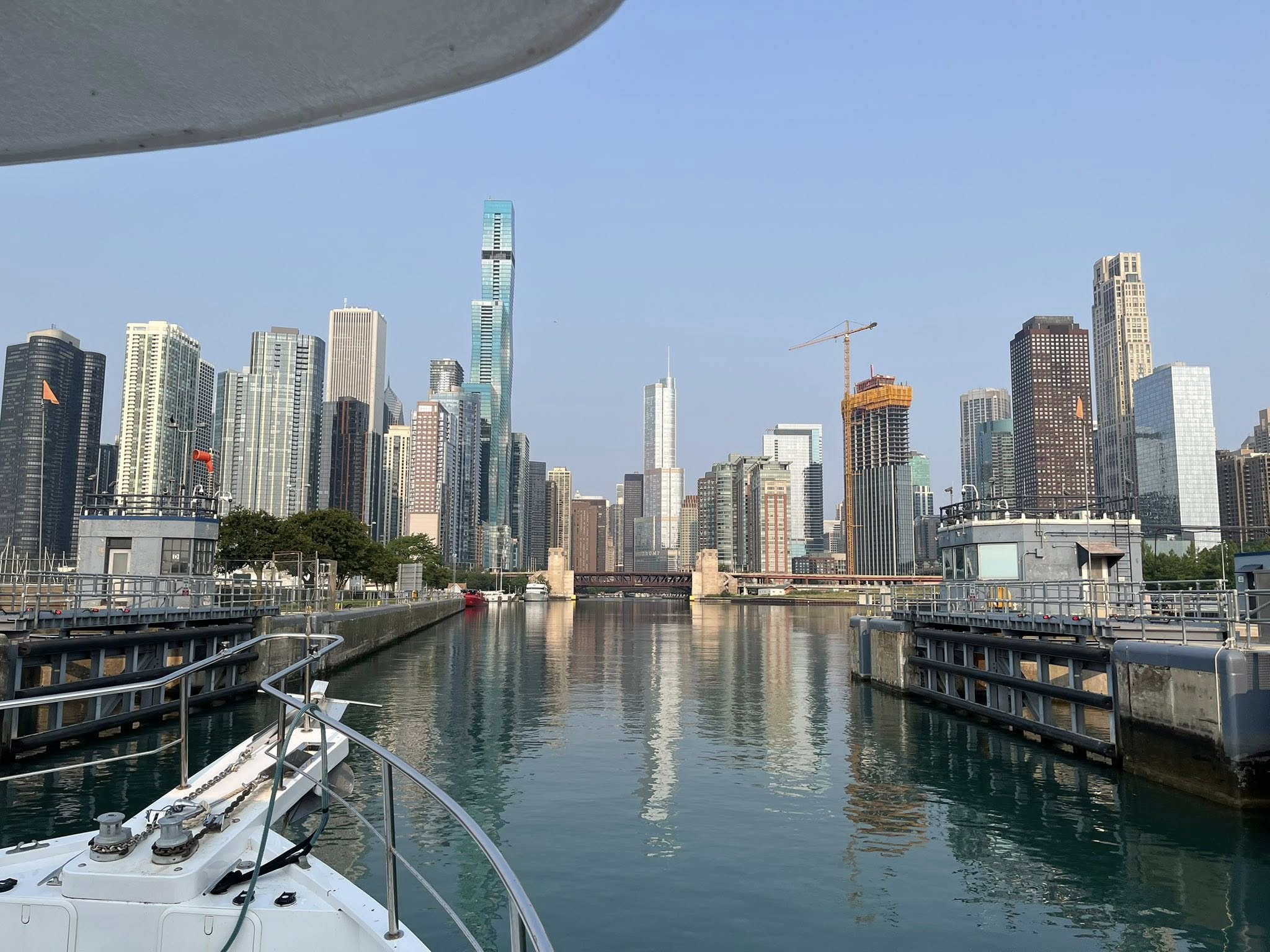
Returning to his vessel in the spring, he then continued through the Great Lakes to Canadian waters before turning south on the Chicago River that took him through a variety of rivers and creeks to include Illinois, Mississippi Ohio, and Tennessee River. Due to the large numbers of barge traffic on the Mississippi River, he chose to continue the loop on the Tennessee-Tombigbee Waterway through the Alabama River where he reentered salt water in Mobile Bay, Alabama. The whole trip was documented on his Facebook group that was created mostly for his mother so, “she would always know where I was.”
From quaint fishing villages to local cuisine and awesome scenery, Sheffield said he can’t say just one part of the trip that he enjoyed most. But he is partial to the sunset photos he took while aboard the vessel.
“The sunsets were amazing,” he said. “Just when I thought they couldn’t get any better, they did.”
Not only did he learn to captain his own vessel, but he also learned so much more about nautical navigation, went through more than 100 locks, understood the differences in the waterways in various parts of the country and even flew a courtesy guest flag when in the Bahamas and in Canada.
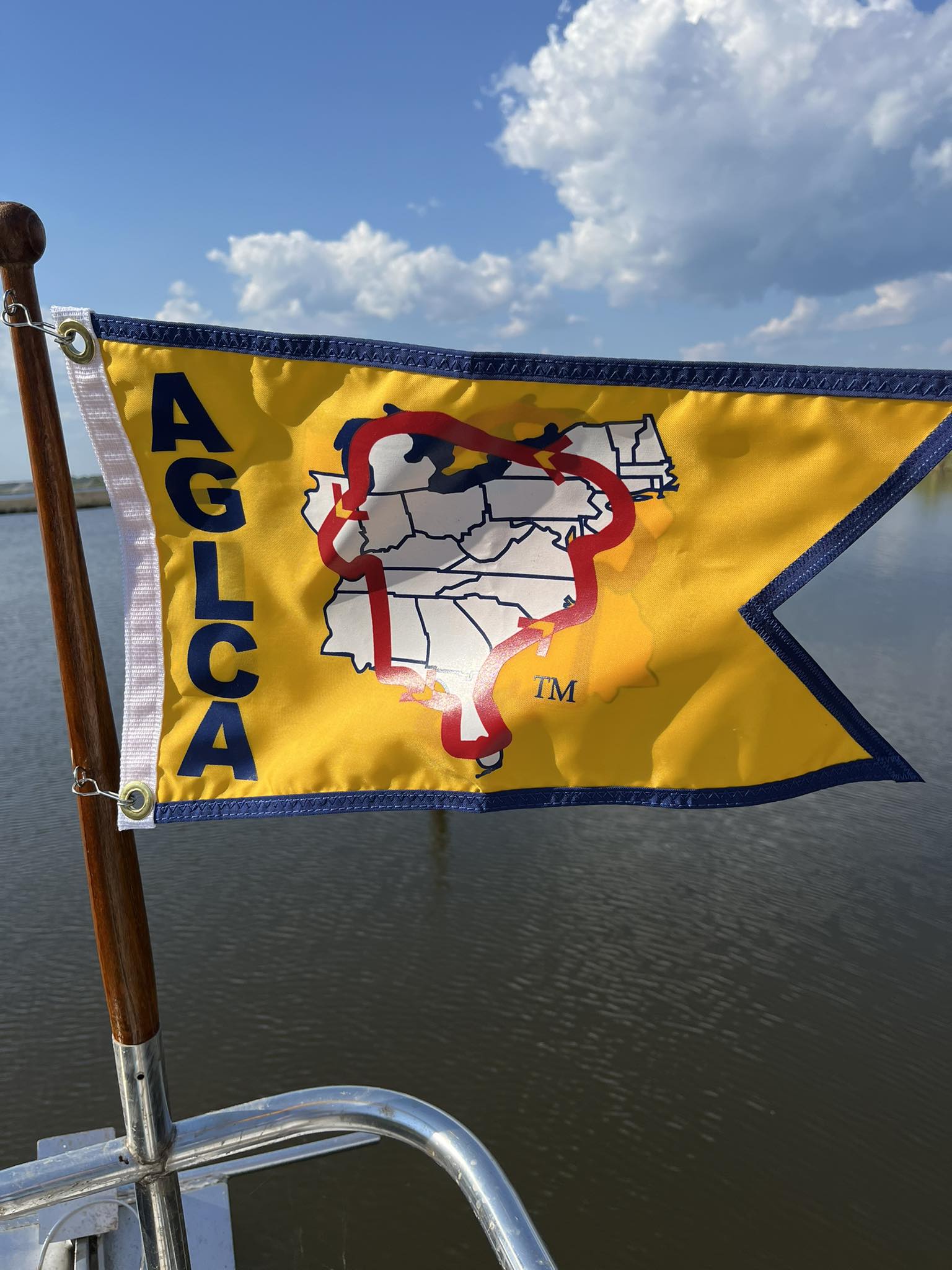
“The American flag always flew from the stern, and the burgee of the Singing River Yacht Club in Pascagoula is a bit tattered now, but it never came down. He also flew the white burgee of the American Great Loop Crusiers’ Association.
Sheffield left port in Moss Point in April 2024 and then returned home in October 2024 after winterizing the vessel in New York. He returned to continue the voyage in May 2025 and came through the Pascagoula River channel on September 5. Today he has exchanged the white AGLCA flag for one with a gold background indicating his first completion of The Great Loop.
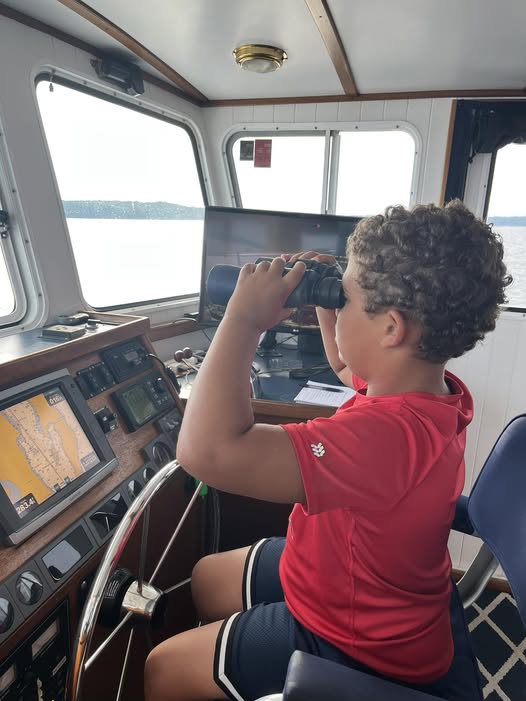
He credits his successful completion of this journey to his wife, Haidee, friends Jim Roe and Captain Joe Senn, David Smith, Brad Blackman, and his first mate, son Leo. Multi-day fishing excursions with family and friends now top his list aboard the ¾ Time.
