



The simple beauty of an Escatawpa River sunset from the steel train trussell and the nudging of an elementary school art teacher created the foundation of what is now a love and career as an artist and creator.
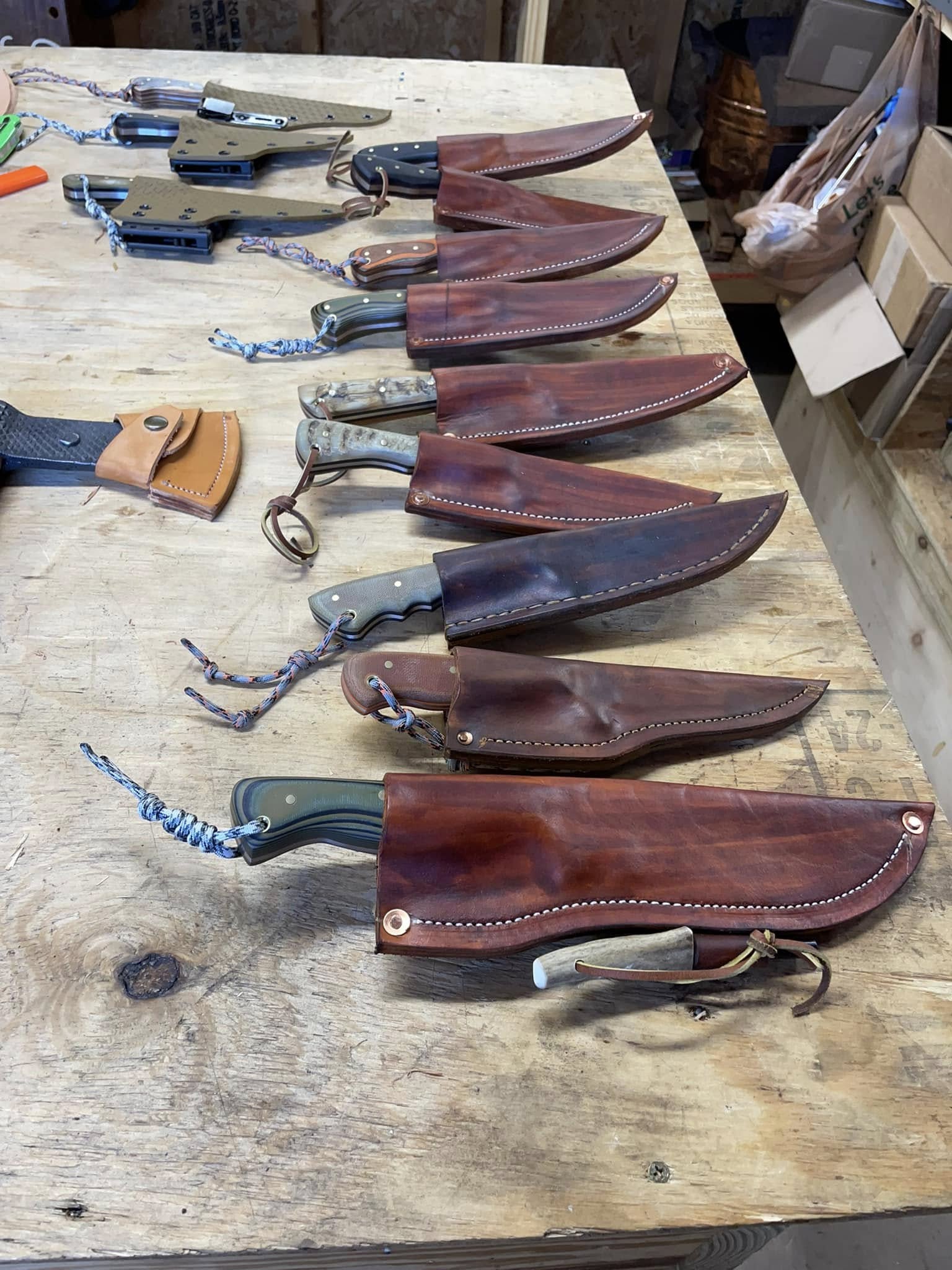
But what started as simple sketching has become the use of primitive techniques used by blacksmiths along with anvils from Europe that are more than 150 years old. The mixing of the primitive techniques paired repurposed circular saws, axes and tomahawks creates awork of art in the form of knives—and it all started from blacksmithing.
Michael Chatham spent his childhood and teen years living along the railroad tracks that ran through downtown Moss Point. That is where an art teacher at Charlotte Hyatt Elementary encouraged his art. He said she was his first inspiration.
“I always had a sketch pad in my hand and was drawing from the age of five,” Chatham said. “We lived across from the railroad tracks in a house build in 1910, and I spent a lot of time walking the M&E railroad tracks down to the trussell by the river.”
He said he would would sketch cypress trees, birds, sunken boats, and the old trussell—was happiest creating and drawing something.
“My first art teacher at Charlotte Hyatt was Mrs . Waters, and she was a huge part of inspiring me, he said. “I remember she would tell me—no matter what you do, Michael Chatham, you never stop drawing and painting.”
And he didn’t until he was introduced to the art of blacksmithing. He left Moss Point in the 10th grade and moved to Illinois and then to Alabama. The first Blacksmith workshop he attended was at a local Smith’s home shop and then continued to learn at a renovated 1800s Blacksmith shop in Stockton, Alabama.
“I was meeting with a local Smith group once a month, and we would build small things like hooks and steak turners, nails and other items using coal forges and anvil,” he said. “I wanted to see if I could make a knife for myself, which I did from an old file.”
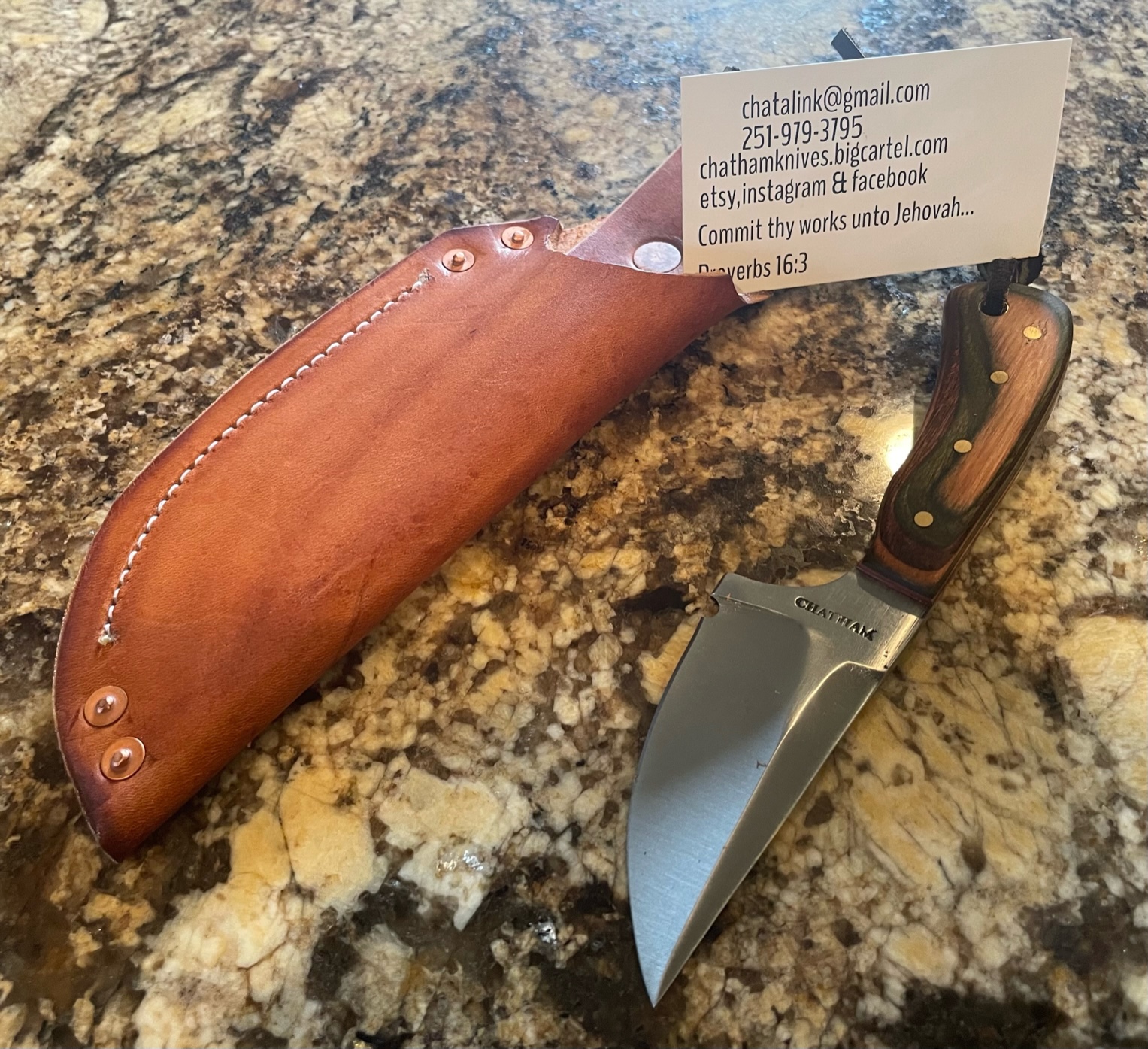
And 15 years later he has a business creating high-end knives using primitive tools and repurposed metals. Oh, and each knife sold comes with a custom-made leather sheath.
“I was always involved with the local arts and crafts and made money selling prints of my original works at festivals,” he recalls. “I decided to make 20 knives and apply to the Daphne, Alabama, arts and crafts festival. My first show was a sell-out.”
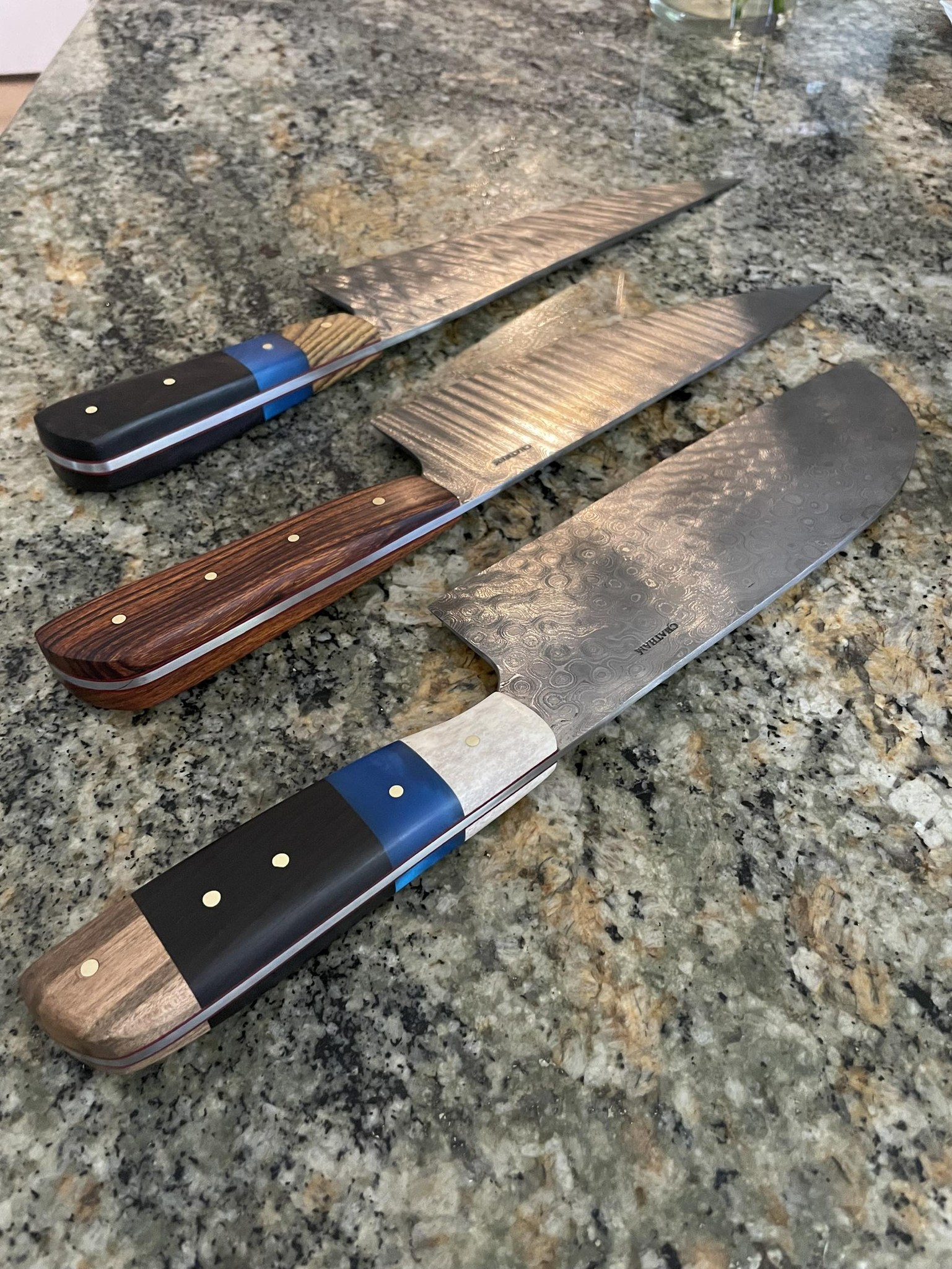
His success prompted him to apply to Garden and Gun Magazine “Made in the South Awards” with his chef knives and was awarded runner up in the chef knife category. With that award and confidence, he made the decision to be a full-time knife creator.
“I’ve been full time since that time. I’ve been so blessed to have been published in a few other magazines, and I currently showcase in four or five large shows per year,” Chatham said. “I also participate in a few reenactments at a local fort each year.”
He said his reenactments include coal forage and smithing as was done in the 1800. He said guests enjoy the demonstrations, and he enjoys sharing the history of the craft. His signature chef knives are made from old circular saw blades that are up to 80 years old. They are hand forged and finished from fire to anvil. He uses propane to forage while using coal in demonstrations. “
He said knowing that “sweet spot” is relative tricky, but he enjoys the challenge. He has also made heirloom items for families that repurpose an old axe head used by a relative and give it new life and a different use. He said the repurposing allows families to have the continued connection with the loved family member.
Much of his artistic talent he draws from his own family whose members who have a variety of artistic characteristics.
“I’ve always been creative in a way, but I always go back to my early years. To me there’s just nothing like the sunset on the Escatawpa River or it rising in the Pascagoula swamp. I guess I’m just weird like that—or simple like that.”
*Photos are courtesy of Michael Chatham
