



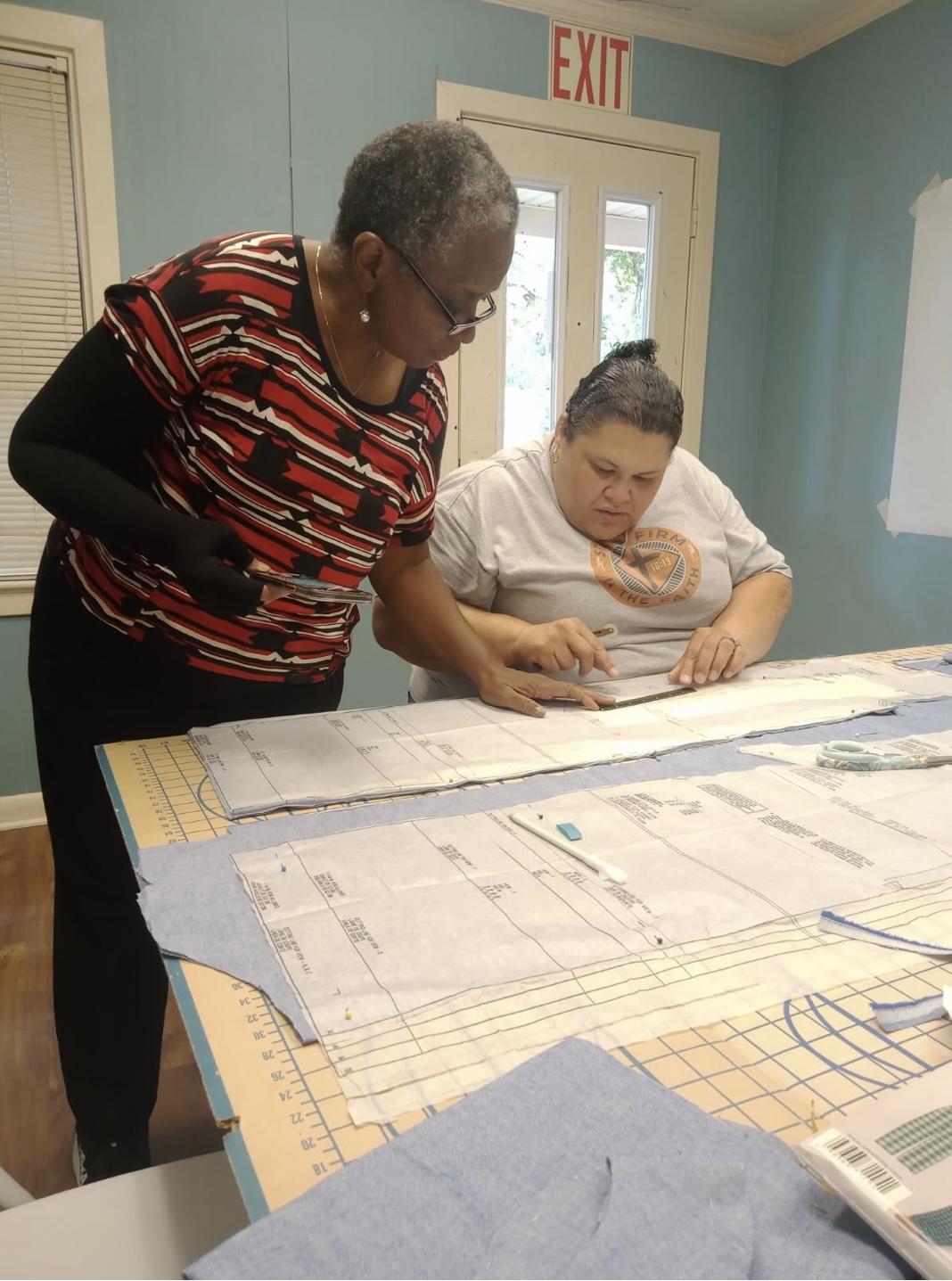
When Lynn Martin talks about sewing, her voice softens—not out of nostalgia, but out of a deep, steady respect for a skill that shaped her life. She grew up moving around the Southwest and the Deep South, the daughter of an ironworker whose union jobs carried the family from Mississippi to Arizona, Texas, and Louisiana. Her father helped build landmarks like the New Orleans Superdome, but it was her mother who built something just as lasting: the family’s clothes, and Lynn’s love for sewing.
In a household with five children, handmade clothing wasn’t a hobby—it was survival. Lynn remembers watching her mother sew with the kind of admiration that turns into determination. She wanted to learn how to make her own clothes, to have the same quiet power her mother had. The first piece she ever completed entirely on her own was an apron in her high school home economics class at Salem Attendance Center in Tylertown. She cut it from a paper pattern, stitched it one careful step at a time under the strict eye of a teacher who didn’t allow shortcuts. When she finished, she knew it was perfect. Not perfect because it was pretty, but because she had earned it, stitch by stitch.
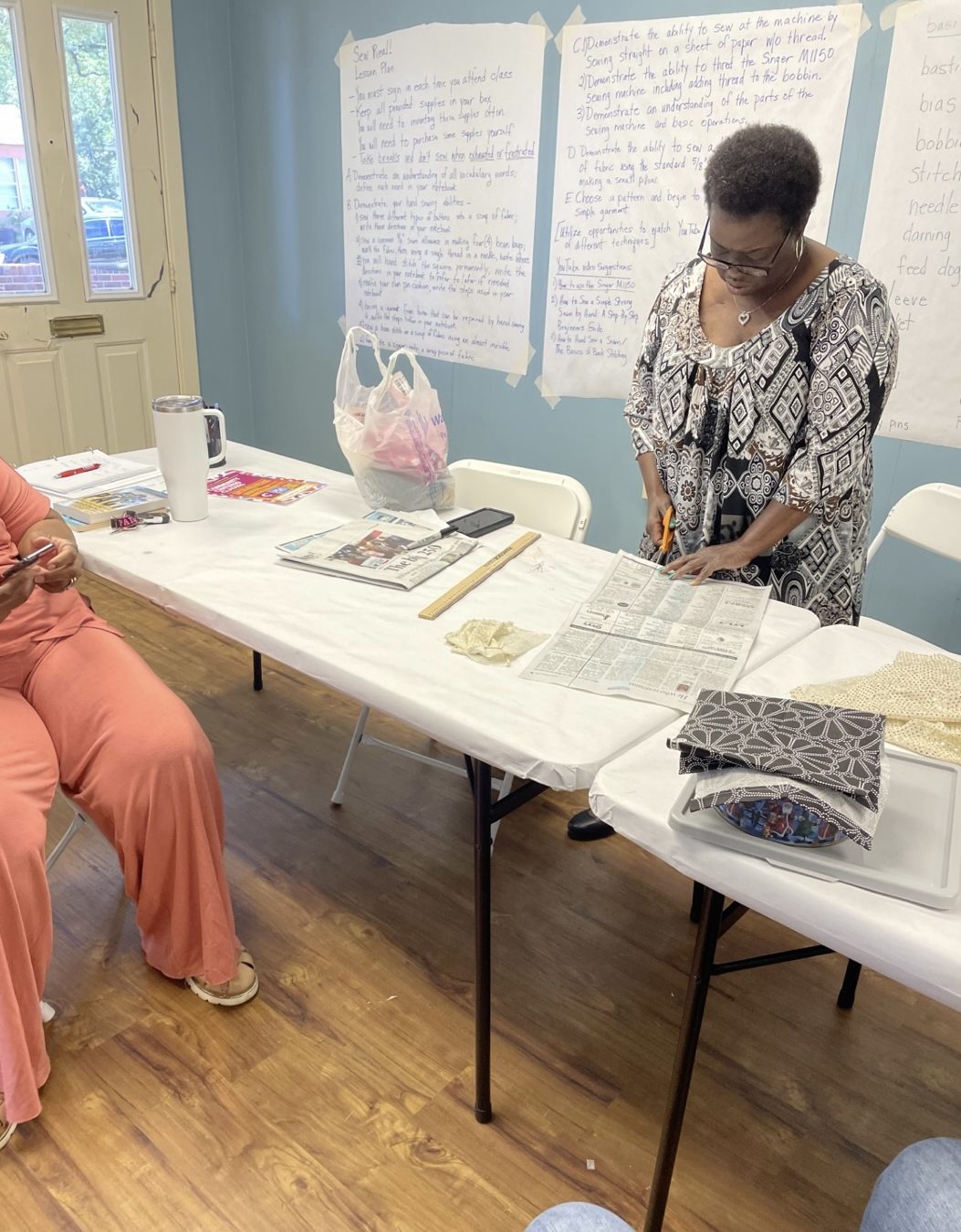
Today, Lynn carries that same patient precision into The Jewel in McComb, where she teaches free sewing classes to anyone willing to show up and learn. Offering the classes at no charge was never a question in her mind. The Jewel—a building named for community advocate Jewel Rushing—felt like a space that needed to hold learning. Lynn had been in his presence only a few times, but it was enough to leave an impression: a small man with a bold commitment to those who couldn’t speak for themselves. Teaching in a building that bears his name felt right. Teaching for free felt even righter.
Sewing, she believes, should be accessible. It saves money. It fosters creativity. It gives people a level of independence they may never have experienced. And for those who walk into her classroom unsure of their abilities, it can be a quiet kind of empowerment.

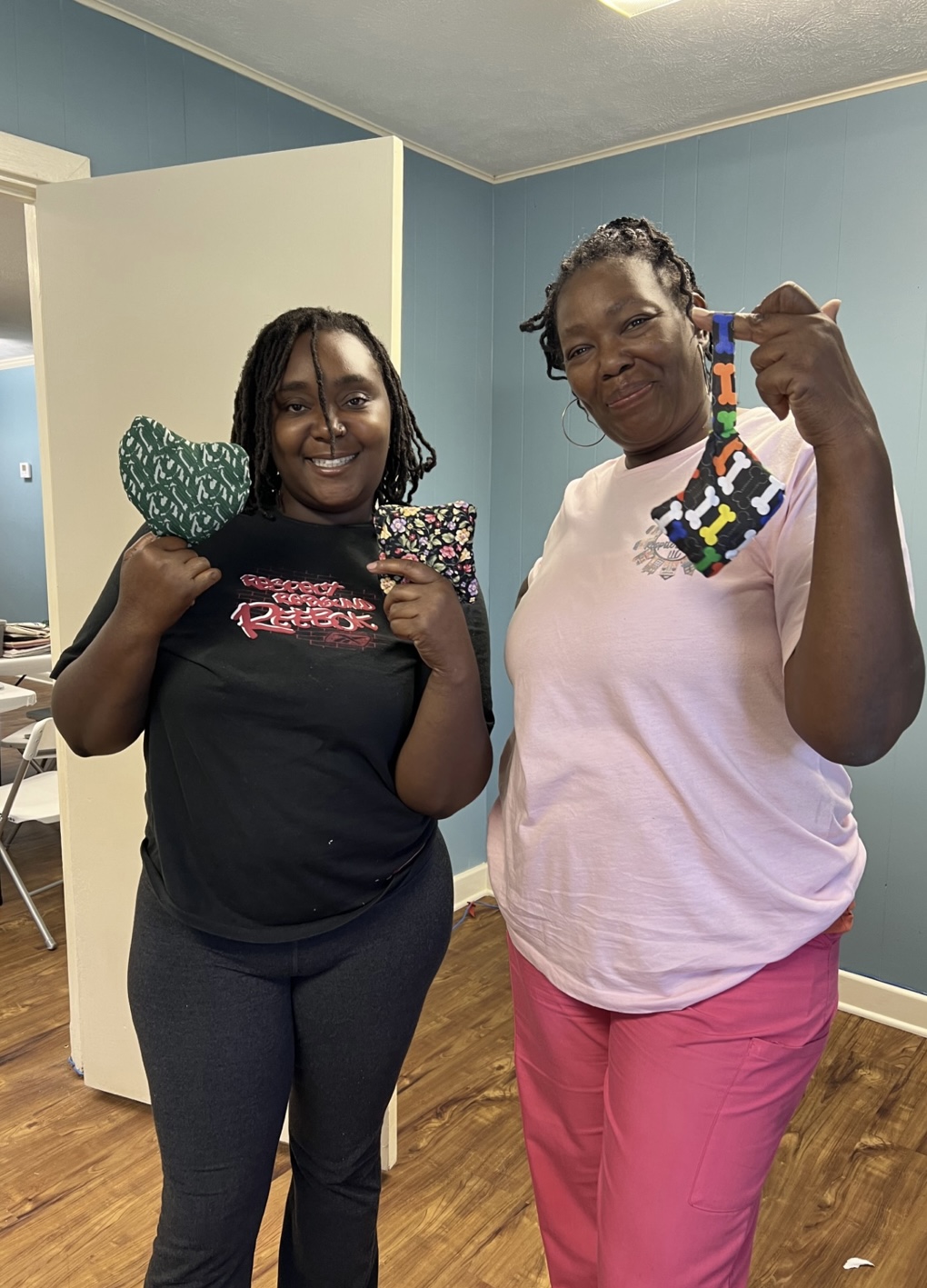
Lynn smiles when she thinks about her students—some of whom have been coming since July. She loves their excitement when something finally comes together, how they hold up a finished piece and brag on it a little. “I want one just like that one,” she always jokes back. To her, those small victories are the heart of the classes. The joy isn’t just in the garment—it’s in the confidence that blooms when someone realizes, I made this.
The classes exist because of generosity: a grant from the Fern Fund, donations from community members, support from the McComb Housing Authority and Pike School of Art. A woman once showed up with an old Sears Kenmore sewing machine she’d been hauling in the trunk of her car, unsure what to do with it. Lynn gladly took it in. But the biggest challenge isn’t funding—it’s commitment. Getting people to show up, to be patient, to practice. Sewing takes repetition. It takes sitting still long enough to let your hands learn. As Lynn says, it’s like anything else: if you want to be good at it, you have to keep at it.

Still, she’s motivated by every button that gets sewn, every machine that gets threaded correctly, every moment someone’s eyes light up because they finally “get it.” Those tiny breakthroughs keep her going. So does the community, which continues to donate fabric, machines, and encouragement.
What Lynn hopes to build goes beyond adult classes. She wants to teach children—because teaching, she says, is how adults give hope to the young. Passing on a skill is more than instruction; it’s an act of belief. It tells a child: You’re capable. You can make something out of nothing.
Her message to the community is simple: even when the headlines are heavy, there is still good happening in our neighborhoods. Learning, teaching, and showing up for one another are ways of proving it.
Of everything she’s ever sewn, Lynn’s favorite project is a collection of small fabric neck bags she made for her mother—just big enough to hold a phone and a pair of glasses. Her mom loved them so much she shared them with friends. They’re functional, thoughtful, and one-of-a-kind. Much like Lynn’s sewing classes themselves.
In a world full of disposable things, Lynn Martin is quietly stitching something that lasts: skills, confidence, connection. Thread by thread, she’s giving McComb a reason to be proud—and giving her students something to carry with them long after the class is done.
