


Local parks are great places to visit regularly. For many, the playgrounds, picnic areas, and walking paths are the draw. But what if we could add something else to make a visit more interesting and educational, but not permanent. This is the idea behind ephemeral art; the installation of temporary artwork designed to be short-lived. The creation of sand sculptures on beaches is a great example. The Coast Ephemeral Art Project was launched to bring this idea to local green spaces.
The Walter Anderson Museum of Art (WAMA) is leading this effort, starting with an installation of ephemeral art at the Sawmill Landing Park in Moss Point. By design, the park is nature-based, focused on fostering the restoration of native trees and shrubs across the 2.75-acre site. The park is a great example of community-based engagement during its establishment. An 800-ft elliptical walking path provides visitors with a nice experience through the park, with the central area left to be on the wilder side (cut only occasionally).
As such, this was a perfect place to launch the Coast Ephemeral Art Project with a goal of inviting people to explore beyond the established pathway. “The Coast Ephemeral Project demonstrates how art can inspire meaningful conversations about our relationship with the natural world,” said Sandra Bilbo, WAMAs Director of Arts and Environmental Education. “By engaging young people in hands-on environmental artmaking, we hope to foster curiosity, stewardship, and a deeper appreciation for the unique ecosystems that define the Mississippi Gulf Coast.”
The key to this approach is the engagement of middle school students, inspired by celebrated Mississippi artist Robin Whitfield. Robin is known for her use of biodegradable installations that come from the spaces where she works. Her work with students at the Mary C Cultural Arts Center in Ocean Springs was a great example of inspiring young artists to make connections with nature. Robin is an artist and a naturalist who is adept at linking these two worlds.
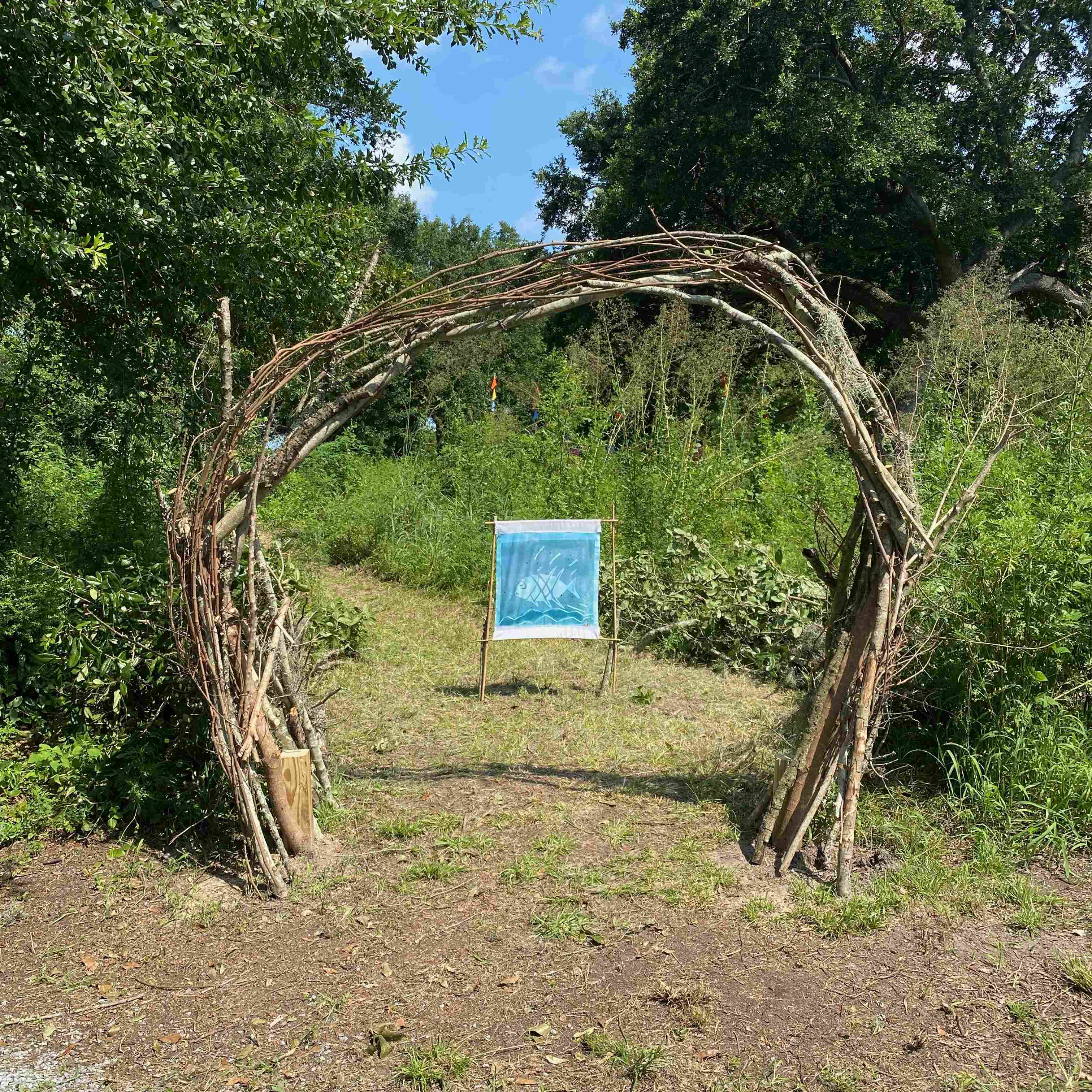
For a “warm” week in late June, Robin and Sandra worked with seven middle school students to create what they call portals into the heart of Sawmill Landing Park: one for earth, water, and sky that each led to a central place in the park. They invited people to venture away from the pathway to experience the park from a different perspective – up close. Robin’s superpower is how she can look at the pieces and parts of a green space and use them, with her young partners, to create something that invites you inside.
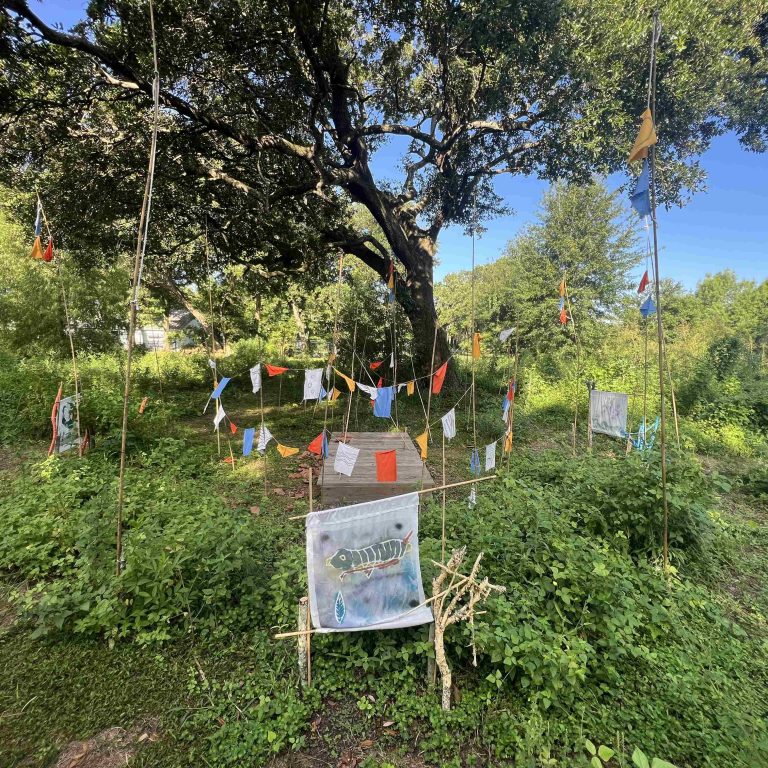
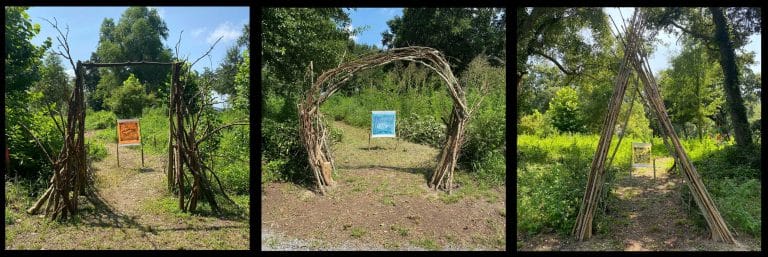 For each portal, students chose mascots that adorn banners at each entrance, ending at the central green space. Skinks represent the earth, butterflies the sky, and fish the water. Numerous smaller banners fly in the center of the park where all three worlds come together. The portals themselves were inspired by some of the seven motifs that Walter Anderson used in his art, all made with local organic materials.
 In the end, Azalia, Boe, Cyrus, Emma Kate, Miya, Trinity and Raygen ended their week-long experience with Robin and Sandra with a better sense of the value of nature, and with a connection with a park they are helping to invite people to visit.
The Walter Anderson Museum of Art will continue its commitment to Arts and Environmental Action through the Coast Ephemeral Project. The Sawmill Landing Installation sets a great example. This project was supported in part by the South Arts Cross-Sector Impact Grant, with support from the City of Moss Point, the Rotary Club of Moss Point, and the Pascagoula River Audubon Center.
Photos courtesy of Sandra Bilbo
