



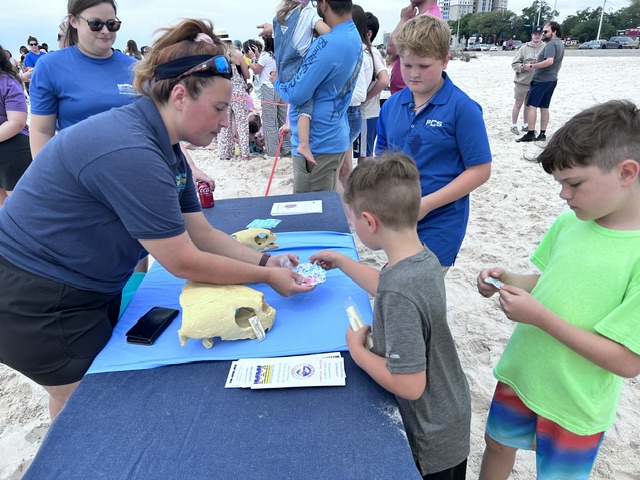
Storm clouds threatened and laughing gulls called as my three children and I made our way to the crowded beach where a portion was sectioned off. This was our second time attending a sea turtle release. The crowd of all ages beamed with excitement and anticipation. Up ahead, a table displayed literature, stickers, and turtle skulls. Staff from the Institute of Marine Mammal Studies were ready to educate, interact, and host this real-world science lesson.
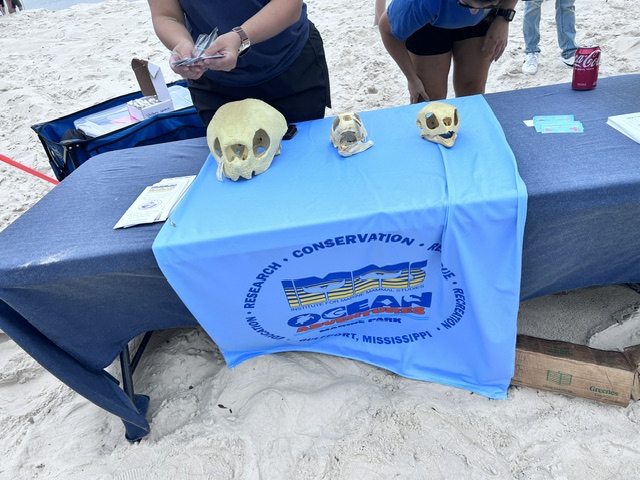
As we made our way to the information table, my children gathered some of the freebies. There were stickers, sea turtle and marine mammal crosswords, stranded animals hotline cards, and a stranding response guides. The hotline card included the phone number to call if anyone came across stranded dolphins or sea turtles (1-888-SOS-DOLPHIN). The stranding response guide contained a wealth of information including:
-the history and mission of IMMS
-what stranding is
-what species IMMS responds to
-what to do if you find a stranded animal
-what IMMS does with stranded dolphins and sea turtles
-how IMMS conducts stranding responses
In the time leading up to the release, staff answered questions and educated everyone. A staff member held the sea turtle that was to be released and showed him off to everyone. This gave the observers a chance to ask questions. Many people asked what the turtle’s name was and how long it had been at the rehabilitation facility.
Right before the big event, Theresa Madrigal, the stranding coordinator, introduced herself and discussed the role IMMS plays in helping to rehabilitate Kemps ridley sea turtles. She informed us that they assist with turtles from the East coast that end up cold stunned from not migrating before winter storms. Many of them contract pneumonia or secondary infections as a result. Turtles that are found are first triaged at the New England Aquarium then flown South and brought to the facility.
We all learned more about Nutmeg before his final departure. He was a Kemps ridley sea turtle, the most endangered species and came from Massachusetts. They received him at the end of November and nursed him back to health.
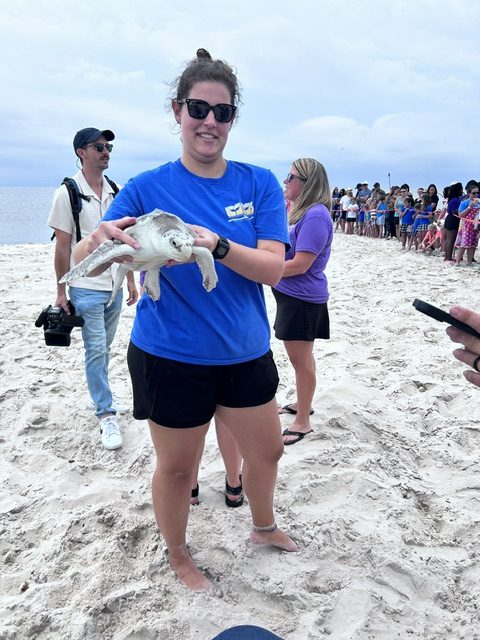
Kemps ridley sea turtles are the most endangered sea turtle species. We learned they are very common along the Mississippi gulf coast. They love blue crabs and X-rays have even shown full crabs in the stomachs of these turtles. Many times their love of free food leads them to being trapped off of fishing piers locally.
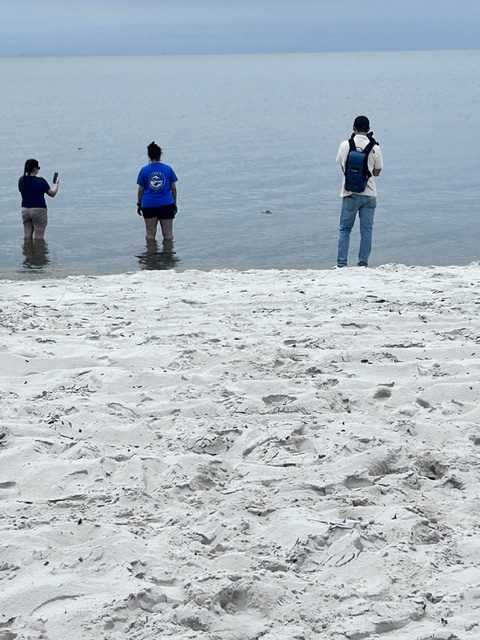
At last, it was time to watch Nutmeg be released back into the Gulf. While he was held in the air he flapped his fins vigorously trying to propel himself. He was ready! A teacher with a class on the field trip had the honor of carrying Nutmeg to the water’s edge. The crowd cheered him on as he was released and began to swim away.
This was our second time attending a sea turtle release and we took much from it. The event was livestreamed on Facebook for anyone not there in person. The releases happen all year at various times and are announced a few days before the event. We loved getting out and watching God’s creation in action!
There are many more resources for anyone interested in learning more. On imms.org, you will find information about rescue and rehabilitation. You can track the tagged sea turtles and read about other research the team has done. There are in depth articles and media clips about cold-stunning. All of the information really helps science, geography, and even history come alive!
*Photos are courtesy of Kourtney Siano
