



Mississippi researchers will help lead a new $13.5 million national effort to expand U.S. seafood production, positioning the Gulf Coast at the center of aquaculture research and development.
The University of Southern Mississippi and Mississippi-Alabama Sea Grant Consortium were selected to participate in the National Oceanic and Atmospheric Administration‘s Cooperative Institute Fostering Aquaculture Research and Markets, or CIFARM.
The five-year initiative, led by the University of New Hampshire, aims to improve aquaculture technology and strengthen domestic seafood production.
“The U.S. still doesn’t do very much aquaculture, particularly marine aquaculture,” said Reginald Blaylock, director of USM’s Thad Cochran Marine Aquaculture Center. “We eat a lot of seafood — and we import it.”

According to NOAA, Americans consume about $24.2 billion in imported seafood each year, much of it farmed in other countries.
“For years, we’ve been interested in trying to change that so that we actually produce the food that we eat here and get the economic benefits of the jobs that the industry creates and the food security,” Blaylock said.
Mississippi leads Gulf Coast role
USM and the Mississippi-Alabama Sea Grant Consortium will serve as the lead representatives for the Gulf of Mexico region within the national cooperative.
“(The institute) will be centered at the University of New Hampshire, but we have regional centers around the country,” Blaylock said. “This will be a large, coordinated effort among the groups.”
Steve Sempier, director of the Mississippi-Alabama Sea Grant Consortium, said the organization will work with Sea Grant programs in Texas, Louisiana and Florida to identify regional aquaculture needs and opportunities.
“Sea Grant and USM are the leads for the Gulf region right now,” Sempier said.
Researchers will use input from industry, coastal communities and other stakeholders to identify knowledge gaps and guide future research priorities.
What researchers will study
At its most basic level, aquaculture is farming plants or animals in water, according to Blaylock.
“It can be aquatic plants, plant-like organisms. It can be animals, fish, shrimp, whatever — anything that you’re growing, cultivating in the water,” he said.

NOAA said CIFARM projects will focus on demonstration farms, engineering, artificial intelligence, environmental forecasting, risk management and seafood markets.
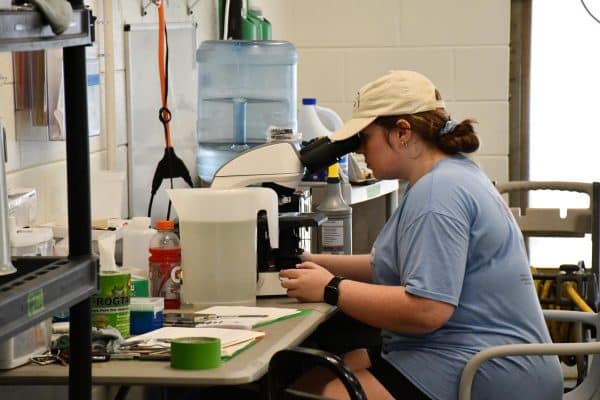
At USM, researchers will contribute expertise developed through years of studying marine species and production methods to help farmers use the best methods and species for aquaculture.
“We’ve worked with a lot of different species here to try to alleviate the bottlenecks in (aquaculture),” Blaylock said.
Sempier said the institute represents NOAA’s largest coordinated investment in aquaculture research.
“This is the first large-scale cooperative institute that’s focused specifically on aquaculture,” Sempier said. “It’s very exciting to see that NOAA is interested in investing in the future of aquaculture throughout the country.”
Why it matters on the Gulf Coast
Sempier said aquaculture in the Gulf has grown over the last decade, particularly in oyster production, but the project will examine a much broader range of opportunities.
Researchers will study both offshore and coastal aquaculture systems and explore the potential for species ranging from shellfish to finfish.
“This is a much broader look at the potential for aquaculture growth throughout the country,” Sempier said.
He said expanding aquaculture could create new opportunities for people who make their living on the water while supporting local economies.

“There are a lot of barriers and challenges, whether it’s engineering or environmental or economic, that have to be overcome,” Sempier said.
He said the project could also help answer regulatory questions that have slowed aquaculture growth.
Public input sought
Both Blaylock and Sempier said community input will play an important role as the project develops.
“It doesn’t matter if you can grow a particular product if people are not interested in that product,” Blaylock said.
Sempier said Sea Grant plans to hold workshops and listening sessions beginning next year to gather questions, concerns and ideas from Gulf Coast residents.
“We would love to get input from anybody who’s willing to share their thoughts and opinions as this project ramps up,” he said.
For Mississippi, the next five years could help determine how much of America’s seafood future is shaped from the Gulf Coast.
“The U.S. imports almost 90% of the seafood it eats,” Blaylock said. “What we want to see come out of this is American products on American plates.”
Contributors: and
