



Summertime Nature with Bored Kids – Nighttime Activities
This is the second in this series of suggested activities for kids to do during summer, besides being glued to screens. In this case, nighttime is a great chance to entice them outdoors to listen and look for nature in the dark. Who knows, it may catch on!
Sounds of Our Summer Nights
Stepping out of our air-conditioned homes opens a symphony of sounds from the nightshift of critters in our world. The most obvious is the chorus of tree crickets singing in the trees, with their songs waxing and waning in volume and even shifting from one area to another. A variety of tree crickets sing in our region, and some may even be attracted to porch lights or sheets (see below) for close up views.
You may even hear the calls of common owls, like the low “Whinny” of Screech Owls, the “Who Cooks for You” call of Barred Owls, or the even lower “Who Hoo, … Who” of Great Horned Owls. Chuck’s Wills Widows sing at night in some areas. And Red Foxes may be heard barking at night, and if you are lucky, you might hear the chatter of Flying Squirrels. Patience and silence are important.
Lights in the Dark
Sadly, fireflies are not as common as they used to be but are still exciting to see when they are out. Timing is important, as they are most active about or right after twilight.
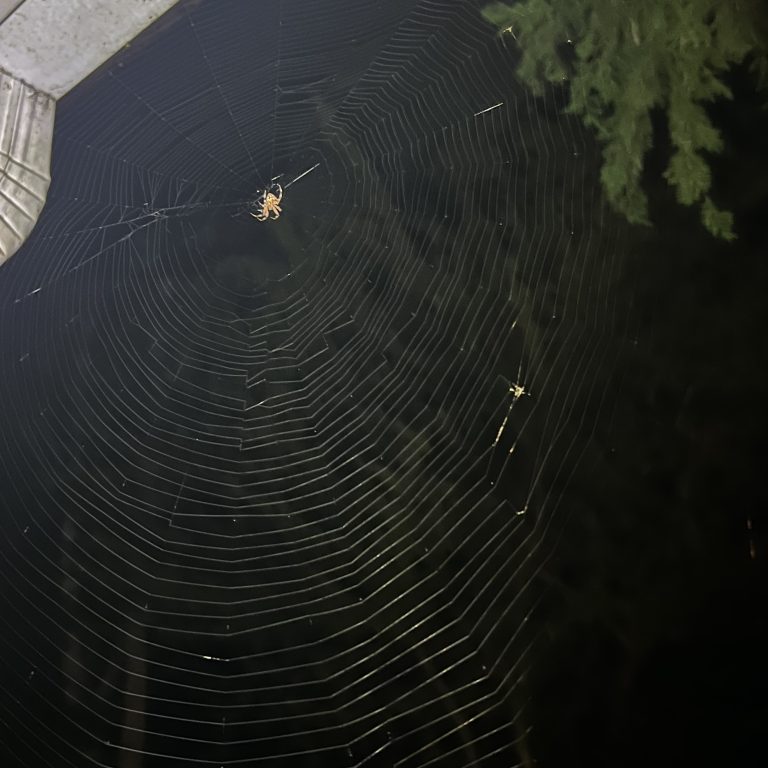
A great way to get your kids out into the yard or woods is with a small flashlight that they can use to find spiders lurking in the grass or in shrubs. Spider eyes reflect light when it is aimed directly at them. A flashlight held up against your head at the level of your eyes will help you find them. Slow approaches toward them will reveal them up close, especially for wolf spiders that wander in the grass, leaves, and on shrubs. Of course, the ones you find are the ones that happen to be facing in your direction. Many more are facing elsewhere. Webs of the common orb weaving spiders are also easily found and you may catch one busily weaving a new web or repairing an old one. Fun to watch.
 Critters on Tree Trunks
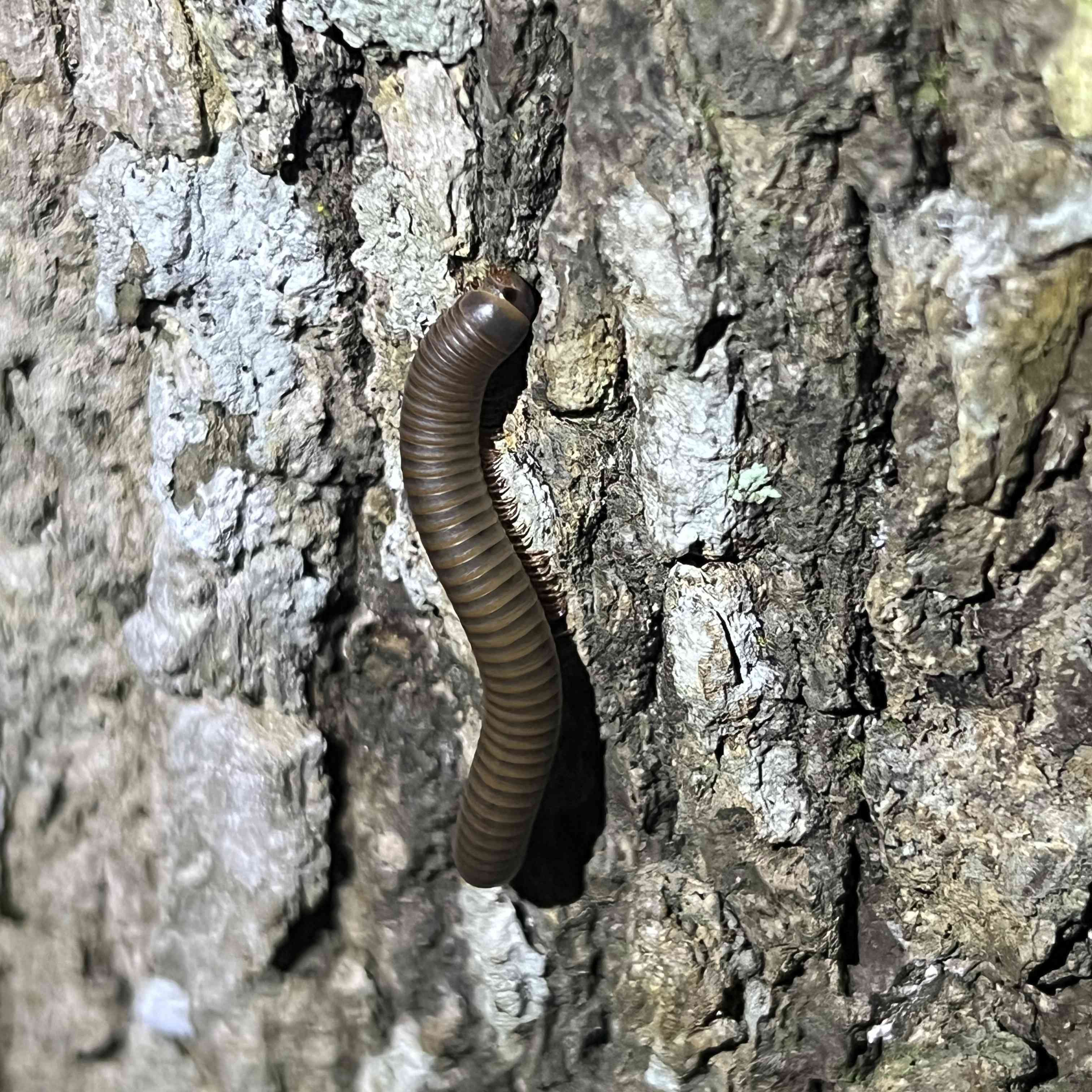
And then there are the creatures that travel tree trunks at night, arising from their daytime hiding spots at the base of trees or in the leaves. The American Giant Millipede is the most common of these critters, feeding on algae and fungus on bark. Daddy Longlegs are also common, as are small woodland slugs that prefer the cooler and damper conditions of summer nights.
Moths and Other Nighttime Insects
If you really want to mesmerize kids, hang a small white sheet on an outside wall or line and shine a light on it to attract the many moths, beetles, crickets, and other nigh flying insects that go unnoticed by us otherwise. The variety (diversity) of insects is amazing if you spend the time looking at them all.
So, schedule a Critters of the Night activity to get started. You never know, it may become a regular event. Those tablets may then become the vehicle for your kids to learn more about what they see or hear. The iNaturalist app will help you identify many of the creatures you find.
Hope to see you in our great outdoors!
