




People were not the only creatures impacted by Hurricane Katrina. And although helping people recover was the priority, we soon turned to helping our feathered friends. As it turned out, these efforts provided folks with a diversion from their toils at home, and a reason for hope, that normal could return, including their own backyards.
The Great Backyard Recovery emerged from a phone call from my now late friend, Judy Toups, a local birding expert, who had shared her passion for birds for years through her weekly articles on birding in the Sun Herald. Judy was a founder of the Mississippi Coast Audubon Society (early 1970s) and the two annual coastal Christmas Bird Counts that continue today. She was a force of nature, and someone who was hard to say “no” to. I didn’t!
Judy’s voice over the phone was firm – “Mark, the trees are down, and our birds need homes. We need to build them some homes and rebuild the forests.” My response was, “On it!” Thus, was born the Great Backyard Recovery Program for south Mississippi. Over the next 18 months, hundreds of people helped us do just that, and more. Here is their story.
It began with the idea of using readily available materials to build simple bird houses that anyone could make. The simplest design was based on a single standard fence board, that could be cut with a hand saw, and nailed together with ease. As it turned out, there was plenty of material around in the form of downed privacy fences. Although using treated wood is not ideal for birdhouses, weathered boards are acceptable, and Judy helped spread the word that Mark LaSalle and Charlie Brenke would come get whatever you had to offer.
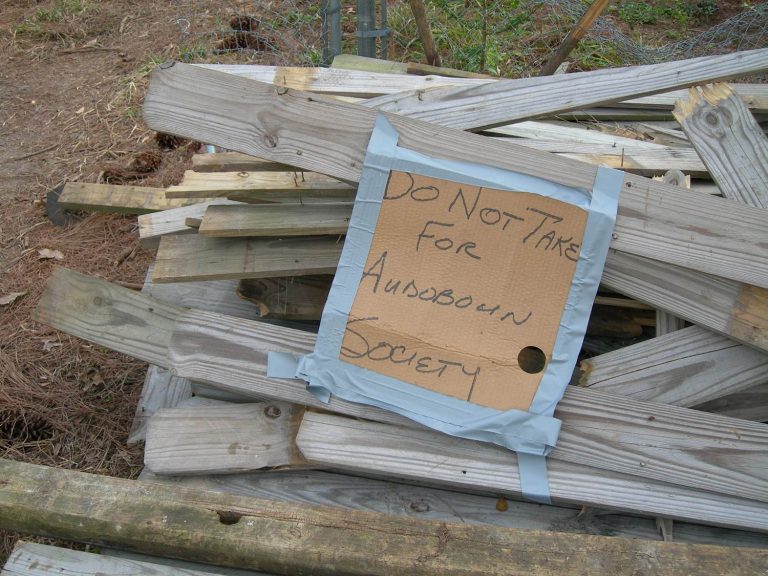
Charlie and I ran the roads with my small trailer to pick up piles of boards, some clearly labeled “Save for Audubon”, to save them from the storm debris haulers. With the help of fellow birders, we cut them into kits and started Judy’s quest at the Peter Anderson Festival, in a misty rain, under a wobbly tent, and equally wobbly table. Within an hour and a half, 100 bird houses left the tent, destined for backyards. Between a set of young “cousins” that were now living together, and many others, we all felt a great sense of accomplishment that day.
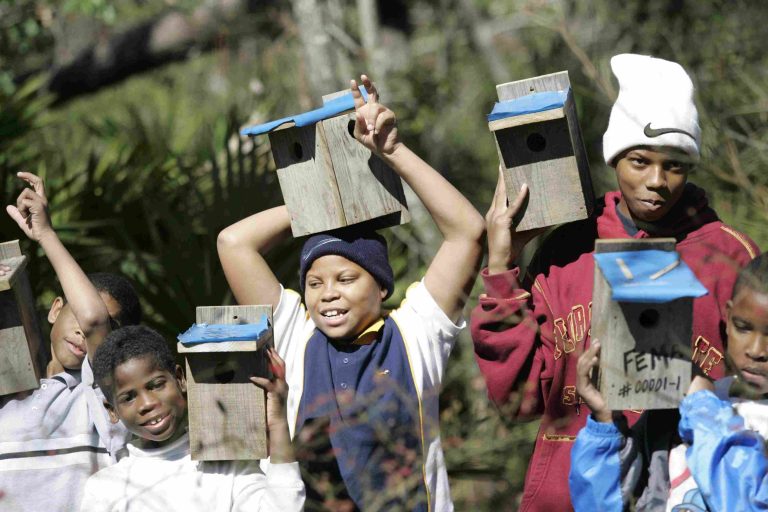
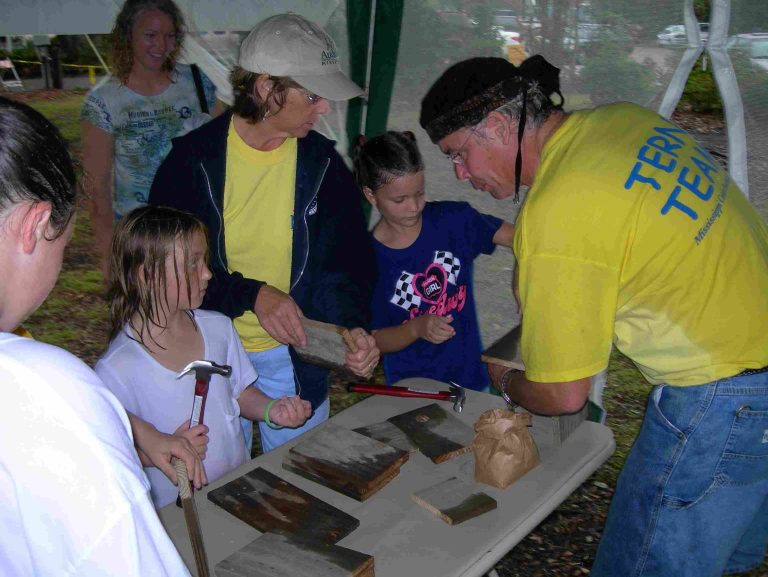 Several more birdhouse clinics followed in communities across the coast. At most sites, they were pounded together on the ground, at a prominent public site, recently cleared of debris, by the young and old. Of these houses, the most touching were the FEMA birdhouses created in the Turkey Creek community of Gulfport, using bits of blue tarp, popsicle sticks, and a magic marker.
 But it did not end there. The National Arbor Day Foundation reached out to Audubon, to help provide trees. Thus, was launched the Katrina Tree Recovery Campaign, focused on distributing bare root trees across south Mississippi and southeastern Louisiana. Folks from across the country could direct their standard $10 and five trees directly to us. Across 20 sites, and three giveaways, over 86,000 trees were distributed. Twenty-one thousand trees were gone within the first hour and a half at the first event.
As with building fence-board bird houses, planting trees gave us all a sense of returning to normal and helping backyard birds, that are important parts of our lives. Judy Toups inspired us to do these things, and in the process, provided a form of therapy that helped us all recover, working together, in the communities we call home.
