


Skip to content
Close Menu

    Subscribe to Updates

    Get the latest creative news from FooBar about art, design and business.

    Most Viewed

    The Old Farmer’s Almanac Has Spoken on Mississippi’s Fall Forecast

    July 25, 2025

    Old Sayings Say It Best

    May 22, 2024

    Actor Jeremy London Calls Mississippi Home

    August 1, 2024

    The Julep Room: A Hole in the Wall with History

    January 8, 2024
    Facebook X (Twitter) Instagram
    Tuesday, February 10, 2026
    Trending
    • A Hattiesburg Mom Turned a Children’s Book Into a Lifeline for a Family Waiting on a Heart
    • Super Sub Mr. B. Celebrates 20 Years in the Classrooms
    • Shipley’s vs. Dunkin’: A Mississippi Girl’s Boston Reality Check
    • From Coast Classics to Your Kitchen: Pizza Spots & Homemade Tips
    • Crazy B’s King Cakes and Bites are a Local Favorite
    Facebook X (Twitter) Instagram YouTube TikTok
    Login
    Our Mississippi HomeOur Mississippi Home
    • Living

      Shipley’s vs. Dunkin’: A Mississippi Girl’s Boston Reality Check

      February 10, 2026

      Crazy B’s King Cakes and Bites are a Local Favorite

      February 9, 2026

      Krewe of Gilles Crowns Royalty in Endless Summer Ball

      February 6, 2026

      A Place to Splash, Learn, and Belong: A Community Vision Taking Shape in Tylertown

      February 6, 2026

      A Forecast of Baseball

      February 5, 2026
    • Arts / Culture

      Theatre MSU Brings the Heat, Razor-Sharp Wit to 2026 Season

      February 5, 2026

      Southern Miss Connoisseurs Series Features World-Class Artists in Free Concerts

      January 28, 2026

      MSU Riley Center Unveils 2026 Spring/Summer Performing Arts Series

      January 23, 2026

      Southern Miss School of Music Welcomes Community to Two Free Concert Showcases in February

      January 22, 2026

      “The Ball” Continues to Stand Alone Among Carnival Events

      January 22, 2026
    • Entertainment

      WMSV The Junction Listeners ‘Rise and Ring’ With On-Air Bulldog Talent

      January 29, 2026

      Where Faith, Family, and Music Meet: Shay and Michi Guess of Mantachie

      January 14, 2026

      From Hawkins to the Coast: Stranger Things Finale Comes to Mississippi

      December 16, 2025

      Love in the Layover: A Holiday Story Rooted in Connection

      December 1, 2025

      Pascagoula Celebrates Alien Abduction Legend

      October 7, 2025
    • Food & Dining

      From Coast Classics to Your Kitchen: Pizza Spots & Homemade Tips

      February 9, 2026

      Exploring the Coast, One Bite at a Time

      February 2, 2026

      A Coastal Favorite for Coffee, Conversation, and Comfort Food

      January 25, 2026

      Ole Miss Football Victory Tastes Like Chicken

      December 29, 2025

      Leftovers With Style: Turning Holiday Extras Into Inspired Meals

      December 28, 2025
    • Environment

      Great Horned Owls – So Many Cool Facts

      February 7, 2026

      Watching Birds That Flock Together in Winter

      January 31, 2026

      The Gift of Wetlands – Tidal Marshes

      January 24, 2026

      We’ve Been Here Before: Remembering Mississippi’s Ice Storm of 1994 as Winter Weather Returns

      January 22, 2026

      Winter Tides

      January 17, 2026
    • Lagniappe
      • Business
      • Sports
      • Education
      • Health & Wellness
      • OurMSVoices
      • People
    Subscribe
    Our Mississippi HomeOur Mississippi Home
    Home»Environment»Pitcher Plant Moths – Eating the Plants that “Eat” Bugs
    Environment

    Pitcher Plant Moths – Eating the Plants that “Eat” Bugs

    Mark W. LaSalle, Ph.D.By Mark W. LaSalle, Ph.D.April 11, 20194 Mins Read38 Views
    Share Facebook Twitter Pinterest LinkedIn Tumblr Reddit Telegram Email
    Share
    Facebook Twitter LinkedIn Pinterest Email Copy Link

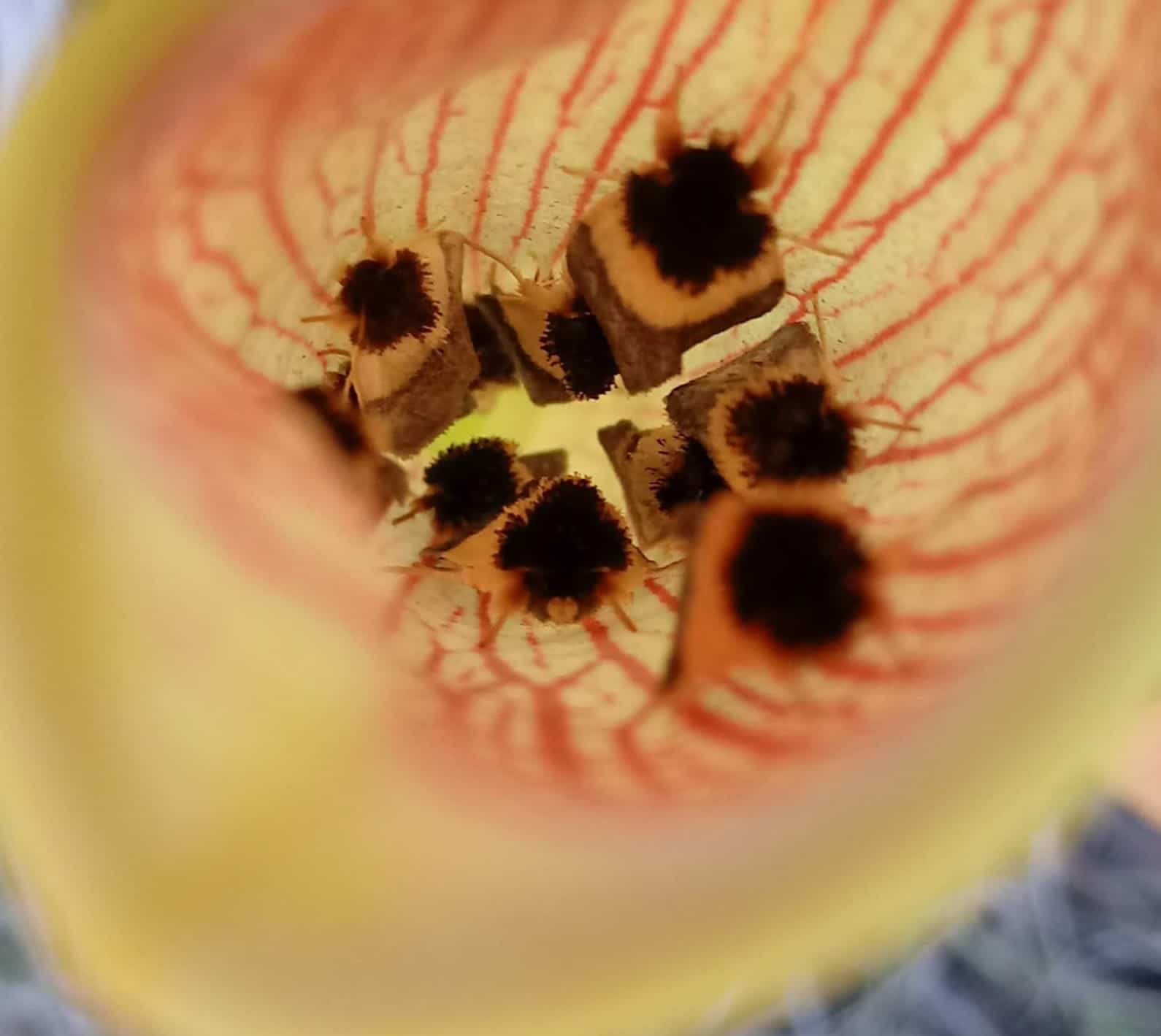
    Not all insects are victims of pitcher plants, one of the most recognized types of carnivorous plants in our world. The design of the leaves (in the shape of hollow pitchers) of these plants is all about luring, then trapping insects that die and provide nutrients that are lacking in the plant’s environment. Opening up an old pitcher plant leaf will reveal the hard parts of ants, beetles and other insects that have found their way inside and died. For as many as a dozen species of insects and spiders, however, pitcher plants are home, providing a source of food and shelter.

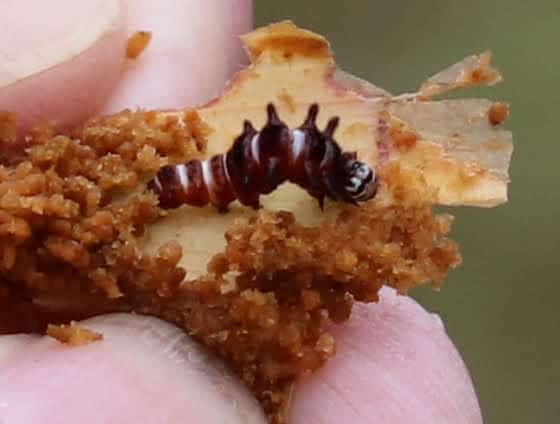
    The most commonly encountered of these pitcher plant insects is the Pitcher Plant Mining Moth, Exyra semicorocea. This curious yellow and black moth lives its entire life in and around all four of our local pitcher plant species and can be seen or detected throughout the year. Adults are most noticed during the spring when they emerge from overwintering pupae. The newly emerging leaves of spring can be packed with several adults, hanging out during the day, waiting for nightfall when they emerge to mate and seek new pitchers to lay their eggs.   The caterpillars are striking creatures and can be detected by looking for the telltale signs on the leaves that they feed upon and inhabit. These signs also speak to how adept these caterpillars are at feeding on the tissue of the plant all the while taking steps to reduce their exposure to predators. Firstly, these caterpillars feed on the inner tissue of the walls of the pitcher and do not eat all the way through. A common sign that these caterpillars are present is when you spot the toppled top of a pitcher: the tissue having been eaten all the way around the circumference of the leaf, causing the top to fold on itself. This effectively blocks anything from entering the pitcher, including predators.
    catepillar
    Photo by Lauren McLaurin

    Caterpillars may also lay out a silken web across the mouth of the pitcher that does much the same. Either way, predatory spiders or parasitic wasps are blocked from reaching the caterpillar. With these defenses in place, the caterpillar is free to eat its fill, leaving a pile of light-brown, ball-shaped droppings (known as frass) behind. Should the caterpillar deplete a given pitcher, it can move on to another until fully developed, where it transforms into pupae and later an adult.   Speaking of pitcher plants, our most common species is the Yellow-topped Pitcher Plant, Sarracenia alata, named for its yellow-topped leaves. And yes, the large, bright yellow flowers seen this time of year within our Wet Pine Savannas and along our wet roadsides, belong to this plant: a surprise to many local folks who know the flowers as “buttercups”. Other local species include the Parrot’s Beak Pitcher, White-topped Pitcher, and Purple Pitcher. Yellow-topped and Parrot’s Beak Pitcher Plants can be seen at the Mississippi Sandhill Crane National Wildlife Refuge, while all four species can be seen at the Grand Bay National Estuarine Research Reserve / Grand Bay National Wildlife Refuge.

    Pitcher Plant Moths are but one of the interesting creatures to look for while exploring these great nature preserves that conserve one of the most biologically diverse habitats in all of North America, with pitcher plants being a few of the 350 plus species of plants found there.

    So, while you are out and about enjoying the blooming of our pitcher plants, look for these pitcher plant eaters.   Photos courtesy of Lauren McLaurin.

    Hope to see you all in our great outdoors!!!

    catepillars plants summer
    Previous ArticleLocal high school juniors attend 2019 Youth Leadership Workshop
    Next Article Farmers Market Tomato Sauce
    Mark W. LaSalle, Ph.D.

    Mark is a naturalist and wetland ecologist, providing expertise on wetlands, water quality and environmental impacts of humans. He has also developed and conducted a number of environmental education programs and workshops for youth, teachers, realtors, and the general public on a variety of subjects including wetlands, natural history, and environmental landscaping. Mark is a graduate of the University of Southwestern Louisiana (B.S. and M.S. degrees) and Mississippi State University (Ph.D.). Mark is the recipient of the Chevron Conservation Award, the Mississippi Wildlife Federation Conservation Educator Award, the Gulf Guardian Award, and the Boy Scouts of America Silver Beaver Award.

    Related Posts

    Qu’est Que C’est

    Great Horned Owls – So Many Cool Facts

    February 7, 2026
    Qu’est Que C’est

    Watching Birds That Flock Together in Winter

    January 31, 2026
    Qu’est Que C’est

    The Gift of Wetlands – Tidal Marshes

    January 24, 2026
    Add A Comment

    Comments are closed.

    Stay In Touch
    • Facebook
    • YouTube
    • TikTok
    • Twitter
    • Instagram

    Subscribe to Updates

    Get the latest good news happening in Mississippi!

    Most Popular

    The Old Farmer’s Almanac Has Spoken on Mississippi’s Fall Forecast

    July 25, 20258K Views

    Old Sayings Say It Best

    May 22, 20247K Views

    Actor Jeremy London Calls Mississippi Home

    August 1, 20247K Views
    Our Picks

    A Hattiesburg Mom Turned a Children’s Book Into a Lifeline for a Family Waiting on a Heart

    February 10, 2026

    Super Sub Mr. B. Celebrates 20 Years in the Classrooms

    February 10, 2026

    Shipley’s vs. Dunkin’: A Mississippi Girl’s Boston Reality Check

    February 10, 2026

    Subscribe to Updates

    Get the latest good news from Our Mississippi Home.

    Our Mississippi Home
    Facebook X (Twitter) Instagram YouTube TikTok RSS
    • About OurMSHome
    • Advertise
    • Community Partners
    • Privacy Policy
    • Guidelines
    • Terms
    © 2026 Our Mississippi Home. Designed by Know_Name.

    Type above and press Enter to search. Press Esc to cancel.

    Ad Blocker Enabled!
    Ad Blocker Enabled!
    Our website is made possible by displaying online advertisements to our visitors. Please support us by disabling your Ad Blocker.

    Sign In or Register

    Welcome Back!

    Login to your account below.

    Lost password?