



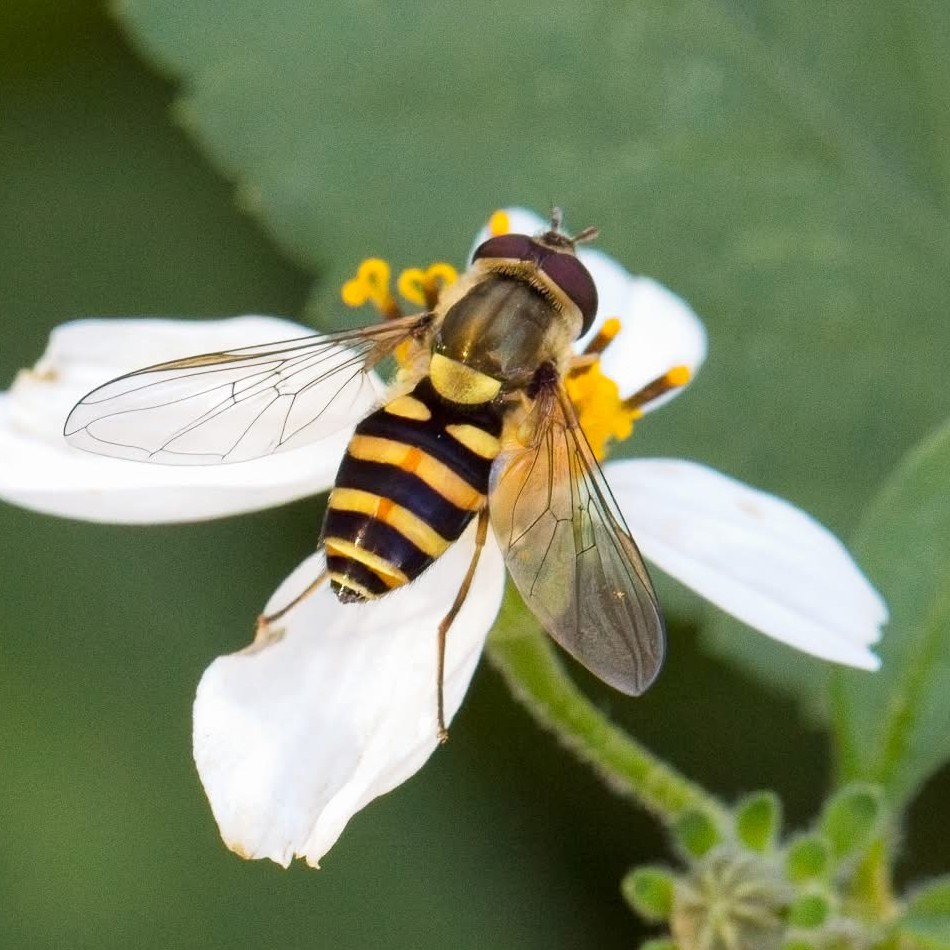
Yes, I am writing about flies – again. In my previous story, An Ode to Maggots, I acknowledged that larval flies get no respect. For the most part, that is true of adult flies as well, especially the species that bite, buzz your face, or fly up your nose. And yet, may I argue that flies are important in our world, whether we appreciate them or not. In part, I offer a few photos of flies that are less offensive, but beautiful, captured with skill by my friends Curtis and Sharon.
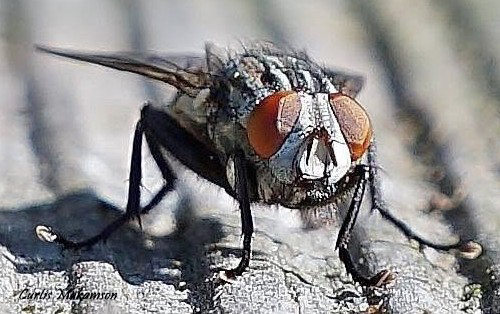
Flesh Fly (Curtis Makamson)
First of all, as with beetles, there are many species globally, estimates ranging in excess of 150,000 species. That is an educated guess, because so many new species are described every year and we have no clue as to how many more species are out there, waiting to be discovered. That is also true of the estimated 17,000 to 19,000 species known from the U.S. and Canada, defined by the scientific world as the Neartic Region.
But this is for adult flies, upon which most of the taxonomy is based, especially the males that are used to define species. In my work with flies, I was often frustrated with limited descriptions of female flies, but particularly stymied by the lack of descriptions of larval flies – maggots.
One statistic has stood out for me, as stated in the two-volume work entitled The Manual of Nearctic Diptera – that less than 10 percent of known species of flies are known as larvae. I had to rear larvae in hopes that I would get a male that someone could identify.
Besides the challenges of identification, let me share a bit about the roles that flies serve in our world, often beneficial to us. Many species of flies are pollinators, some being critical for common foodstuffs. Flower flies are some of the most common pollinators and have beautiful patterns that mimic bees to help protect them from predators. In many cases, flies are as important as bees.
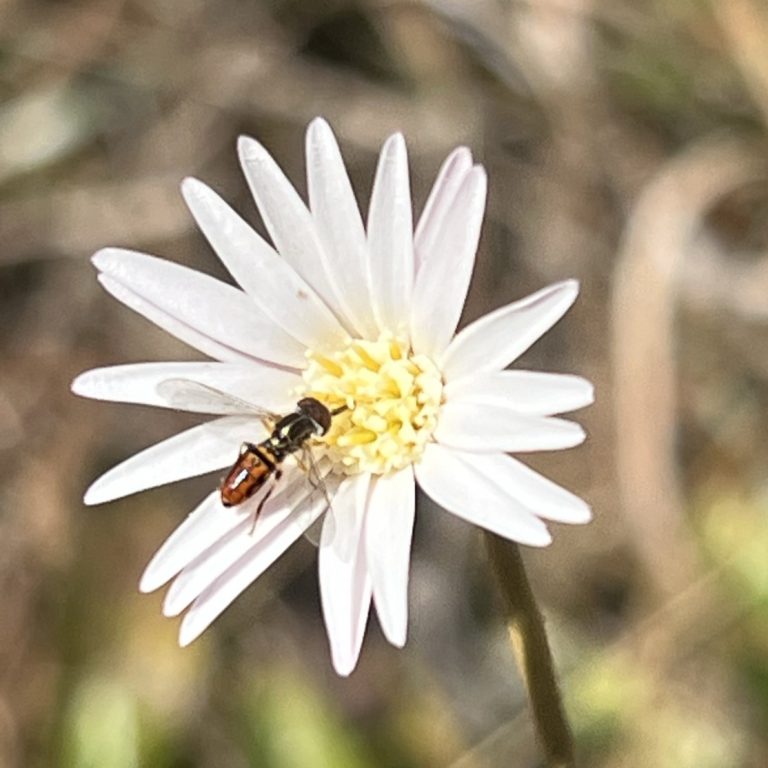
Calligrapher Fly (Mark LaSalle)
Many species of flies are predators on other insects, and as most of us know, the larvae of many species of flies are decomposers of all types of organic matter. Many species of long-legged flies are brightly colored and feed on other insects. Blow flies and flesh flies recycle organic matter. Think of them as garbage handlers for our world.
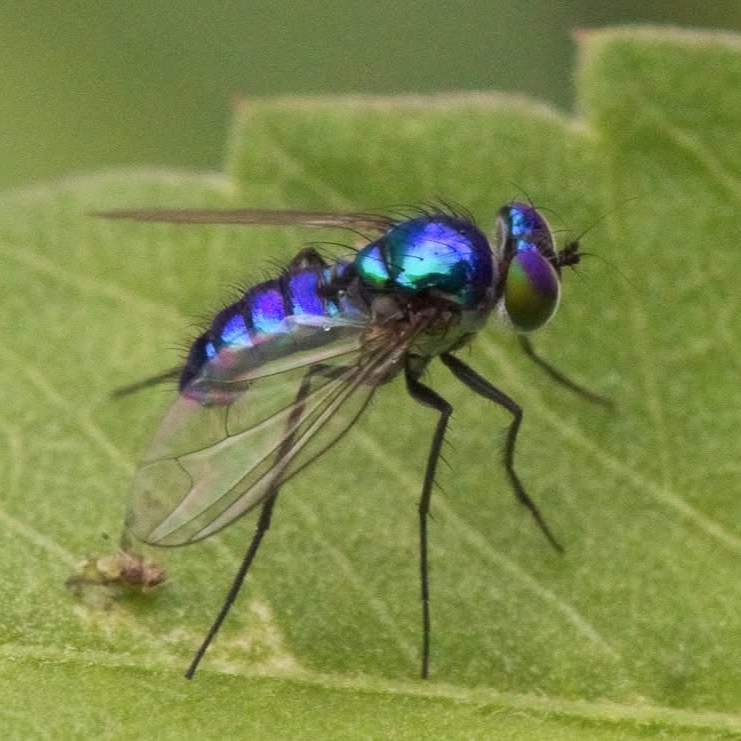
Long-Legged Fly (Sharon Milligan)
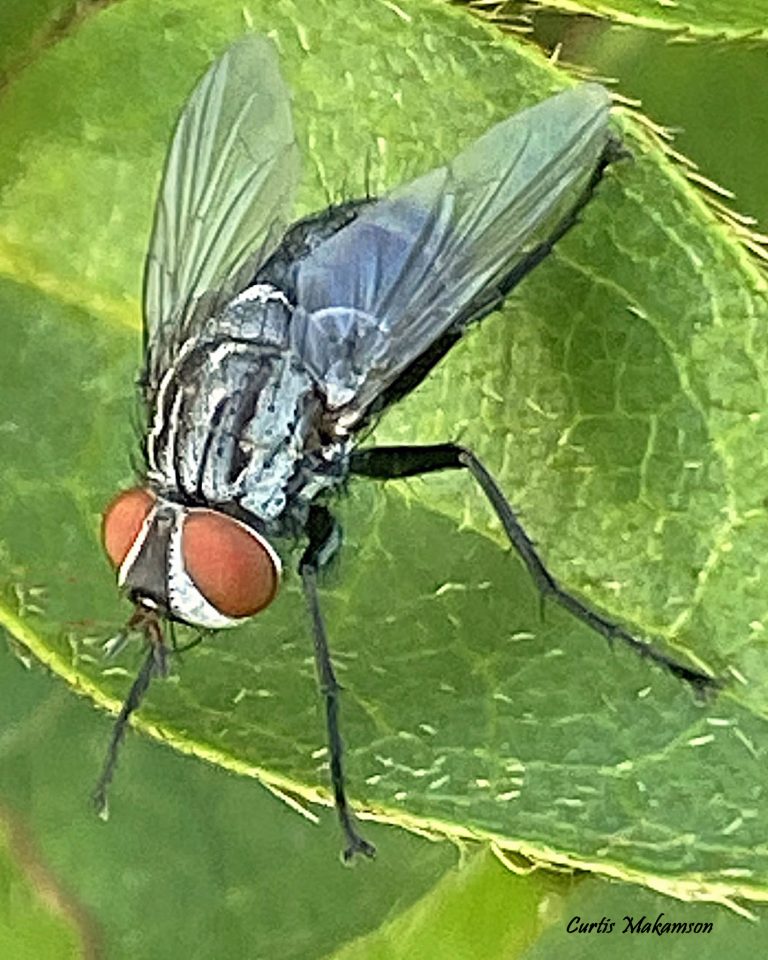
Flesh Fly (Curtis Makamson)
But adult and immature flies are also critical to terrestrial and aquatic food chains. Aquatic larval flies are common food items for many species of fish. Flies feed birds, lizards, frogs, and toads. And some are beneficial in our gardens as predators of pest insects.
I hope that this diatribe about one of my favorite groups of insects helps elevate your appreciation of what they do in our world, mostly good, some not so much. But, we have to appreciate their success. I often recall a quote from a prominent 19th Century naturalist about the diversity of beetles: The Creator would appear to have “an inordinate fondness for beetles”. Flies are not far behind.
Hope to see you in our great outdoors!
Photos courtesy of Curtis Makamson and Sharon Milligan
