



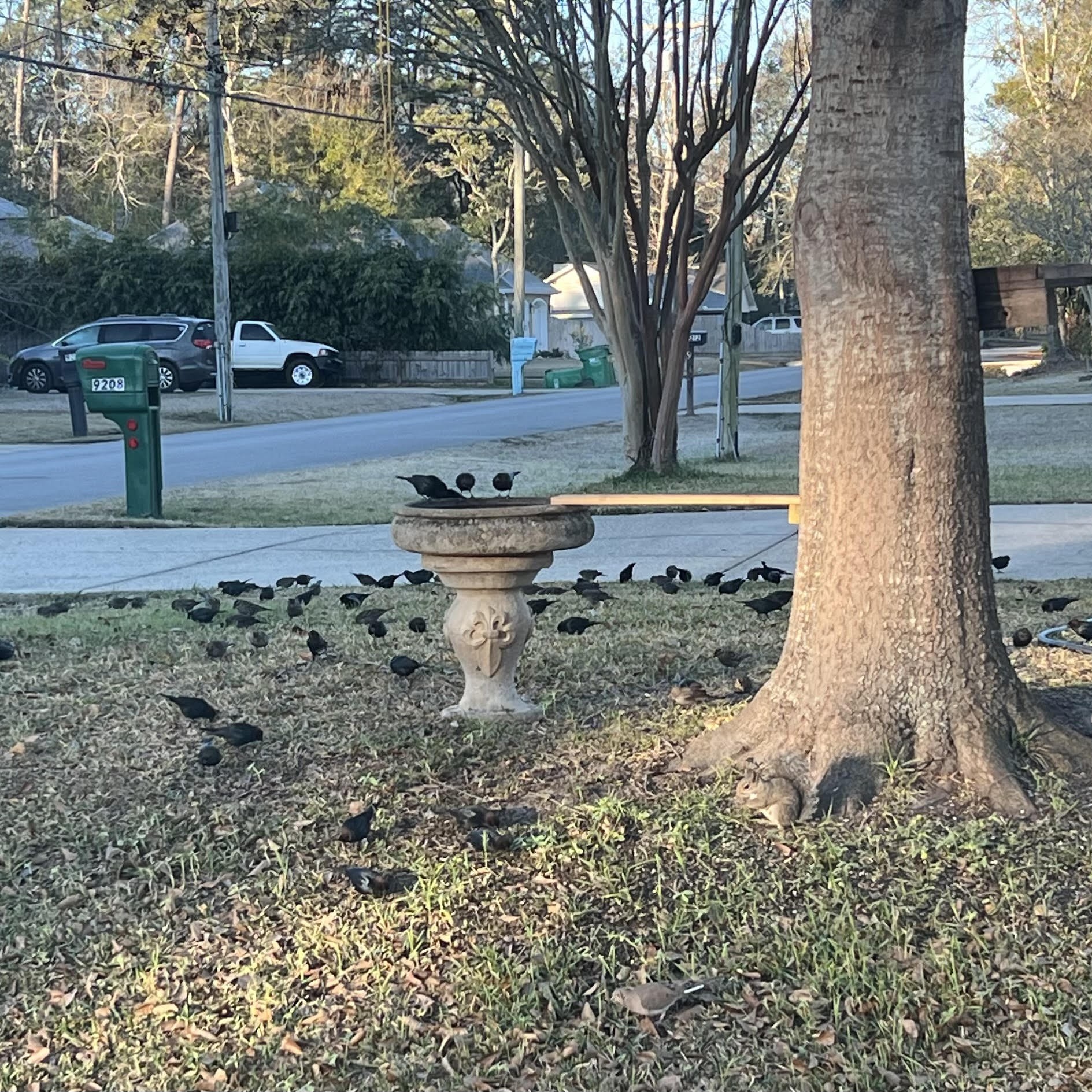
Many kinds of birds flock together in winter, for good reasons. Understanding why makes watching them fun and a chance to appreciate their roles in our world.
Studies about why birds flock together identify two main reasons. First and foremost is safety in numbers. It is much harder for a hawk to pick out an individual in a flock of birds, especially when the flock is on the move. As part of a flock, your chance of surviving an attack is higher – statistics matters!
Being part of a larger group of birds also increases foraging efficiency when resources are found. More eyes looking for food, and less time worrying about predators as part of a larger group, improves the net gain in energy of all. Understanding these reasons for flocking makes looking for flocks easier. Here are a couple of examples of where and what to watch for.
Watching a large flock of American White Pelicans in winter is mesmerizing, especially when they fly in synchrony, high in a bright winter sky. But if you find a flock of these birds floating in a waterway, you may catch them lining up and herding small fishes toward the bank of a bayou where the entire group has a better chance to catch their fair share. Ducks and geese flock together in winter in large coastal wetlands where food resources are abundant.
Many of us also spot larger flocks of blackbirds in a pasture where they glean the abundance of grass seeds, or in the tops of seed-rich trees, like Sweetgum, or under a yard feeder where they gobble up seeds laying on the ground. What makes these flocks interesting is that they are often made up of multiple species. Brown-headed Cowbirds, Starlings, Mourning Doves, and sparrows often join in, all benefiting from the two main reasons for flocking. American Robins are also often seen foraging in large flocks.
My favorite flocks to watch for are found in woodlands, like my backyard where I often stop to watch them from my office windows, while on my computer (like as I wrote this article). As I learned from my birder friends, a woodland flock of birds is inevitably made up of multiple species. Often dominated by Yellow-rumped Warblers, these small flocks often include Ruby-crowned Kinglets, Blue-gray Gnatcatchers, Tufted Titmice, Downy Woodpeckers, and Carolina Chickadees.
As ornithologists and naturalists Kenn and Kimberly Kaufman noted in their recent article on flocking (https://www.birdsandblooms.com/birding/birding-basics/mixed-winter-flocks/ ), woodland flocks are often led by chickadees, one of the smaller of our woodland birds. Each of these species also feed in small family groups, but it appears that they flock together when territories overlap. Because they all feed in different ways in different microhabitats, competition for food is minimal.
But one flock of birds puts on a spectacular show, if you are lucky enough to witness it. Tree Swallows are a common winter bird along the northern Gulf Coast, most often seen flying in scattered flocks above wetlands and fields, snatching flying insects. When insect activity falls with temperatures, they will seek out the fat-rich berries of Wax Myrtle bushes, where flocks of hundreds form what amounts to a bird tornado. The swirling flock descends upon individual plants making them shake violently as they fly in, grab a berry and fly back out, reforming, and repeating until the berries are gone.
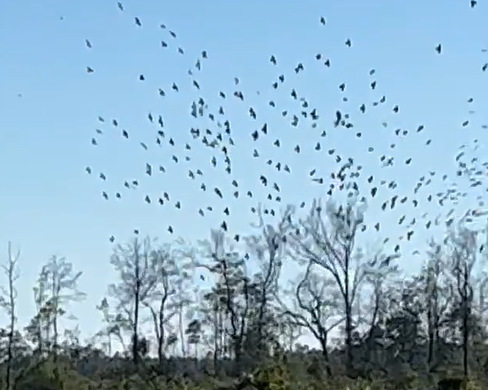
I have been lucky enough to observe these swallow tornadoes twice in the past 20 years during annual Christmas Bird Counts. Hoping for cold weather for count day may be odd for this cold-intolerant southerner, but getting to see a Swallow Tornado is worth it.
Take time to check out the bird flocks in your world.
Hope to see you in our great outdoors!