



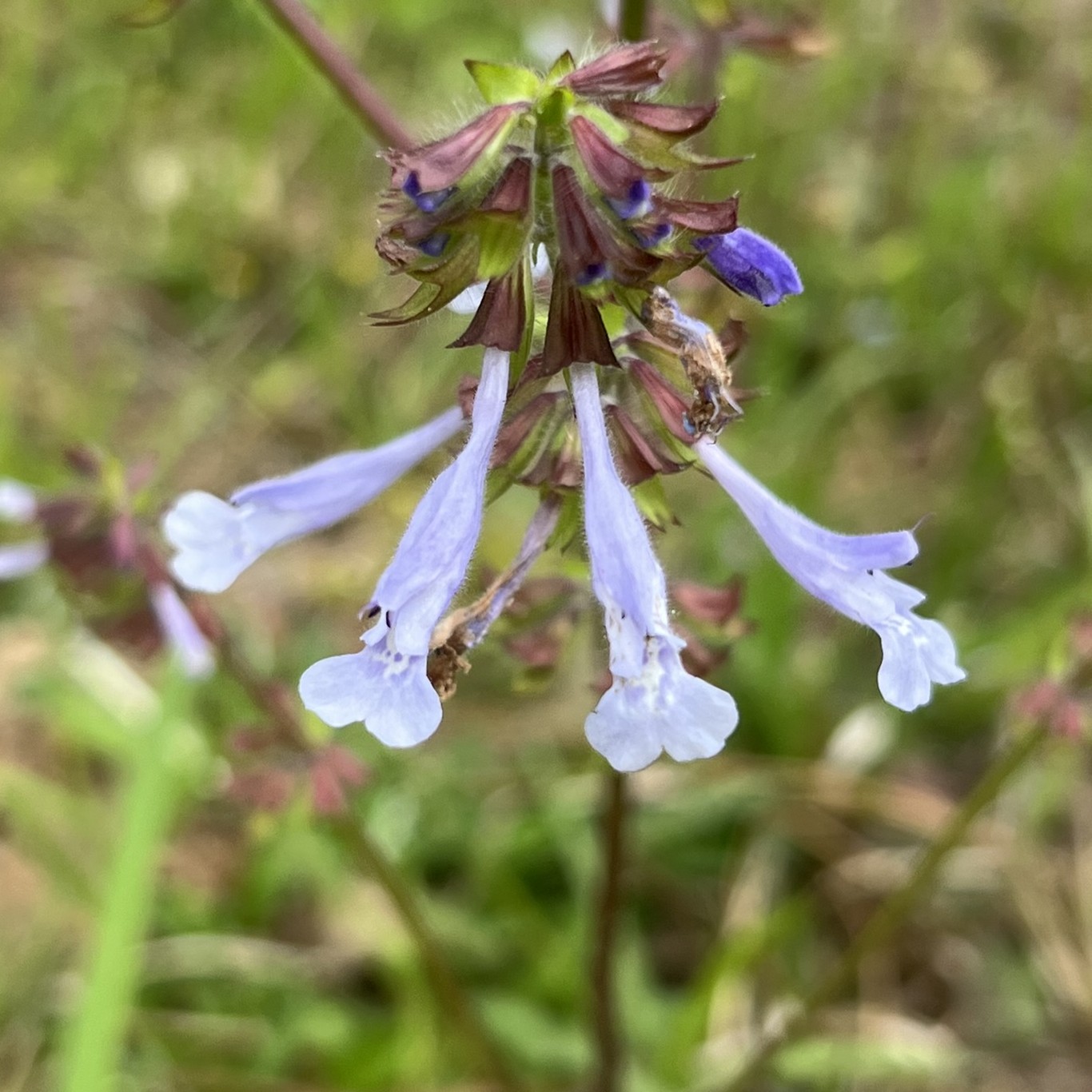
Lyreleaf Sage is an early spring wildflower across the southeastern U.S., often adding a splash of color in the landscapes where is thrives. Common along roadsides, open woodlands, and urban spaces, this small, yet attractive plant benefits many animals and can add value to our landscapes.
Salvia lyrata is also known as Cancerweed and was once thought to be an external cure for cancer. The species was first described by none other than the father of taxonomy, Carl Linnaeus in 1753.
The light blue blossoms begin to appear in late February to early March in coastal areas, with blooming progressing northward. This adoptable plant is widespread and hardy in a variety of areas, often creating dense beds. The vertical flower stalks are the plant’s most prominent feature, with numerous flowers arranged in whorls along its square stem.
 The vertical stems, that are often branched, grow from the center of a basal rosette of lobed leaves, that often resemble a lyre, thus its common name. The dark green leaves often have dark purple central veins. When abundant, this plant creates a dense carpet and can be used as an evergreen ground cover.

 Lyreleaf Sage flowers provide an early source of nectar for a variety of butterflies and bees that are just emerging from winter hibernation. They are also visited by early arriving Ruby-throated Hummingbirds. And once the black seeds form, they are eaten by a variety of birds, including American Goldfinch, House Finch, Mourning Dove, and Indigo Bunting, among many others.
This combination of nectar and seeds during early spring is critical for many species of migrant birds just returning to North America, as well as many resident species. Along with insect pollinators, it is no wonder why this is such a widespread and common plant across its range.
The low-profile nature of the plant’s basal rosette of leaves means that it tolerates mowing and can be persistent in lawns and roadsides. As an evergreen and perennial plant, it also stabilizes soil and can help reduce erosion. As such, it is a great native herb in many public places. As many communities embrace the idea of letting wildflowers thrive, this plant will continue to persist and benefit man and beast.
Lyreleaf Sage is one of the first of a parade of wildflowers that bloom throughout the year, adding color to our landscapes and support local and regional food chains. Consider encouraging this species in your landscape and watch for the many pollinators and hungry birds that visit it.
Hope to see you in our great outdoors!