


Skip to content
Close Menu

    Subscribe to Updates

    Get the latest creative news from FooBar about art, design and business.

    Most Viewed

    The Old Farmer’s Almanac Has Spoken on Mississippi’s Fall Forecast

    July 25, 2025

    Old Sayings Say It Best

    May 22, 2024

    Actor Jeremy London Calls Mississippi Home

    August 1, 2024

    Snoop Dogg’s Mississippi Roots Run Deep

    October 22, 2024
    Facebook X (Twitter) Instagram
    Sunday, October 4, 2026
    Trending
    • Taste of Fall: Sausage and Cornbread Skillet
    • One Highway, Hundreds of Finds: Mississippi’s Highway 15 Yard Sale
    • Southern Miss Wind Ensemble Welcomes Pipa Virtuoso Gao Hong for October Band Series
    • Autumn Colors of the Natchez Trace
    • City Takes Over Diamondhead Fall Fest Tradition
    Facebook X (Twitter) Instagram YouTube TikTok
    Login
    Our Mississippi HomeOur Mississippi Home
    • Living

      One Highway, Hundreds of Finds: Mississippi’s Highway 15 Yard Sale

      October 2, 2026

      Autumn Colors of the Natchez Trace

      October 1, 2026

      City Takes Over Diamondhead Fall Fest Tradition

      September 30, 2026

      One Smart Cookie

      September 25, 2026

      Salvation Army Bell Ringers Make Life Better

      September 24, 2026
    • Arts / Culture

      Southern Miss Wind Ensemble Welcomes Pipa Virtuoso Gao Hong for October Band Series

      October 1, 2026

      ZONTA Celebrates 49th Festival in Pascagoula

      September 30, 2026

      Belhaven’s Project Dance Jackson Offers Colorful Performances and Hourly “Flash Mobs” at LeFleur’s Bluff

      September 29, 2026

      Pops in the Park to Bring Music, Community Together at Southern Miss

      September 16, 2026

      A Bucket of Shells and a Mother’s Intuition

      September 4, 2026
    • Entertainment

      Belhaven’s Project Dance Jackson Offers Colorful Performances and Hourly “Flash Mobs” at LeFleur’s Bluff

      September 29, 2026

      BBQ Battle Set for Moss Point’s Downtown Riverfront Park

      September 24, 2026

      The River City is Ready for Cruisers

      September 24, 2026

      South Mississippi Toy Fest Brings Collectors to Hattiesburg

      September 23, 2026

      Mississippi Pecan Festival Returns to Perry County for 38th Year

      September 23, 2026
    • Food & Dining

      Taste of Fall: Sausage and Cornbread Skillet

      October 4, 2026

      When Mississippi Feels Like Fall, Make This Cake

      September 27, 2026

      Pull Up a Chair: McComb’s Main Table Brings a Southern Tradition to Main Street

      September 22, 2026

      A Victory Never Tasted So Good: Hotty Toddy Sunday Sliders

      September 20, 2026

      Sunday Dessert: Old-Fashioned Southern Peach Cobbler

      August 30, 2026
    • Environment

      Autumn Colors of the Natchez Trace

      October 1, 2026

      Defining ‘Super El Niño’: What Is It, and What Does It Mean for South Mississippi?

      September 30, 2026

      The Blob – A Qu’est Que C’est Origin Story

      September 26, 2026

      Tiny Wings, Big Wonder: Hummingbird Season in Mississippi

      September 15, 2026

      Fall Migration of Our Feathered Friends is Upon Us

      September 12, 2026
    • Lagniappe
      • Business
      • Sports
      • Education
      • Health & Wellness
      • OurMSVoices
      • People
    Subscribe
    Our Mississippi HomeOur Mississippi Home
    Home»Environment»The Fascinating History of Horn Island
    Environment Featured JaxCoHome

    The Fascinating History of Horn Island

    Brenda LewisBy Brenda LewisMarch 6, 20207 Mins Read2K Views
    Share Facebook Twitter Pinterest LinkedIn Tumblr Reddit Telegram Email
    Share
    Facebook Twitter LinkedIn Pinterest Email Copy Link

    Lasting through time, Horn Island is resilient, ever changing and constantly shifting. There are many theories as to how barrier islands, and in particular Horn Island, Mississippi formed. It is estimated that 20,000 years ago the coast of Mississippi was more than 60 miles south east of Biloxi. That theory holds that the isle was a part of the mainland until a sinking of the land in what is now called the sound isolated the island. Others believe that some 5,000 to 6,000 years ago the land was built up, by sediment from the Appalachian Mountains carried by rivers and shore currents to build up the island.

    Regardless of how Horn Island developed it has a rich history and beauty to match!

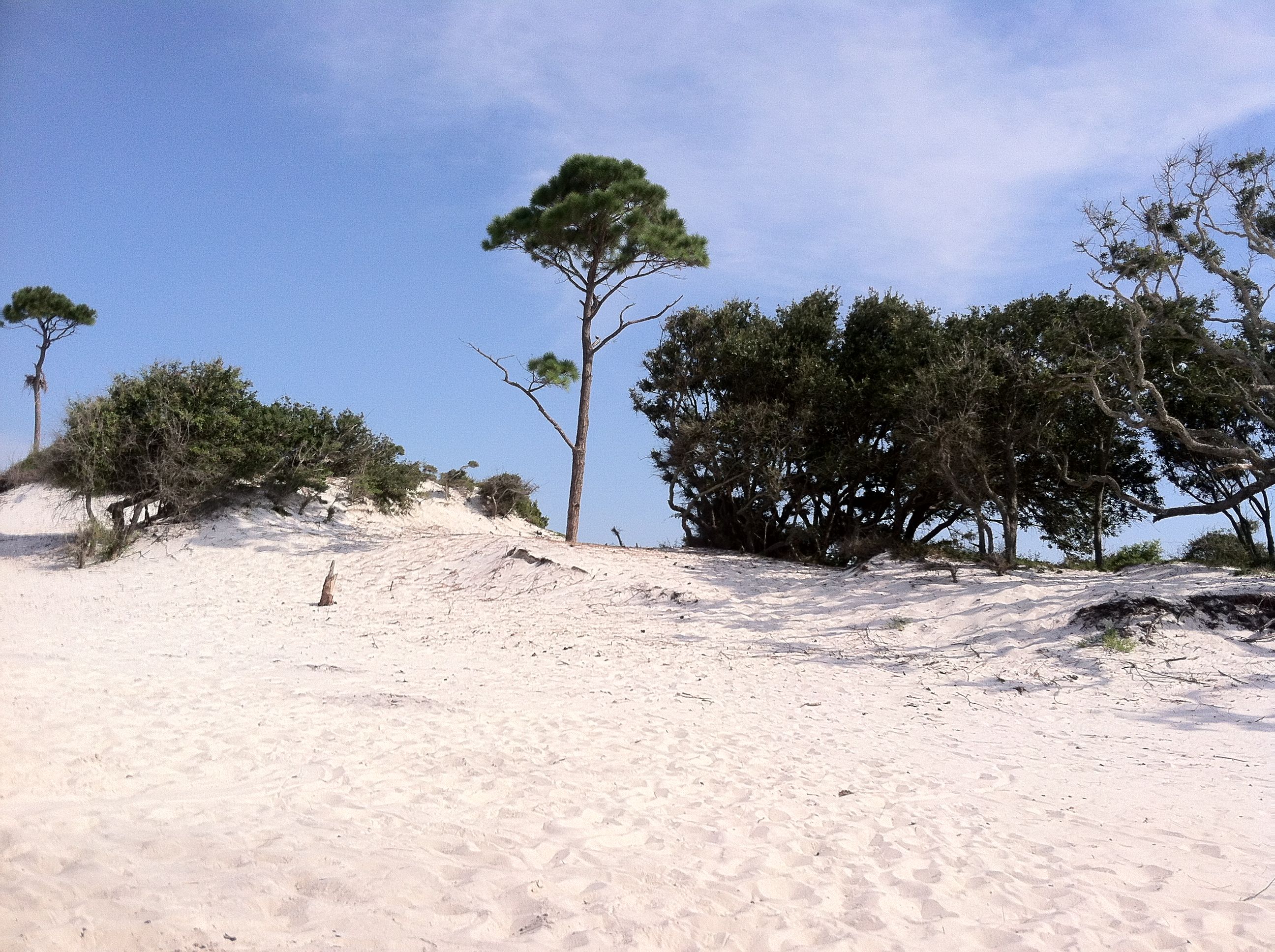
    Approximately 8 to 10 miles south of Pascagoula, the island consists of sand dunes, low marshes, several lagoons and each end of the island disappears in sandy points into the Gulf. The length (8 to 10 miles) and width (one mile at the most) of the island has varied decade to decade, and it appears the island is constantly shifting northwest at the rate of three to four miles per century. The loss of the island mass averages 11 percent per year. From 1944 to 1956, it was estimated the island lost over 300 acres.

    First mapped in 1500 by Juan de la Cost, the companion of Christopher Columbus, and was later to receive its name in 1699. While being explored by Sieur Bienville, King’s Lieutenant of the French Army. It was reported that one of his five men lost his powder horn on the island, earning it the name of Horn Island. Bienville won the decoration of the Cross of St. Louis and therefore received a royal patent granting him Horn Island. From 1717 to 1732, the island was known as Isle Bienville, but eventually returned to the name of Horn Island, much of the history between 1732 and 1845 is forever lost, or perhaps there was nothing to report about this barren strip of sand and pine trees.

    It has been reported that a family named Waters (how apropos) lived on Horn Island from 1845 to 1920 raising cattle. This author has serious questions about why anyone chose to raise cows in such an unlikely spot!

    Horn Island was deemed a central point which could help ships and vessels maneuver the waters of the Gulf and sound, so many light houses were maintained there. However, they were not your typical round stone lighthouses.

    The first lighthouse was a simple wooden structure erected on a screw pile foundation in 1874 at a cost of $22,000. It was constructed on the eastern end of Horn Island and elevated only three feet above the water, which mystifies this writer. Obviously maintaining a structure on a constantly evolving mass of sand proved to be a challenge. In 1880-81 due to erosion, the shoreline was bulkheaded about 60 feet from the light. However, not even that maneuver could sustain the carnage of storms, the bulkhead eventually giving way; causing the light house to be moved 100 yards across the island to the north side, this time to be supported by creosote poles. By 1882, once again the station was in the Gulf. By 1885, the water around the house had risen to a depth of 7 feet.

    The second lighthouse constructed in 1887 and consisted of a square house 1 1/2 stories tall with a living room, kitchen, three bedrooms, pantry and work room with the lantern on the roof. Once again, nature won and by 1900 the house had to be moved 300 feet north due to erosion but was still in about 2 feet of water. This house was destroyed by the hurricane of 1906.

    There is an unfortunate tale that resulted as that hurricane hit landfall in Pascagoula. The lighthouse keeper Charles Johnsson, despite the urging of a ship captain, refused to abandon his post, stating that was his jobs and he would not allow ships to be lost on his shift. Unfortunately that decision cost him his life and the lives of his wife and his 18-year-old daughter.

    No further lighthouses were built directly on the island. But the one built on neighboring Petit Boy Island was still referred to the Horn Island Lighthouse. By 1961, all lighthouse operations ceased due to new range lighting constructed by the Coast Guard which directed ships to port.

    During WWII in March 1943, Horn Island was acquired by the US Army for the purposes of testing biological weapons. The Horn Island Chemical Warfare Service Quarantine Station opened October 29, 1943, a 2000 acre site. The island was immediately closed to public access and remain closed until August 28, 1945, when operations ceased.

    During this time, about 200 scientists and technicians and a few military occupied the island being housed in wooden structures and tents. Some roads were built and a company of Seabees constructed 7.6 miles of narrow gauge railroad along the island. Two locomotives and several freight cars were used to move materials between the facility and testing grounds.

    The focus of the study was on the use of insects as biological weapons, with testing on animals of various sizes from guinea pigs to horses. The only tests that were eventually performed used botulin and ricin with a subject of guinea pigs. The test was a horrible failure. Of the 60 four-pound toxin laden bombs detonated, there was only one death of a guinea pig by inhalation.

    They should have used the Mississippi ‘Pie Plate’ mosquito! I know from experience those insects would conquer any advancing forces.

    Eventually the huge mistake of such a folly was exposed in that the windy Horn island was too close in proximity to human populations, risking accidental exposure and the facility was closed.

    Closing the operation left another conundrum, what to do with thirty undetonated bombs filled with mustard agent. ‘Operation Hornblow’ authorized the detonation on the island with the leftover casings being dumped in the open water of the sound. I guess they weren’t quite so eco conscious in those days!

    From February 1944 to February 1945,  E. Avery Richmond was allowed by the US Army to live on the island and study the flora and fauna, cataloguing many specimens which were presented to The National Museum  and various Universities.

    From 1946 – 1965, Walter Anderson, a celebrated artist from Ocean Springs, visited the island to draw and paint. His creations are now immortalized in the Walter Anderson Museum. It is said that Anderson was so enamored by the island and its nature that during Hurricane Betsy he refused to leave the island, instead tying himself to a tree in 150 mph winds so that he could evidence the devastation and reconstruction of the habitat.

    Finally the wonderful nature of the island was starting to be recognized. In 1965, Public Land Order Number 1638 made Horn Island a wildlife refuge, following in 1971, a part of the Gulf Islands National Seashore, and in 1978, the US government declared the area as a federally protected wilderness.

    In 2005, Hurricane Katrina completely swamped and devastated the island, but it survived and bounced back within five years to its natural beauty.

    Those legislative protections, however,  could not protect the island from the damage of the massive BP Deep Horizon oil spill in 2011. Only 70 miles from the spill location, the island was soon encircled by oil, tar balls, trash and struggling animals affected by the oil. For months, organizations and locals ventured to the island wearing hazmat suits and started manually removing oil and assisting nature.

    Despite the island’s sordid past (unknown to many) and prediction of eventual demise, for anyone with an access to a boat and a little time to relax the island still boasts of white sand, clear water, bountiful nature and a wonderful time.


    environment environment feature
    Previous ArticleFrom Brussels With Love – Paintings of Our Pascagoula River
    Next Article JGRLS Library programs and events – March 10-19
    Brenda Lewis

    Brenda Lewis is a native of Jackson County. She has attended the University of Southern Mississippi on numerous occasions, earning a BS in Architectural Technology, advanced studies in Accounting and now on a mission to finalize her Masters of Business Administration. Brenda is an avid fisherwoman, owns her own boat, baits her own hook, cleans her own fish and cooks them. But sorry guys, she has a loving husband, daughter and 4 grandchildren. When unable to fish her spare time is spent in the greenhouse and garden, supplying fresh edibles for the family and cultivating local species and rarities. In 2007 her team was awarded the 2007 Golden Eagle Challenge from the University of Southern Mississippi. The challenge was to create the best business plan and presentation of a viable technological business. In 2015 she was certified as a TapRoot Cause Analyst, a system used to improve performance, fixing small problems to avoid major incidents. Having worked in a small family business since childhood she was exposed to entrepreneurship. That experience led her to her own business, tax preparation, where she served her loyal clients for 10 years. During that time, she earned the Enrolled Agent certification with the IRS, and insurance and security licenses, offering additional services to her clients. Her employment has been in private business, government, contract and corporate settings. Mostly in management, her tasks included a variety of administrative, safety, Quality control and human resources. “The reason I want to write for OurMsHome is I have experienced the advancements in Jackson County first hand over the past 50 years, and I feel that the county has made enormous progress. We need to ‘toot our horn’ and let the world know about our rich history and abundant natural resources.”

    Related Posts

    Featured

    One Highway, Hundreds of Finds: Mississippi’s Highway 15 Yard Sale

    October 2, 2026
    Environment

    Autumn Colors of the Natchez Trace

    October 1, 2026
    Environment

    Defining ‘Super El Niño’: What Is It, and What Does It Mean for South Mississippi?

    September 30, 2026
    Add A Comment

    Comments are closed.

    Stay In Touch
    • Facebook
    • YouTube
    • TikTok
    • Twitter
    • Instagram

    Subscribe to Updates

    Get the latest good news happening in Mississippi!

    Most Popular

    The Old Farmer’s Almanac Has Spoken on Mississippi’s Fall Forecast

    July 25, 20258K Views

    Old Sayings Say It Best

    May 22, 20248K Views

    Actor Jeremy London Calls Mississippi Home

    August 1, 20247K Views
    Our Picks

    Taste of Fall: Sausage and Cornbread Skillet

    October 4, 2026

    One Highway, Hundreds of Finds: Mississippi’s Highway 15 Yard Sale

    October 2, 2026

    Southern Miss Wind Ensemble Welcomes Pipa Virtuoso Gao Hong for October Band Series

    October 1, 2026

    Subscribe to Updates

    Get the latest good news from Our Mississippi Home.

    Our Mississippi Home
    Facebook X (Twitter) Instagram YouTube TikTok RSS
    • About OurMSHome
    • Advertise
    • Community Partners
    • Privacy Policy
    • Guidelines
    • Terms
    © 2026 Our Mississippi Home. Designed by Know_Name.

    Type above and press Enter to search. Press Esc to cancel.

    Ad Blocker Enabled!
    Ad Blocker Enabled!
    Our website is made possible by displaying online advertisements to our visitors. Please support us by disabling your Ad Blocker.

    Sign In or Register

    Welcome Back!

    Login to your account below.

    Lost password?