



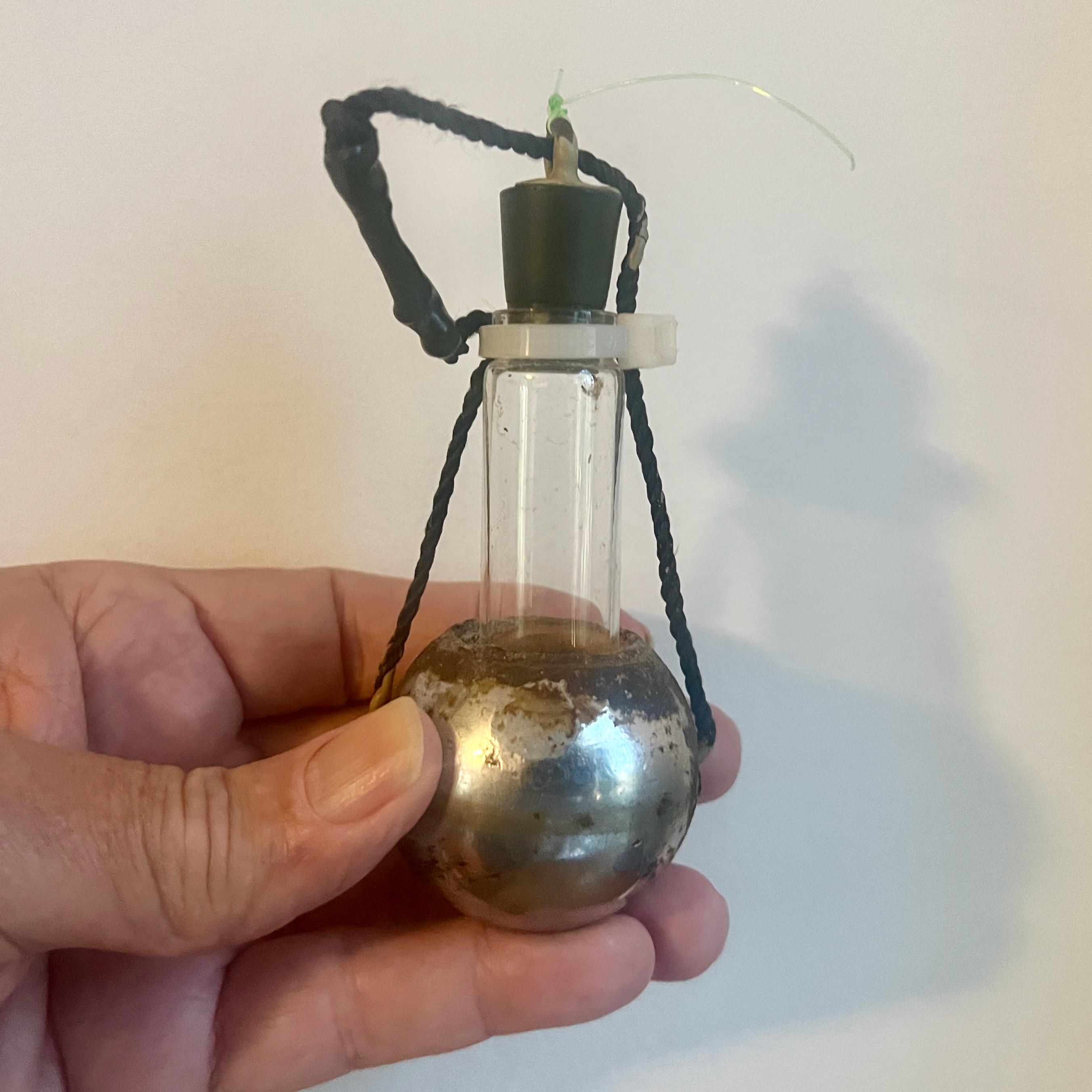
I love homemade stuff. Today that is called DIY – do it yourself. Well, DIY has been a way of life for generations. So it was that this Cajun joined forces with a River Rat to come up with a way to sample water from the bottom of the Pascagoula River. It costs us nothing but time, if you don’t count the multiple cups of coffee along the way. And that sampler did the job!
My good friends Benny and Lynn McCoy love the Pascagoula River. They launched the McCoy River and Boat Tour company around the turn of this century to share their love of the river with others. They provided many of those tours in partnership with the fledgling Pascagoula River Audubon Center. Between the twang of those two fellas and my Cajun accent, tours were as interesting as anything seen or heard on the river.
Apart from the differences in how we sounded, we shared an inclination for coming up with homemade solutions for just about anything. We all grew up fishing and using boats, motors and trailers. Those skills come in handy when you need a new something or other for a task. Better to make that something rather than spend bucks on some fancy solution.
So it was that Benny and I found ourselves scratching our heads one day “figuring” out how to make a water sampler that we could use to collect water from the bottom of the river. A fancy scientific sampler would set us back more than $100, so that was not an option.
Our goal was to measure the salinity at the bottom of the river channel to find the salt wedge – the layer of higher salinity water that is found along the bottom of coastal rivers. Salt water is heavier than fresh water and in dry times of the year, a wedge of salt water can travel along the bottom well upriver. We had a group of Junior Naturalists to help us find that wedge during our summer program. But what to use to get a sample of water up from the bottom?
I had come up with homemade samplers before and Benny is as good a craftsman as any, so we talked through the need to have a small, closable bottle, attached to something heavy, to get the thing to the bottom. But then we had to open the bottle from the boat, when we hit the bottom, without losing the stopper, and haul it up quick.
Our solution brought together elements of our experiences as boaters (a detachable steel ball from a trailer hitch), fishermen (a fishing pole), and a bit of science-based thinking (a glass vial and rubber stopper). The fishing pole delivered the device (OK, contraption) to the bottom and retrieved it, but not before giving the rig a tug to release the snug, but not too tight rubber stopper, to allow water to fill the capsule just above the river bottom.
To our delight, adjustments that led to success were simply about how tight we placed the stopper, and our skill in dropping the sampler to the bottom without triggering the sampler too soon. Our young naturalists did the rest, and we tracked the salt wedge 13 miles upstream that day. We retired that sampler soon thereafter, but it sits on a small shelf in my home office where it brings a smile to my face every time I see it. Make-do solutions work just as well as any.
Hope to see you in our great outdoors!
