



While honeybees are important for crops and as a food source for humans, native bees pollinate as much as 80% of many important crops and should be protected as well. Most people don’t realize that there are about 20,000 species of bees worldwide, and 90% of bees are solitary, meaning they don’t form hives or live communally. The bulk of what the general public has been taught about bees leaves out the majority of our native species, but one organization is trying to educate us properly and learn more about these buzzing creators.
Ground Nesting Bees Community Science Project, or Project GNBee, is organized through the Cornell University College of Agriculture and Life Sciences. Launched in June 2023, Project GNBee leads in the research, conservation, and applied management of wild bees by bringing together community scientists, researchers, and institutions to establish a national monitoring program for ground-nesting bees.
“We work with community scientists to better understand where native bees nest across the landscape and which environmental and management conditions support their populations over time,” said Jordan Kueneman with Project GNBee.
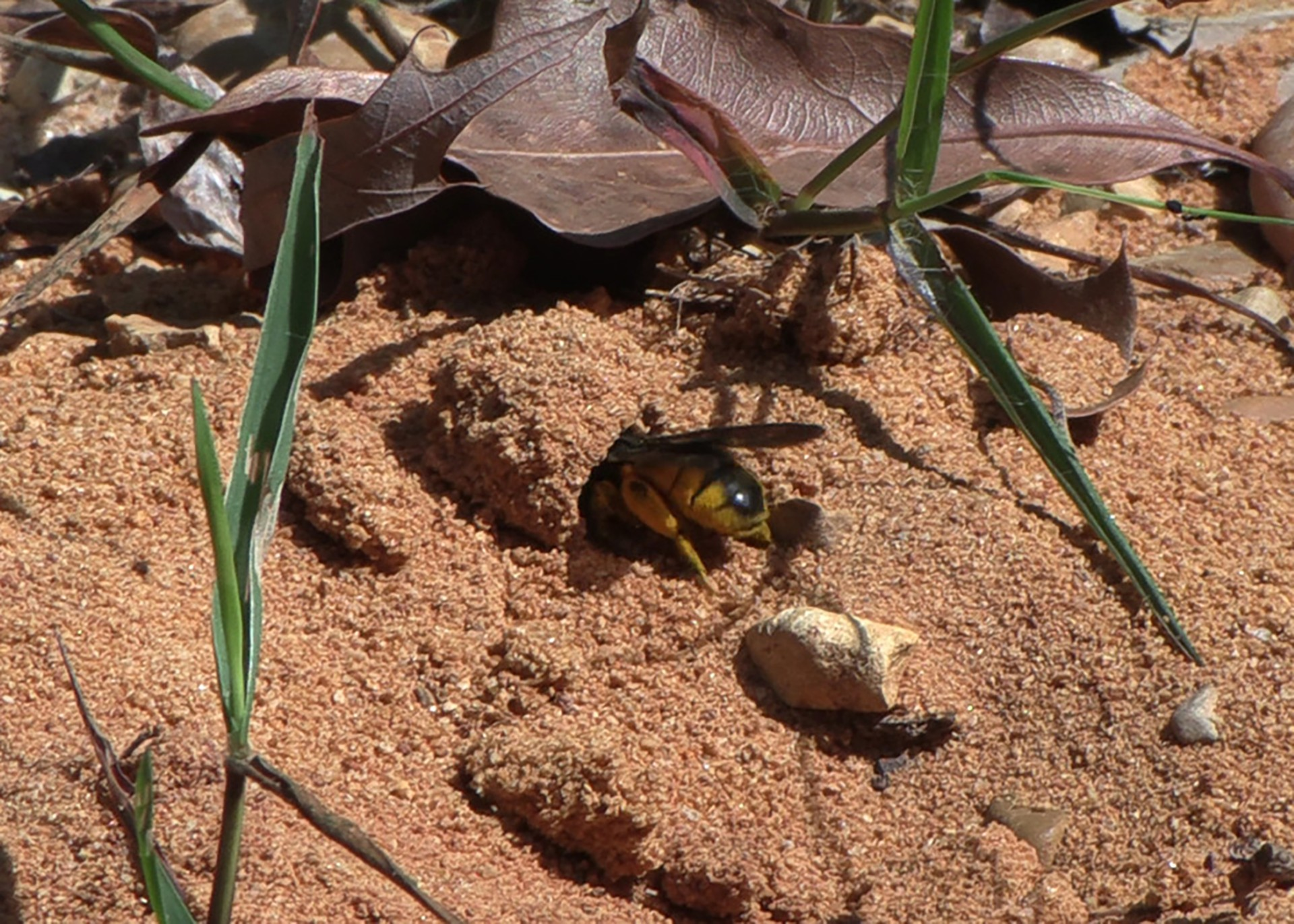
The project invites land managers and the general public, like you and me, to report areas where they observe small holes in the ground with bees actively coming and going.
“By sharing simple observations — ideally with photos — participants can help document nesting sites, identify the bee species present on their properties and contribute to research that improves conservation and management guidance for farms and orchards,” Keuneman said.
Project GNBee is expanding its efforts to better include farmers, growers, orchardists, and other managers working on agricultural lands in Mississippi. But you don’t have to live on a large piece of land to add value to the project; you just have to be willing to get curious about your own backyard.
“This is a community-led science project, where we are relying on Mississippi’s average day person, or anyone interested in biology or naturalism, to observe what they’re seeing in their surroundings and make observations,” shared Kueneman.
The first step is to observe flight activity. When you come across an area where insects are flying or hovering over the ground, relax, settle in, and take a minute to watch. You may notice bees carrying pollen into the ground; that’s their nest entrance. That is an immediate indicator that you’re dealing with bees, because bees are the only ones collecting pollen and taking it underground.
“Many native bees nest directly in the soil, often along field edges, farm lanes, bare patches, and lightly disturbed ground,” Kueneman said. “These nesting aggregations are critical for crop pollination, yet they are easily overlooked and rarely documented on working lands.”
If you happen to have access to a cemetery and don’t mind an adventure, that happens to be a great place for ground-nesting bees for a variety of reasons.
“Cemeteries seem to be a really great place for bees for a number of reasons,” explained Kueneman. “The soil is consistent and easy to dig. And there are usually a lot of flowers around.”
Once you land on an active location, there can be an enormous number of bees, and it’s amazing to watch in real time. We should all be encouraged to be more curious about our own outdoors and take an afternoon to observe and learn what we can about the biology of ground-nesting bees.
Project GNBee asks that you take a photo and then upload it to their database. To make observations, participants will need to create an iNaturalist account, join the project, and tag the project in their observation. Learn more by visiting https://www.gnbee.org.
