



The Mississippi Business Alliance (MSBA) Foundation has entered into a formal partnership with AccelerateMS, the state’s Office of Workforce Development, to support the work of the newly established Mississippi Postsecondary Attainment Council (M-PAC) through MSBA’s WorkFuture Institute for Workforce and Educational Excellence.
Created through Senate Bill 2524, M-PAC brings together leaders from the private sector, economic development, workforce development, and education, to develop strategies that increase postsecondary attainment while strengthening alignment between education and workforce demand. The council is charged with helping ensure Mississippi develops the talent needed to support long-term economic growth and competitiveness.
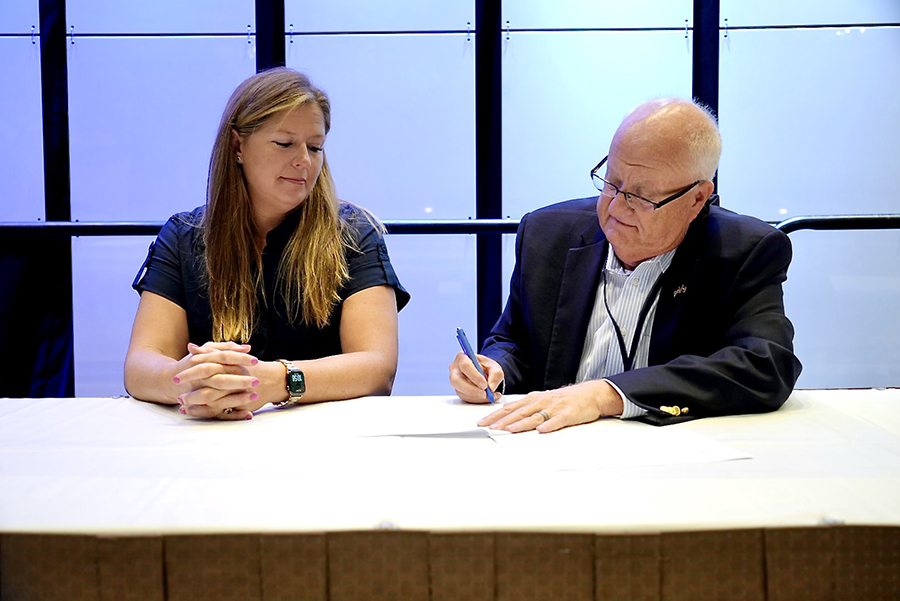
The partnership was formalized through a Memorandum of Understanding signed during the MSBA Manufacturers Summit on June 5, bringing together business, workforce, and education leaders committed to strengthening Mississippi’s talent pipeline and long-term economic competitiveness.
Under the agreement, AccelerateMS will serve as the principal staff and coordinating entity for the council, while the WorkFuture Institute will provide support in areas including strategy development, employer engagement, workforce analysis, career pathway development, and council operations.
“Mississippi’s future economic success depends on increasing postsecondary attainment and strengthening alignment with workforce needs to ensure students have clear pathways to meaningful careers and employers have access to the talent they need,” said John McKay, President and CEO of the Mississippi Business Alliance.
“The creation of the Mississippi Postsecondary Attainment Council represents an important step forward in building a stronger talent pipeline for our state. This partnership brings together education, workforce, and business leaders around a shared goal of connecting education to employment opportunities.”
The partnership will focus on developing strategy to increase attainment across all levels of postsecondary education, including industry-recognized credentials, associate degrees, bachelor’s degrees, and postgraduate education. Efforts will also emphasize employer engagement, data-driven informed decision-making, completion, and workforce outcomes.
“By leveraging data, employer input, and strategic partnerships, we can strengthen pathways that help more Mississippians develop the skills and competencies employers need,” said Dr. Courtney Taylor, Executive Director of Accelerate Mississippi. “The Mississippi Postsecondary Attainment Council brings everyone together to develop strategies and align efforts around a common vision for Mississippi’s future.”
The WorkFuture Institute will assist in identifying workforce needs, engaging employers in talent development strategies, strengthening career coaching and advising, and providing research and analysis to support the council’s work.
“Building Mississippi’s future workforce requires more than simply increasing attainment numbers,” said Scott Waller, President of the MSBA Foundation. “We must ensure students have access to the information they need to make informed decisions, complete their chosen pathways, and connect those pathways to real career opportunities that exist in Mississippi.”
The WorkFuture Institute, launched in October 2025, was created to help the private sector play a larger role in shaping Mississippi’s future workforce. “For too long, business and industry have primarily engaged at the end of the talent pipeline,” Waller said. “Employers must be engaged at the beginning of the pipeline to help define skills, shape educational pathways, and create stronger connections between classroom learning and workplace needs.”
The services provided by the WorkFuture Institute under the agreement will be delivered at no cost to the State of Mississippi, leveraging private-sector investment, expertise, and engagement to help strengthen Mississippi’s education-to-employment pipeline.
M-PAC will begin its work July 1, 2026, focusing on strategies that increase postsecondary attainment, strengthen workforce alignment, improve career outcomes, and ensure Mississippi develops the talent needed to support employers and economic growth over the next decade.
