


Skip to content
Close Menu

    Subscribe to Updates

    Get the latest creative news from FooBar about art, design and business.

    Most Viewed

    The Old Farmer’s Almanac Has Spoken on Mississippi’s Fall Forecast

    July 25, 2025

    Old Sayings Say It Best

    May 22, 2024

    Actor Jeremy London Calls Mississippi Home

    August 1, 2024

    Snoop Dogg’s Mississippi Roots Run Deep

    October 22, 2024
    Facebook X (Twitter) Instagram
    Wednesday, October 7, 2026
    Trending
    • George County Rodeo Brings Families a Night Out, Supports Local Firefighters
    • Beach and Block Parties Planned for ‘Goula Cruise 2026
    • Spooky Season in the Hub City: Your Guide to October Fun in Hattiesburg
    • Southern Miss PA Program Earns Accreditation-Provisional Status Ahead of 2027 Launch
    • Poplarville Main Street Adds Narrated QR Codes to Veteran Banners
    Facebook X (Twitter) Instagram YouTube TikTok
    Login
    Our Mississippi HomeOur Mississippi Home
    • Living

      George County Rodeo Brings Families a Night Out, Supports Local Firefighters

      October 6, 2026

      Beach and Block Parties Planned for ‘Goula Cruise 2026

      October 6, 2026

      One Highway, Hundreds of Finds: Mississippi’s Highway 15 Yard Sale

      October 2, 2026

      Autumn Colors of the Natchez Trace

      October 1, 2026

      City Takes Over Diamondhead Fall Fest Tradition

      September 30, 2026
    • Arts / Culture

      Southern Miss Wind Ensemble Welcomes Pipa Virtuoso Gao Hong for October Band Series

      October 1, 2026

      ZONTA Celebrates 49th Festival in Pascagoula

      September 30, 2026

      Belhaven’s Project Dance Jackson Offers Colorful Performances and Hourly “Flash Mobs” at LeFleur’s Bluff

      September 29, 2026

      Pops in the Park to Bring Music, Community Together at Southern Miss

      September 16, 2026

      A Bucket of Shells and a Mother’s Intuition

      September 4, 2026
    • Entertainment

      Spooky Season in the Hub City: Your Guide to October Fun in Hattiesburg

      October 5, 2026

      Belhaven’s Project Dance Jackson Offers Colorful Performances and Hourly “Flash Mobs” at LeFleur’s Bluff

      September 29, 2026

      BBQ Battle Set for Moss Point’s Downtown Riverfront Park

      September 24, 2026

      The River City is Ready for Cruisers

      September 24, 2026

      South Mississippi Toy Fest Brings Collectors to Hattiesburg

      September 23, 2026
    • Food & Dining

      Taste of Fall: Sausage and Cornbread Skillet

      October 4, 2026

      When Mississippi Feels Like Fall, Make This Cake

      September 27, 2026

      Pull Up a Chair: McComb’s Main Table Brings a Southern Tradition to Main Street

      September 22, 2026

      A Victory Never Tasted So Good: Hotty Toddy Sunday Sliders

      September 20, 2026

      Sunday Dessert: Old-Fashioned Southern Peach Cobbler

      August 30, 2026
    • Environment

      Autumn Colors of the Natchez Trace

      October 1, 2026

      Defining ‘Super El Niño’: What Is It, and What Does It Mean for South Mississippi?

      September 30, 2026

      The Blob – A Qu’est Que C’est Origin Story

      September 26, 2026

      Tiny Wings, Big Wonder: Hummingbird Season in Mississippi

      September 15, 2026

      Fall Migration of Our Feathered Friends is Upon Us

      September 12, 2026
    • Lagniappe
      • Business
      • Sports
      • Education
      • Health & Wellness
      • OurMSVoices
      • People
    Subscribe
    Our Mississippi HomeOur Mississippi Home
    Home»Environment»Qu’est Que C’est»Live Oaks Are Shaped for Coastal Life
    Qu’est Que C’est

    Live Oaks Are Shaped for Coastal Life

    Mark W. LaSalle, Ph.D.By Mark W. LaSalle, Ph.D.November 22, 20253 Mins Read138 Views
    Share Facebook Twitter Pinterest LinkedIn Tumblr Reddit Telegram Email
    u89-Live-Oak-Spreading-Mounding-Squared
    Share
    Facebook Twitter LinkedIn Pinterest Email Copy Link

    Live Oaks are iconic trees across the coastal plains of the northern Gulf of Mexico and southeastern Atlantic coast. As much as any tree has value in our personal and community landscapes, this species tops them all. As a large, spreading, evergreen tree, it stands out and provides shade and cooler temps in our humid summer months. They are also some of the longest-lived trees across their range, living for hundreds of years. But that is how humans view them. The features that we prize also have important functional value in the areas where most of these trees grow – maritime forests.

    As a dominant tree of these shoreline forests, Quercus virginiana, has evolved to endure high winds and salt spray, that impacts them on a regular basis, through the passage of winter fronts in most years, and occasional hurricanes. Their growth habit is a clue to how they manage this feat and a lesson for us on how to ensure that these iconic trees have the space they need to continue to thrive.

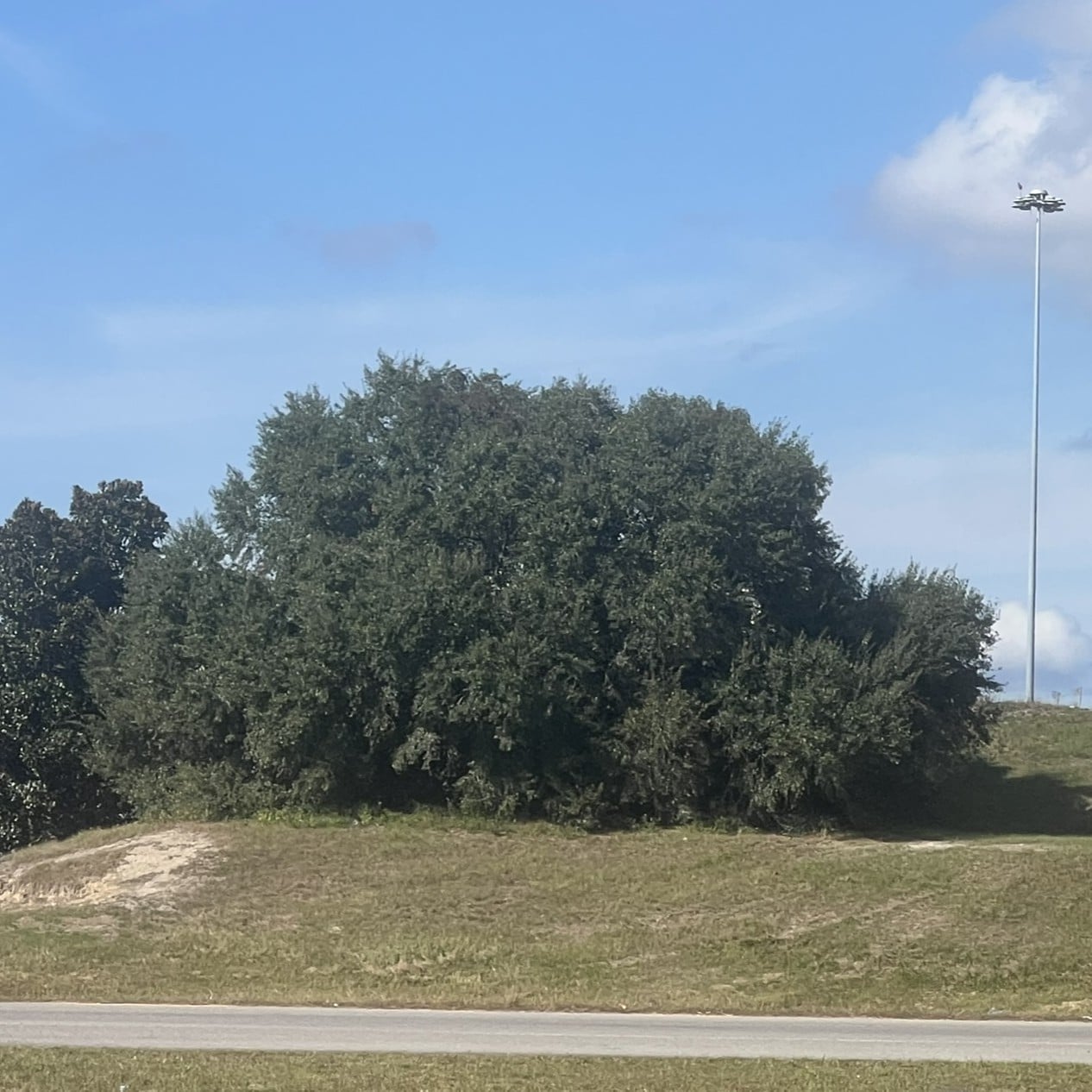
    A Live Oak left to grow naturally in maritime conditions, grows in what my arborist friend David Minkler describes as a mounding-spreading form – a wide, rounded shape that includes very large lateral branches that grow downward, eventually touching the ground in all directions. It is common to see a tree that reaches 50-60 feet in height with branches growing horizontally 50-60 feet from the trunk. A reported champion tree in southeastern Louisiana is 68 feet high with a total spread of 139 feet. In a healthy tree, a wall of leaves hides the branches and trunks.
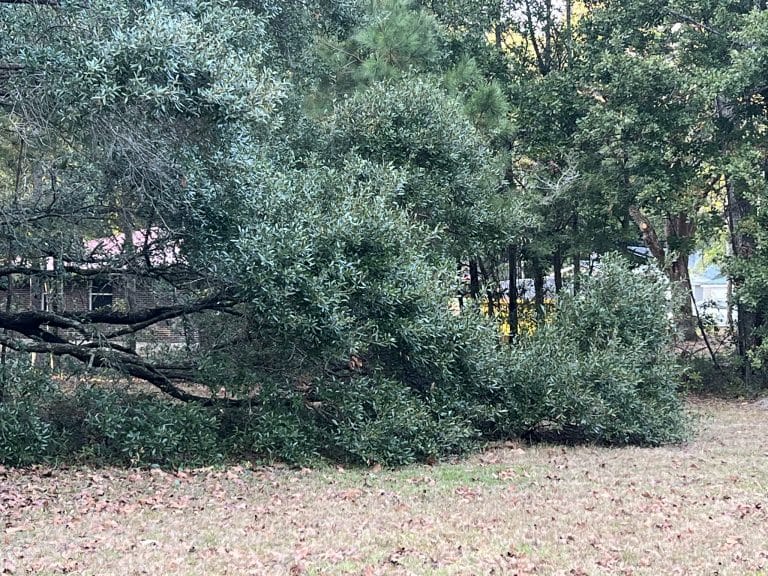
    This growth form is believed to be a direct response to regular exposure to winds in these narrow maritime habitats. The thick, evergreen foliage helps deflect winds up and over the tree, rather than through it, making these trees resistant to toppling. What we do not see is the extensive root structure that extends as far as or often beyond the drip line of the tree – the most lateral extent of the branches. This real estate above and below ground anchors Live Oaks well. In more dense forests away from the shoreline, Live Oaks grow taller, with less spread.

    It is only when humans insist on altering this mounding-spreading  form do these trees become vulnerable to winds and waves. We like to freely walk beneath a canopy of large branches. We also insist on building too closely to trees, cutting roots and compacting the soil within the root zone. The combination of altering the bowl shape of the tree and weakening the root structure makes them vulnerable to being blown over in heavy weather.

    In extreme cases of over managing these trees, some landscapers practice Lion’s Tailing, that leaves balls of foliage at the ends of branches that resemble a lion’s tail. They do this by removing smaller interior branches and leaves along major branches. Apart from the stress of removing living materials, this practice lets the wind move more freely through the trees, making toppling more likely.

    What we should do is embrace the mounding-spreading form of Live Oaks, as much as we can and enjoy the beauty and functionality of what evolution has forged. Sadly, even when we do abuse the above and below ground parts of these trees, they persist, even though they are not in the best-looking form. We should strive to do better with these beautifully designed trees and make room for them. They survive storms better than we do.

    Hope to see you in our great outdoors!

    live oak maritime forest spreading-mounding
    Previous ArticleSouthern Miss Alumna Surprised with $25K Milken Educator Award
    Next Article Homelessness and Helplessness are a Year ‘Round Concern
    Mark W. LaSalle, Ph.D.

    Mark is a naturalist and wetland ecologist, providing expertise on wetlands, water quality and environmental impacts of humans. He has also developed and conducted a number of environmental education programs and workshops for youth, teachers, realtors, and the general public on a variety of subjects including wetlands, natural history, and environmental landscaping. Mark is a graduate of the University of Southwestern Louisiana (B.S. and M.S. degrees) and Mississippi State University (Ph.D.). Mark is the recipient of the Chevron Conservation Award, the Mississippi Wildlife Federation Conservation Educator Award, the Gulf Guardian Award, and the Boy Scouts of America Silver Beaver Award.

    Related Posts

    Qu’est Que C’est

    The Blob – A Qu’est Que C’est Origin Story

    September 26, 2026
    Qu’est Que C’est

    Fall Migration of Our Feathered Friends is Upon Us

    September 12, 2026
    Qu’est Que C’est

    Discovering Nature on the Singing River – an iNaturalist Project

    September 5, 2026
    Add A Comment

    Comments are closed.

    Stay In Touch
    • Facebook
    • YouTube
    • TikTok
    • Twitter
    • Instagram

    Subscribe to Updates

    Get the latest good news happening in Mississippi!

    Most Popular

    The Old Farmer’s Almanac Has Spoken on Mississippi’s Fall Forecast

    July 25, 20258K Views

    Old Sayings Say It Best

    May 22, 20248K Views

    Actor Jeremy London Calls Mississippi Home

    August 1, 20247K Views
    Our Picks

    George County Rodeo Brings Families a Night Out, Supports Local Firefighters

    October 6, 2026

    Beach and Block Parties Planned for ‘Goula Cruise 2026

    October 6, 2026

    Spooky Season in the Hub City: Your Guide to October Fun in Hattiesburg

    October 5, 2026

    Subscribe to Updates

    Get the latest good news from Our Mississippi Home.

    Our Mississippi Home
    Facebook X (Twitter) Instagram YouTube TikTok RSS
    • About OurMSHome
    • Advertise
    • Community Partners
    • Privacy Policy
    • Guidelines
    • Terms
    © 2026 Our Mississippi Home. Designed by Know_Name.

    Type above and press Enter to search. Press Esc to cancel.

    Ad Blocker Enabled!
    Ad Blocker Enabled!
    Our website is made possible by displaying online advertisements to our visitors. Please support us by disabling your Ad Blocker.

    Sign In or Register

    Welcome Back!

    Login to your account below.

    Lost password?