


Skip to content
Close Menu

    Subscribe to Updates

    Get the latest creative news from FooBar about art, design and business.

    Most Viewed

    The Old Farmer’s Almanac Has Spoken on Mississippi’s Fall Forecast

    July 25, 2025

    Old Sayings Say It Best

    May 22, 2024

    Actor Jeremy London Calls Mississippi Home

    August 1, 2024

    The Julep Room: A Hole in the Wall with History

    January 8, 2024
    Facebook X (Twitter) Instagram
    Saturday, June 13, 2026
    Trending
    • Why the Mockingbird Still Deserves Its Place as Mississippi’s State Bird
    • From Alcorn to the Fast Lane: Breanna O’Leary’s Historic NASCAR Journey
    • Southern Miss Joins Major NOAA Effort to Strengthen America’s Seafood Supply
    • First Fruits Farm: A Leap of Faith That Continues to Bear Fruit
    • The Mississippi Pickle Fest Is Kind of a Big Dill
    Facebook X (Twitter) Instagram YouTube TikTok
    Login
    Our Mississippi HomeOur Mississippi Home
    • Living

      The Mississippi Pickle Fest Is Kind of a Big Dill

      June 11, 2026

      A Fresh First Impression for the Mississippi Gulf Coast

      June 11, 2026

      Cabins, Campfires, and Lightning Bugs: A New Season for Mississippi State Parks

      June 10, 2026

      A Love Letter to the Barrier Islands

      June 8, 2026

      The Best Things in a Mississippi Summer Are Still Free

      June 2, 2026
    • Arts / Culture

      Local Couple Bringing Community Arts Center to Lumberton

      June 10, 2026

      Fisheye Film Festival Launches in Ocean Springs

      June 9, 2026

      MSU Wins 5 Prestigious Southeast Emmys

      June 8, 2026

      “Mississippi Sounds” Carries Southern Voices Across the World

      June 5, 2026

      Mississippi Humanities Council to Host Screening of Natchez at Palace Theater in McComb

      May 27, 2026
    • Entertainment

      The Mississippi Pickle Fest Is Kind of a Big Dill

      June 11, 2026

      Bay Fest Celebrates Gulf Coast Creativity in Bay St. Louis

      May 27, 2026

      Family, Community Focus of Forrest County Boxing Event

      May 14, 2026

      Inside McComb’s Exotic Animal Kingdom

      May 13, 2026

      Nearly Sold Out: Air Supply 50th Anniversary Coming to MSU Riley Center

      April 17, 2026
    • Food & Dining

      Biscuits, Conversation, and a Biloxi Morning Tradition

      May 24, 2026

      A Coastline Full of Flavor: Where to Eat Along Mississippi’s Gulf Coast

      April 28, 2026

      Sip, Stroll, and Stay Awhile in Ocean Springs

      April 8, 2026

      From Sound to Shell: The Story of Mississippi Oysters

      March 29, 2026

      From Hard Times to Po-Boys: The Flavors of Old Biloxi

      March 22, 2026
    • Environment

      Why the Mockingbird Still Deserves Its Place as Mississippi’s State Bird

      June 13, 2026

      Southern Miss Joins Major NOAA Effort to Strengthen America’s Seafood Supply

      June 12, 2026

      Fisheye Film Festival Launches in Ocean Springs

      June 9, 2026

      The iNaturalist App – Helping with Qu’est Que C’est

      May 30, 2026

      An Ode to Maggots

      May 16, 2026
    • Lagniappe
      • Business
      • Sports
      • Education
      • Health & Wellness
      • OurMSVoices
      • People
    Subscribe
    Our Mississippi HomeOur Mississippi Home
    Home»Environment»Qu’est Que C’est»Bladderworts – Carnivorous Aquatic Traps
    Qu’est Que C’est

    Bladderworts – Carnivorous Aquatic Traps

    Mark W. LaSalle, Ph.D.By Mark W. LaSalle, Ph.D.April 27, 20244 Mins Read44 Views
    Share Facebook Twitter Pinterest LinkedIn Tumblr Reddit Telegram Email
    Bladderworts group - squared
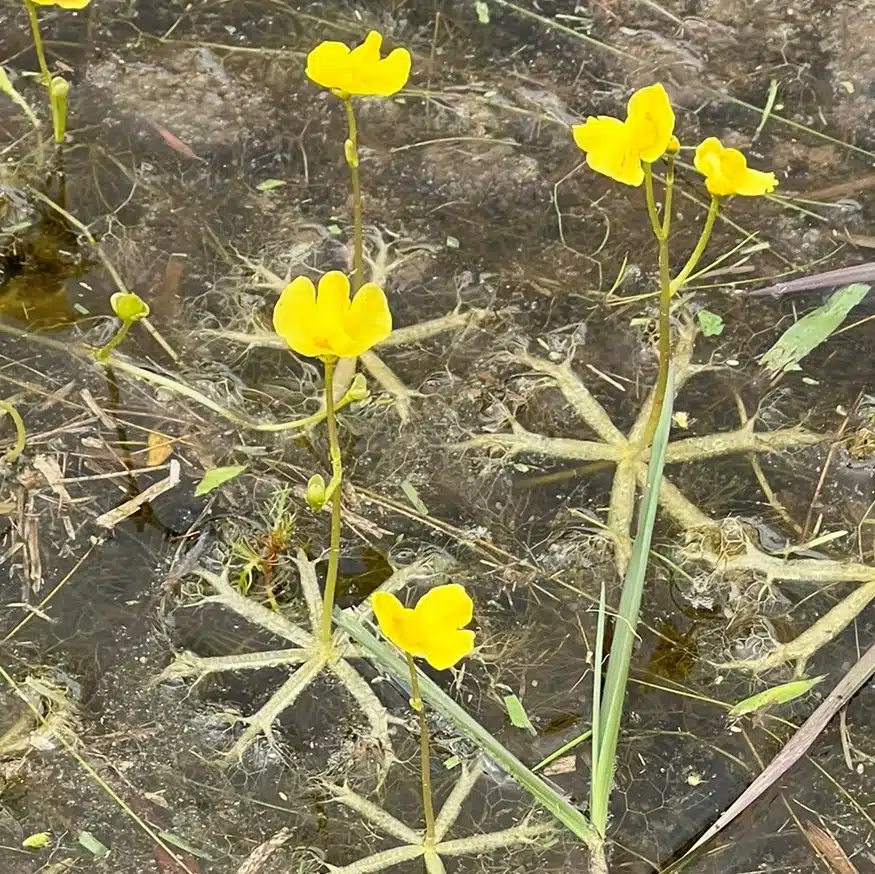
    Little Swollen Bladderwort
    Share
    Facebook Twitter LinkedIn Pinterest Email Copy Link

    Carnivorous plants are a curious collection of organisms that have evolved ways to trap insects and other animals to supplement the lack of nutrients in the habitats where they grow. The term itself seems counterintuitive when you think about it. We all learned that plants make their own food, using carbon dioxide from the atmosphere, water, and nutrients, powered by sunshine.

    But not all habitats have enough nutrients to support everything a plant needs, such as healthy growth and enough resources to flower and produce seeds for the next generation. As it turns out, our world is rich in carnivorous plants species that use both passive and active traps to snare animal prey lured to them. The most commonly known of these are pitcher plants that use tapered tubes to trap prey and absorb nutrients after their death – a passive approach. Sundews are also passive in design, using sticky surface hairs that snare prey. https://ourmshome.com/sundews-botanical-flypaper/

    Venus Flytraps are the most recognized terrestrial carnivorous plant with active traps – a highly modified hinged leaf that is triggered to close around prey that are lured there by the smell of nectar. But lurking in shallow water wetlands across the world are a group of plants that also use a sophisticated active trap – in the worldwide genus Utricularia. Along the Gulf Coast these plants live in shallow ponds, drains and ditches that retain water most of the year.

    The name Utricularia is from the Latin word utriculus, a reference to a wine flask, leather bottle or bagpipe. These bladders are the means of trapping aquatic organisms and represent one of the most sophisticated structures in the plant world. Each bladder is an offshoot of the underwater “stems’ that are suspended in the water column. At the heart of the trap is a door that is triggered to open inward, within milliseconds, sucking in water and the unsuspecting critters that are attracted to them, by sugary substances, much like other carnivorous plants.

    The neat part of the design is the way cells in the walls of the hollow bladders pump out water to create negative pressure that drives the rapid-fire action of the door, once triggered. The door quickly shuts, trapping prey within. Prey quickly suffocate. It has been shown that traps can be reset and operate more than once. In any case, these traps are quite effective, as evidenced by the dark black color of bladders as they fill with prey. Depending on the species of bladderwort and the size of their bladders, prey may include tiny crustaceans, mosquito larvae, newly hatched tadpoles and fish fry.

    Apart from the flowers of these plants that rise above the water on slender stalks, much of this drama remains out of sight beneath the surface. But where these plants exist, they can be numerous and have a significant impact on small aquatic creatures. The species that inspired this story is known as Little Swollen Bladderwort. Its bright yellow flowers make it easy to spot this time of year, each held above the water surface on a pad of multiple, modified floating leaves.
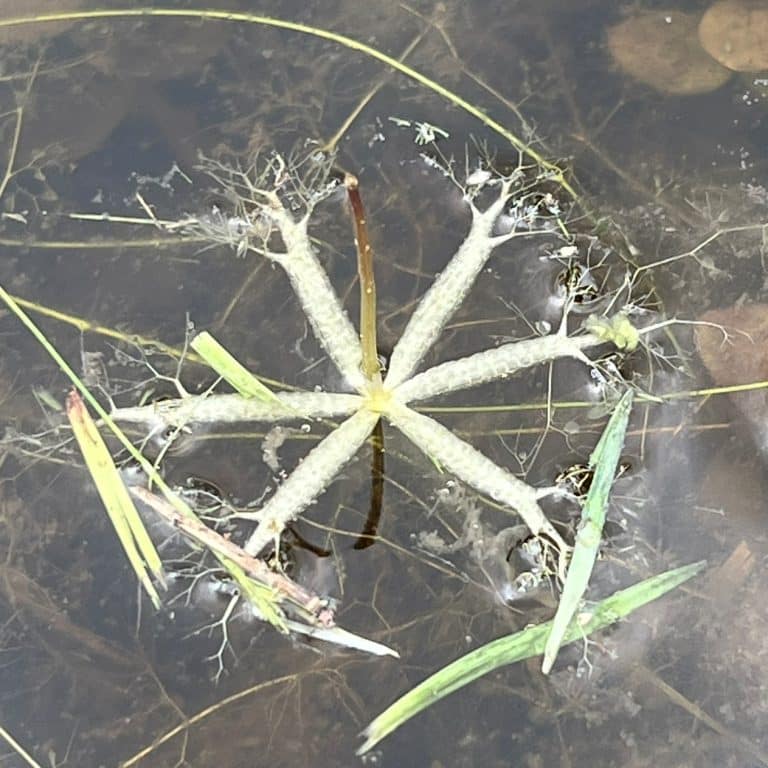
    And although the U.S. has several other aquatic species, there are also more than one that live in the saturated soils of local Wet Pine Savannas, where their bladders lie in the soil, trapping soil organisms like nematodes. Still out of sight, but effective. Their presence in these habitats is only known because of their bright yellow flowers that emerge from the soil.

    We may not have Venus Flytraps in our part of the world, but we do have some of the most effective and sophisticated active carnivorous plants anywhere – if you know where to look.

    Hope to see you in our great outdoors!

    Aquatic Bladderwort Carnivorous Plants
    Previous ArticleEdible Book Festival Sparks Creativity on USM Campuses
    Next Article Picnic Season
    Mark W. LaSalle, Ph.D.

    Mark is a naturalist and wetland ecologist, providing expertise on wetlands, water quality and environmental impacts of humans. He has also developed and conducted a number of environmental education programs and workshops for youth, teachers, realtors, and the general public on a variety of subjects including wetlands, natural history, and environmental landscaping. Mark is a graduate of the University of Southwestern Louisiana (B.S. and M.S. degrees) and Mississippi State University (Ph.D.). Mark is the recipient of the Chevron Conservation Award, the Mississippi Wildlife Federation Conservation Educator Award, the Gulf Guardian Award, and the Boy Scouts of America Silver Beaver Award.

    Related Posts

    Qu’est Que C’est

    The iNaturalist App – Helping with Qu’est Que C’est

    May 30, 2026
    Qu’est Que C’est

    An Ode to Maggots

    May 16, 2026
    Qu’est Que C’est

    Those Birds Under the Bridge

    April 25, 2026
    Add A Comment

    Comments are closed.

    Stay In Touch
    • Facebook
    • YouTube
    • TikTok
    • Twitter
    • Instagram

    Subscribe to Updates

    Get the latest good news happening in Mississippi!

    Most Popular

    The Old Farmer’s Almanac Has Spoken on Mississippi’s Fall Forecast

    July 25, 20258K Views

    Old Sayings Say It Best

    May 22, 20248K Views

    Actor Jeremy London Calls Mississippi Home

    August 1, 20247K Views
    Our Picks

    Why the Mockingbird Still Deserves Its Place as Mississippi’s State Bird

    June 13, 2026

    From Alcorn to the Fast Lane: Breanna O’Leary’s Historic NASCAR Journey

    June 12, 2026

    Southern Miss Joins Major NOAA Effort to Strengthen America’s Seafood Supply

    June 12, 2026

    Subscribe to Updates

    Get the latest good news from Our Mississippi Home.

    Our Mississippi Home
    Facebook X (Twitter) Instagram YouTube TikTok RSS
    • About OurMSHome
    • Advertise
    • Community Partners
    • Privacy Policy
    • Guidelines
    • Terms
    © 2026 Our Mississippi Home. Designed by Know_Name.

    Type above and press Enter to search. Press Esc to cancel.

    Ad Blocker Enabled!
    Ad Blocker Enabled!
    Our website is made possible by displaying online advertisements to our visitors. Please support us by disabling your Ad Blocker.

    Sign In or Register

    Welcome Back!

    Login to your account below.

    Lost password?