


Skip to content
Close Menu

    Subscribe to Updates

    Get the latest creative news from FooBar about art, design and business.

    Most Viewed

    The Old Farmer’s Almanac Has Spoken on Mississippi’s Fall Forecast

    July 25, 2025

    Old Sayings Say It Best

    May 22, 2024

    Actor Jeremy London Calls Mississippi Home

    August 1, 2024

    The Julep Room: A Hole in the Wall with History

    January 8, 2024
    Facebook X (Twitter) Instagram
    Saturday, April 4, 2026
    Trending
    • The Easter Bonnet: A Mississippi Tradition That Still Shows Up
    • Menhaden Season Brings the Scents and Sounds of Summer on the Coast
    • The Bees Beneath Your Feet: Why Mississippi’s Native Pollinators Matter
    • The Anola Club Beach/ Elementary School: A History Lesson
    • Free, Family-Friendly Earth Day Festival Celebrates Community and Conservation in Moss Point
    Facebook X (Twitter) Instagram YouTube TikTok
    Login
    Our Mississippi HomeOur Mississippi Home
    • Living

      The Easter Bonnet: A Mississippi Tradition That Still Shows Up

      April 4, 2026

      The Bees Beneath Your Feet: Why Mississippi’s Native Pollinators Matter

      April 3, 2026

      Moss Point Celebrates 125th Birthday with Festival

      March 27, 2026

      The Hummingbirds Return

      March 25, 2026

      41 Years Strong: Kosciusko’s Beloved Easter Passion Play Continues

      March 24, 2026
    • Arts / Culture

      Southern Miss A Cappella Group, Spirit of Southern, Wins ICCA Quarterfinal, Advances to Semifinals

      March 26, 2026

      41 Years Strong: Kosciusko’s Beloved Easter Passion Play Continues

      March 24, 2026

      More Than Theater: The Impact of Jayna Young

      March 19, 2026

      Screamin’ Eagles Guitar Festival Returns to the Hub City

      March 4, 2026

      Theatre MSU Brings the Heat, Razor-Sharp Wit to 2026 Season

      February 5, 2026
    • Entertainment

      Eaglepalooza Returns to Downtown Hattiesburg April 24 with Headliner Houndmouth

      March 25, 2026

      Long Beach Radish Festival returns April 18

      March 18, 2026

      Moss Point Proud: Daniel Stallworth Sings His Way Into American Idol’s Top 20

      March 16, 2026

      WMSV The Junction Listeners ‘Rise and Ring’ With On-Air Bulldog Talent

      January 29, 2026

      Where Faith, Family, and Music Meet: Shay and Michi Guess of Mantachie

      January 14, 2026
    • Food & Dining

      From Sound to Shell: The Story of Mississippi Oysters

      March 29, 2026

      From Hard Times to Po-Boys: The Flavors of Old Biloxi

      March 22, 2026

      Mississippi Pot Roast: The Slow Cooker Recipe That Took the Internet (and Our Kitchens) by Storm

      March 15, 2026

      MSU’s Food Science, Culinology Students Cooking Up Success at National Competition

      March 10, 2026

      The Best Things I Ever Ate on the Mississippi Gulf Coast

      March 8, 2026
    • Environment

      Menhaden Season Brings the Scents and Sounds of Summer on the Coast

      April 3, 2026

      The Bees Beneath Your Feet: Why Mississippi’s Native Pollinators Matter

      April 3, 2026

      Free, Family-Friendly Earth Day Festival Celebrates Community and Conservation in Moss Point

      April 2, 2026

      Celebrate International Beaver Day Every Day at the Mississippi Aquarium

      April 2, 2026

      S3 Camps offer Informal STEM Learning During School Breaks

      March 30, 2026
    • Lagniappe
      • Business
      • Sports
      • Education
      • Health & Wellness
      • OurMSVoices
      • People
    Subscribe
    Our Mississippi HomeOur Mississippi Home
    Home»Environment»Being Dioecious – Male and Female Plants
    Environment Qu’est Que C’est

    Being Dioecious – Male and Female Plants

    Mark W. LaSalle, Ph.D.By Mark W. LaSalle, Ph.D.November 19, 20233 Mins Read26 Views
    Share Facebook Twitter Pinterest LinkedIn Tumblr Reddit Telegram Email
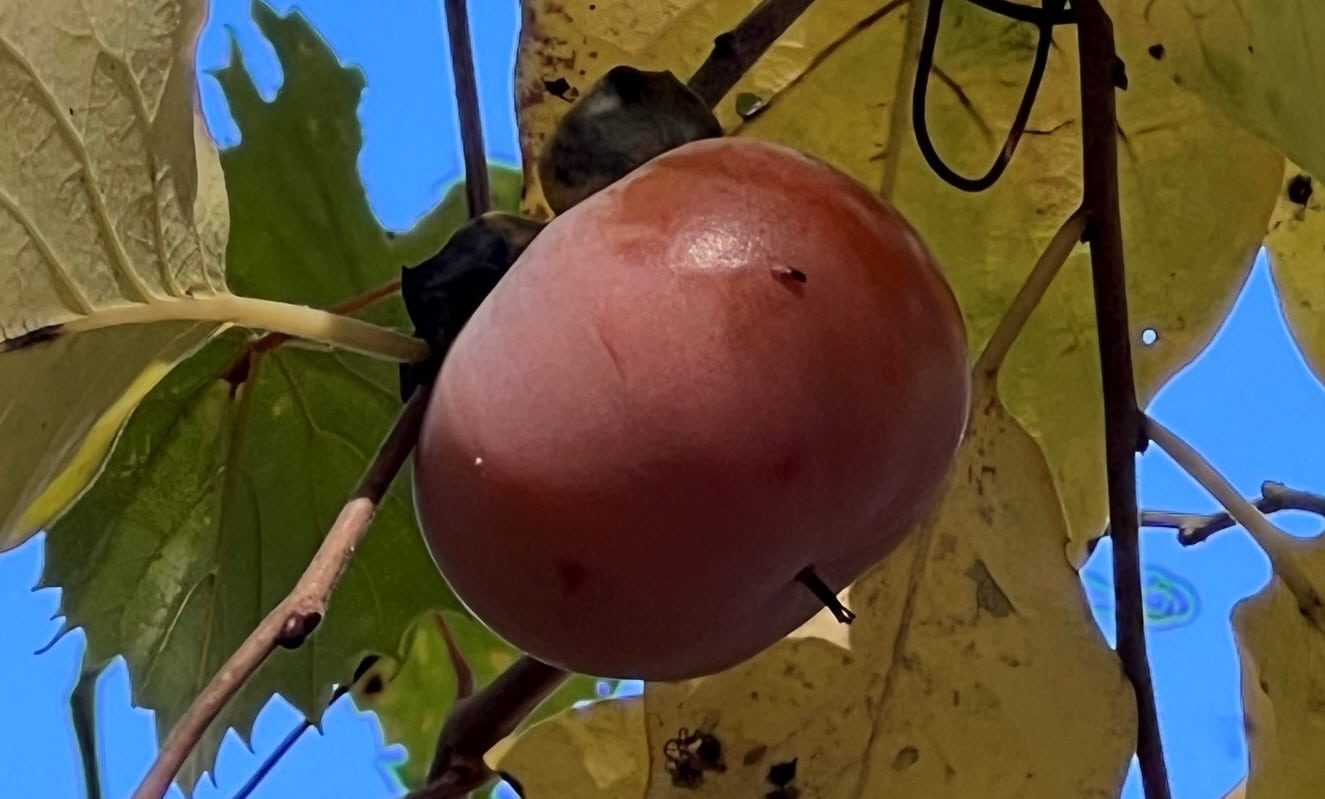
    Wild Persimmon
    Share
    Facebook Twitter LinkedIn Pinterest Email Copy Link

    Plants with colorful or tasty fruit are valued by many of us for their beauty, as food, or both. I am a big fan of wild Persimmon and Red Mulberry, for example, but not every Persimmon or Mulberry tree in the woods will have fruit. And there is a perfectly good reason why. Male plants will never bear fruit – they can only produce the pollen needed by nearby female plants to form those tasty treats I seek.

    Plants that have male and female reproductive structures in separate plants are referred to as dioecious: meaning “two houses” (di=two, oecious=house). It turns out that many common plants in nature are just so, with any given plant having either male or female flower parts. These types of flowers are referred to as imperfect flowers. Both types can have petals, but staminate flowers bear only long filaments that hold pollen at the tips, while pistillate flowers typically have what looks like a vase-shaped ovary, with a stalk having a sticky end to trap pollen, often delivered by a pollinator.

    I am often asked why a certain type of plant in someone’s yard has never had fruit, like Yaupon Holly, Persimmon, or Red Mulberry. Hollies, Wax Myrtle, Gallberry, Black Gum, Red Bay, Horse Sugar, Wild Olive, Groundsel, and many other common plants are also dioecious species. A forester once suggested that nearly 70% of Red Bay plants in our woodlands are males – why is a mystery. Given how hard it seems to find a female Persimmon or Red Mulberry, the same may well be true for those species as well.

    Imperfect flowers are not, however, confined to dioecious species. Corn and many other grasses also have imperfect flowers, but on the same plant – referred to as monoecious (one house) species. The male or staminate flowers on corn are borne at the top of a mature plant, with the female or pistillate flowers lower on the stalk – the ears that have long tassels that collect the pollen that falls upon them, and deliver that to the many ovaries on the cob that will form the kernels we eat.

    Back to the point about why we like colorful fruit, it can be frustrating to use these species of plants in landscaping, if the fruit is the selling point. A nice row of Yaupon Holly or Wax Myrtle plants will look quite different with a mixture of females with bright red berries next to berryless male plants. Most nurseries that sell these species have plants raised from seeds, meaning that about half will be male and the other half female. But, until they are mature enough to produce flowers, they look the same. In order to guarantee male or female plants, producers grow them from cuttings.

    In any case, having a fruitless dioecious plant is not the end of the world. The foliage is often as attractive as the flowers. Besides, your male plants are important sources of pollen for the nearby fruit-bearing plants, even if they are in your neighbor’s yard. Another great reason to be friendly to all your neighbors, if only to be invited to share in the bounty of yummy fruit.

    Hope to see you in our great outdoors!

    Previous ArticlePractical Advice to Make Cooking Thanksgiving Dinner Trouble-Free
    Next Article Recipe: Tis’ the Season for Chicken and Dumplings
    Mark W. LaSalle, Ph.D.

    Mark is a naturalist and wetland ecologist, providing expertise on wetlands, water quality and environmental impacts of humans. He has also developed and conducted a number of environmental education programs and workshops for youth, teachers, realtors, and the general public on a variety of subjects including wetlands, natural history, and environmental landscaping. Mark is a graduate of the University of Southwestern Louisiana (B.S. and M.S. degrees) and Mississippi State University (Ph.D.). Mark is the recipient of the Chevron Conservation Award, the Mississippi Wildlife Federation Conservation Educator Award, the Gulf Guardian Award, and the Boy Scouts of America Silver Beaver Award.

    Related Posts

    Community Picks

    Menhaden Season Brings the Scents and Sounds of Summer on the Coast

    April 3, 2026
    Education

    The Bees Beneath Your Feet: Why Mississippi’s Native Pollinators Matter

    April 3, 2026
    Community Picks

    Free, Family-Friendly Earth Day Festival Celebrates Community and Conservation in Moss Point

    April 2, 2026
    View 1 Comment

    1 Comment

    1. Mark W. LaSalle, Ph.D. on November 20, 2023 5:58 pm

      OOPS – Correction: Meant to say 70% of Persimmon were male – not Red Bay which is Monoecious( with perfect flowers). 😳🙄😉

    Stay In Touch
    • Facebook
    • YouTube
    • TikTok
    • Twitter
    • Instagram

    Subscribe to Updates

    Get the latest good news happening in Mississippi!

    Most Popular

    The Old Farmer’s Almanac Has Spoken on Mississippi’s Fall Forecast

    July 25, 20258K Views

    Old Sayings Say It Best

    May 22, 20247K Views

    Actor Jeremy London Calls Mississippi Home

    August 1, 20247K Views
    Our Picks

    The Easter Bonnet: A Mississippi Tradition That Still Shows Up

    April 4, 2026

    Menhaden Season Brings the Scents and Sounds of Summer on the Coast

    April 3, 2026

    The Bees Beneath Your Feet: Why Mississippi’s Native Pollinators Matter

    April 3, 2026

    Subscribe to Updates

    Get the latest good news from Our Mississippi Home.

    Our Mississippi Home
    Facebook X (Twitter) Instagram YouTube TikTok RSS
    • About OurMSHome
    • Advertise
    • Community Partners
    • Privacy Policy
    • Guidelines
    • Terms
    © 2026 Our Mississippi Home. Designed by Know_Name.

    Type above and press Enter to search. Press Esc to cancel.

    Ad Blocker Enabled!
    Ad Blocker Enabled!
    Our website is made possible by displaying online advertisements to our visitors. Please support us by disabling your Ad Blocker.

    Sign In or Register

    Welcome Back!

    Login to your account below.

    Lost password?