



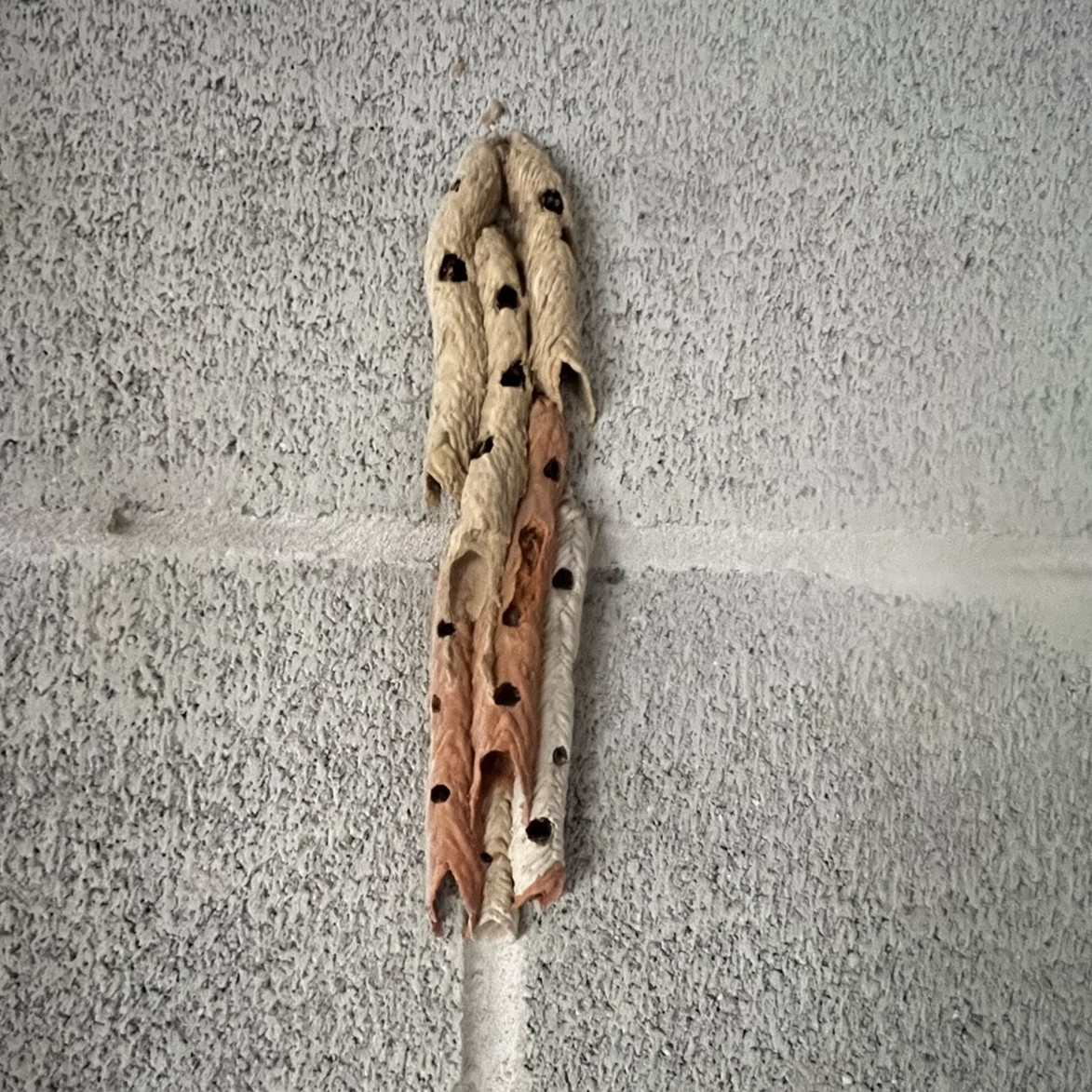
Among the many species of large wasps in our world, some create beautiful nests from raw materials around them. Paper wasps and hornets scrape wood fibers from trees to create their nests. Others use soil to create earthen structures, the most recognizable being that of Organ Pipe Mud Daubers.
Three species of mud daubers live across the eastern U.S. and Canada. As their name implies, they collect soil to mix with saliva to create earthen chambers for their young. Two of the three species build their own chambers. The third species reuses and repairs old nests made by the other two species.
All three species provision their nests with paralyzed spiders, mostly small web-building species. Adult wasps sting their prey and place upwards of 8-10 spiders in each cell of their nests. The spiders remain alive until the single larva in each cell consumes them, one after the other. Fully developed adults chew their way out of their cells.
To watch one of the two nest-building species collect soil from open ground or when they are laying out the moistened mud to create the nest, is something to behold. These wasps are laser focused on their tasks, often emitting a low buzz. Any mason would value the skills that these insects bring to their work.
As for beauty, the nests of Organ Pipe Mud Daubers (Trypoxylon politum) tops them all. Built largely by the female, it consists of several long tubular chambers, most often laid side by side to resemble organ pipes. Each chamber may include 4-6 interior cells within which a single egg is laid on the last spider stuffed inside. The nest built by Yellow-Legged Mud Daubers (Sceliphron caementarium) are more globular, with chambers stacked on top of each other.
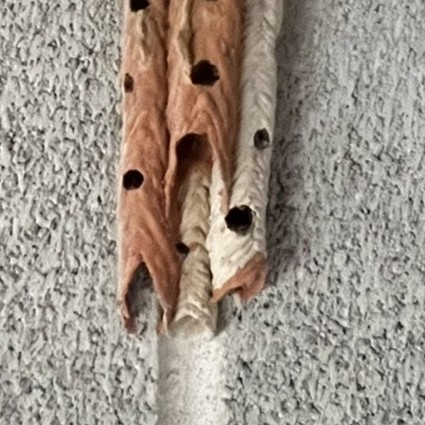
What adds character to these marvels of construction are different colors of soil that these wasps may choose. If you look closely, or watch a wasp as they make each chamber, the walls begin as wet rings of mud extruded from the wasp’s mouthparts, taken from a lump of mud held in their mandibles. It is mesmerizing to watch the collection of mud from its source or the construction of the nest.
As for their place in our world, mud daubers are important elements of local food chains. They help control populations of web spiders, that feed their young, but are equally important as pollinators of flowering plants, the source of food for adults. Both sexes help protect young during nest building, the male often staying behind to guard against parasites and predators. In that way, they provide good parental care.
For us, we most often find these nests attached to protected vertical walls in our sheds, garages, patios and attics. In nature, mud daubers seek out caves, overhangs of rock outcrops, large tree holes and parts of tree trunks protected from rain. Besides suitable nest sites, these wasps need sources of exposed mud or soil, and forests where they can collect web spiders.
If you do encounter these shiny black/blue wasps, fear not as they are quite docile by nature. Organ Pipe Mud Daubers are solid black with the tips of their hind legs colored yellow. The slightly larger Yellow-Legged Mud Daubers have yellow on their legs, thorax and abdomen. Blue Mud Daubers (Chalybion californicum) are solid, metallic blue.
So instead of saying ugh when you spot one of these nests, take the time to appreciate the skill that these insect engineers bring to their work.
Hope to see you in our great outdoors!