



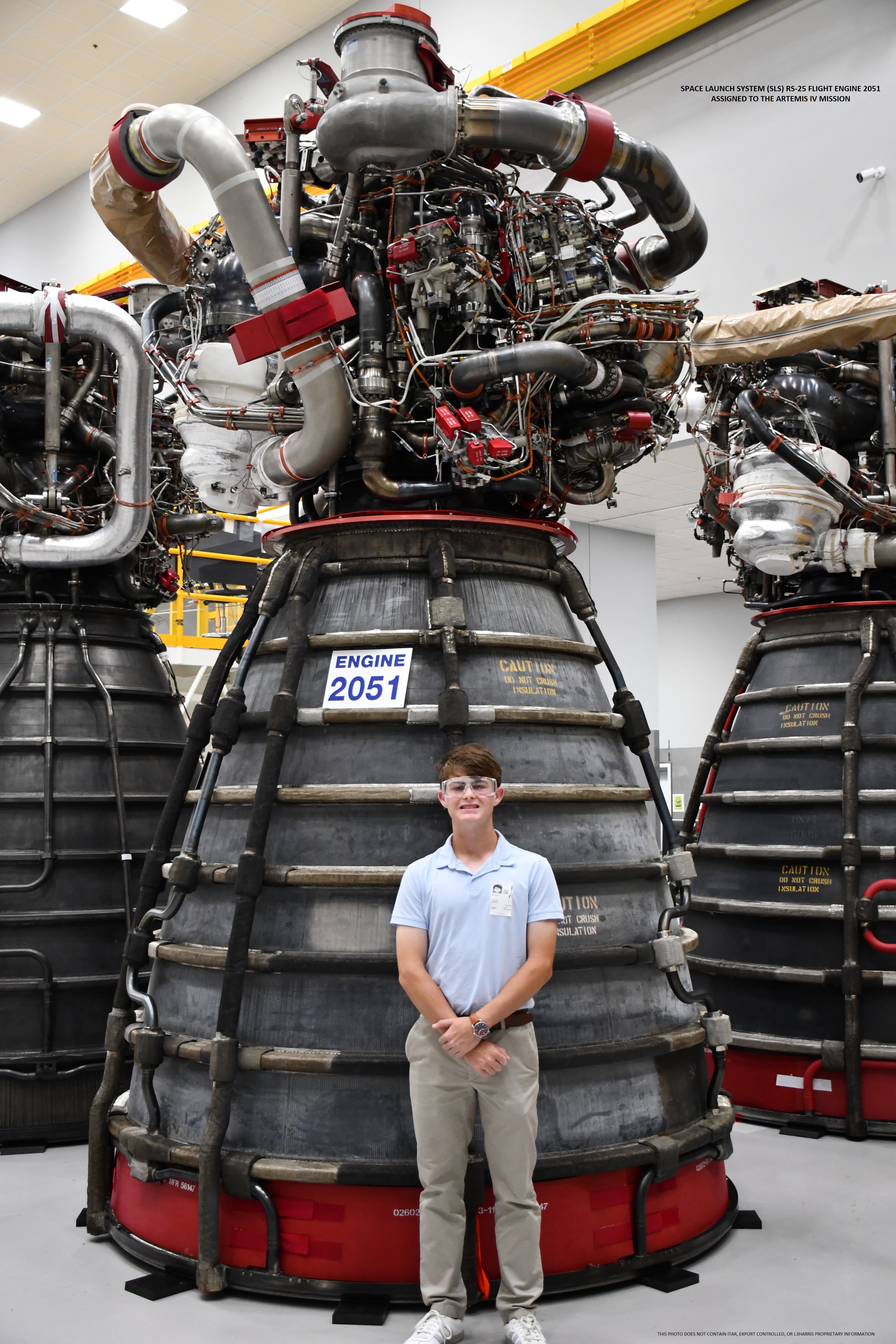
There is something pretty special about seeing a childhood spark turn into a plan for the future.
For Collin Murphy, that spark happened years ago inside Chevron FABLAB Jackson County.
He was a kid from Vancleave attending one of the FABLAB’s early summer camps when he opened a laptop and discovered that something he created on a screen could become something he could actually hold in his hands.
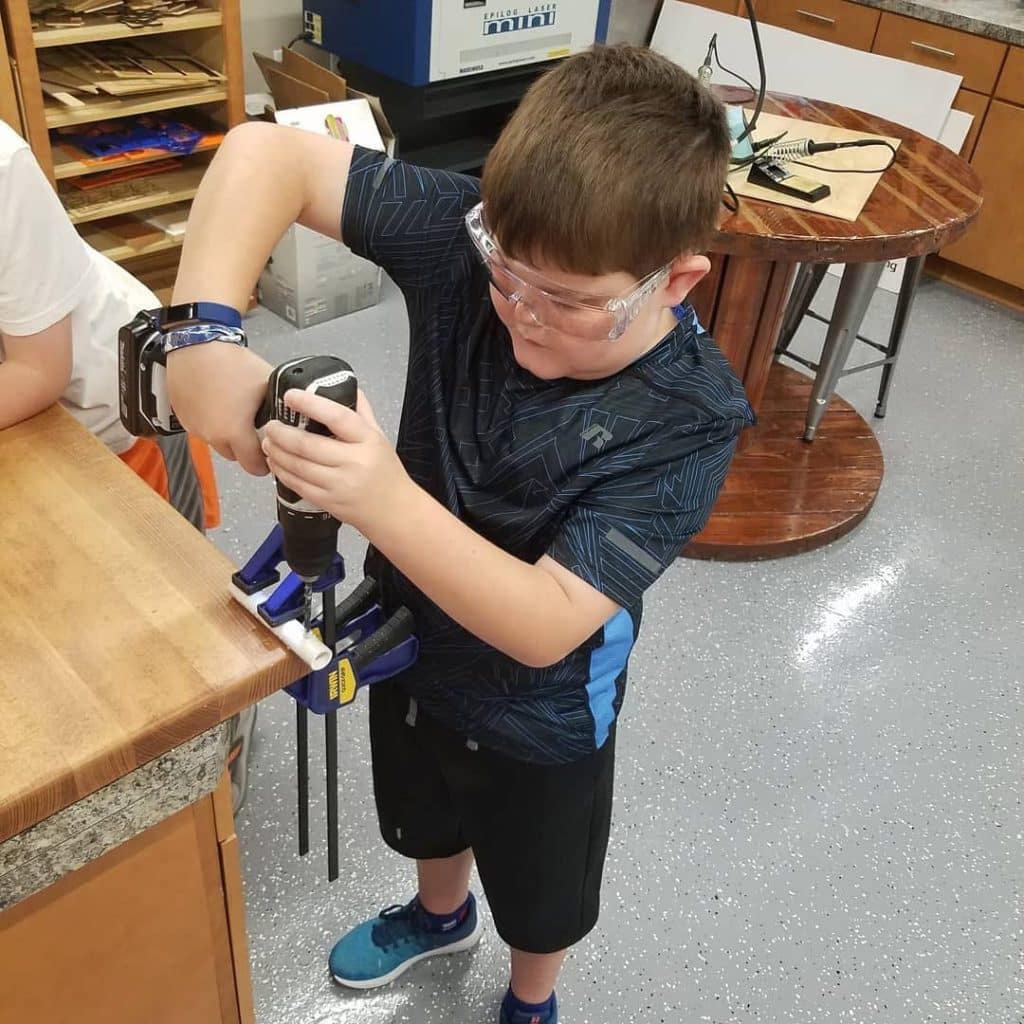
“I remember my first summer camp and it was amazing,” Collin said of his first FABLAB experience. “I remember opening a laptop and being instantly fascinated. The idea that I could design something online and hold a 3D-printed version of it in my hand the very next day is something that still excites me.”
Apparently, it excited him quite a bit back then, too.
After that first day, Collin went home and asked his parents to help him create an email address so he could save his projects and keep working on them. One week of camp wasn’t enough, either.
“I loved the camp so much that I asked to return every week for the rest of the summer, and I continued attending every year until the 6th grade,” he said. “The coolest part was watching the items I designed on a computer come to life on a 3D printer. Once I learned how to use the laser engravers, I started making as many things as I could.”
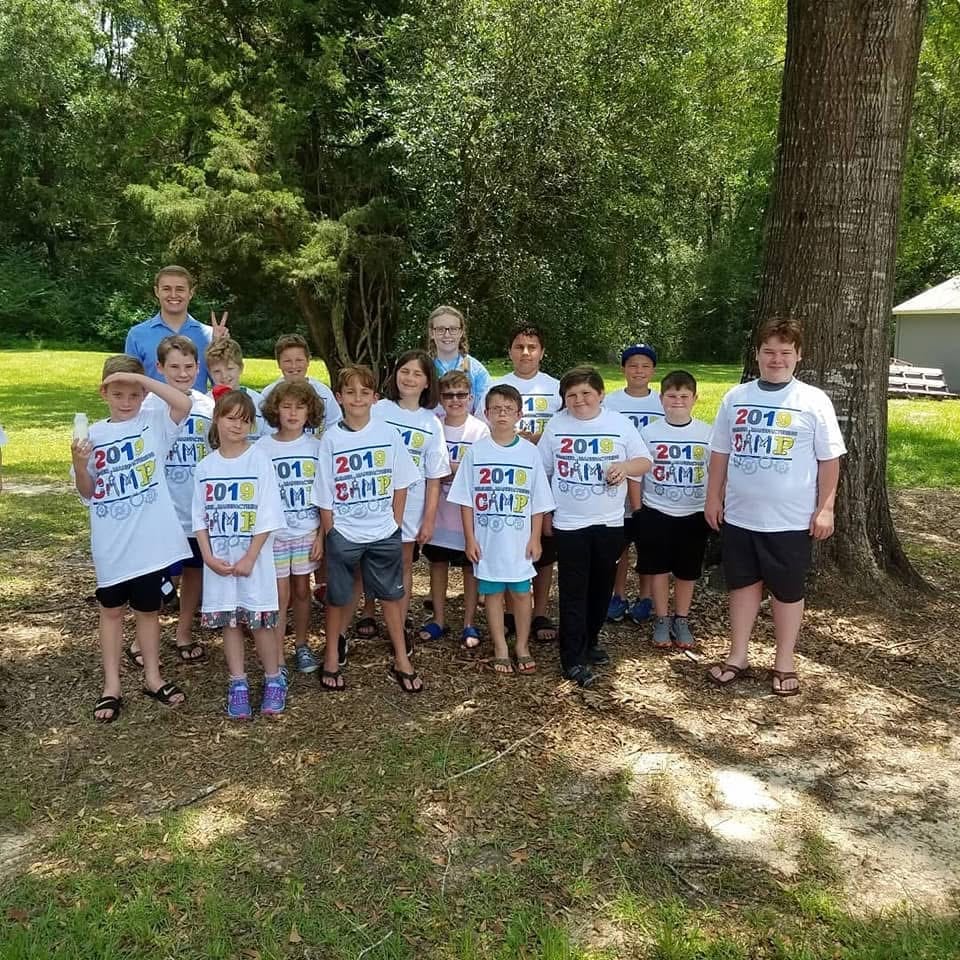
Years later, the little boy who couldn’t get enough of 3D printers and laser engravers is now 18, a senior at St. Patrick Catholic High School, researching bacteria levels in Mississippi coastal waters.
And he’s just getting started.
Collin grew up in Vancleave and, outside the classroom, competes in tennis tournaments and is heavily involved in Boy Scouts. He recently completed his Eagle Scout project, and perhaps unsurprisingly, he used the opportunity to introduce STEM concepts to local elementary school students.
His own introduction to STEM at Chevron FABLAB, he said, helped shape not only his interests but his academic path.
“The Fab Lab introduced me to a world of learning at a very early age, which ultimately shaped the school I attend and my academic path,” Collin said. “Learning the fundamentals of language-based coding and 3D modeling software provided me with a strong foundation that accelerated my opportunities.”
He saw just how much of a head start that foundation had given him when he attended his first school robotics meeting. When asked to 3D model a practice part, Collin completed it faster than the other students because he was already familiar with the technology.
Those early summer days of creating projects eventually grew into a much bigger question: How could he use science to solve problems in his own community?
Living his entire life on the Mississippi Gulf Coast gave him an idea.
Collin began researching fecal coliform, E. coli, and Vibrio levels in Mississippi coastal waters. Vibrio, in particular, caught his attention.
“I have lived on the coast my entire life, yet have always been advised not to go into the water,” he said. “I wanted to investigate the root causes of this bacterium’s presence.”
His research took him well beyond the typical high school science project.
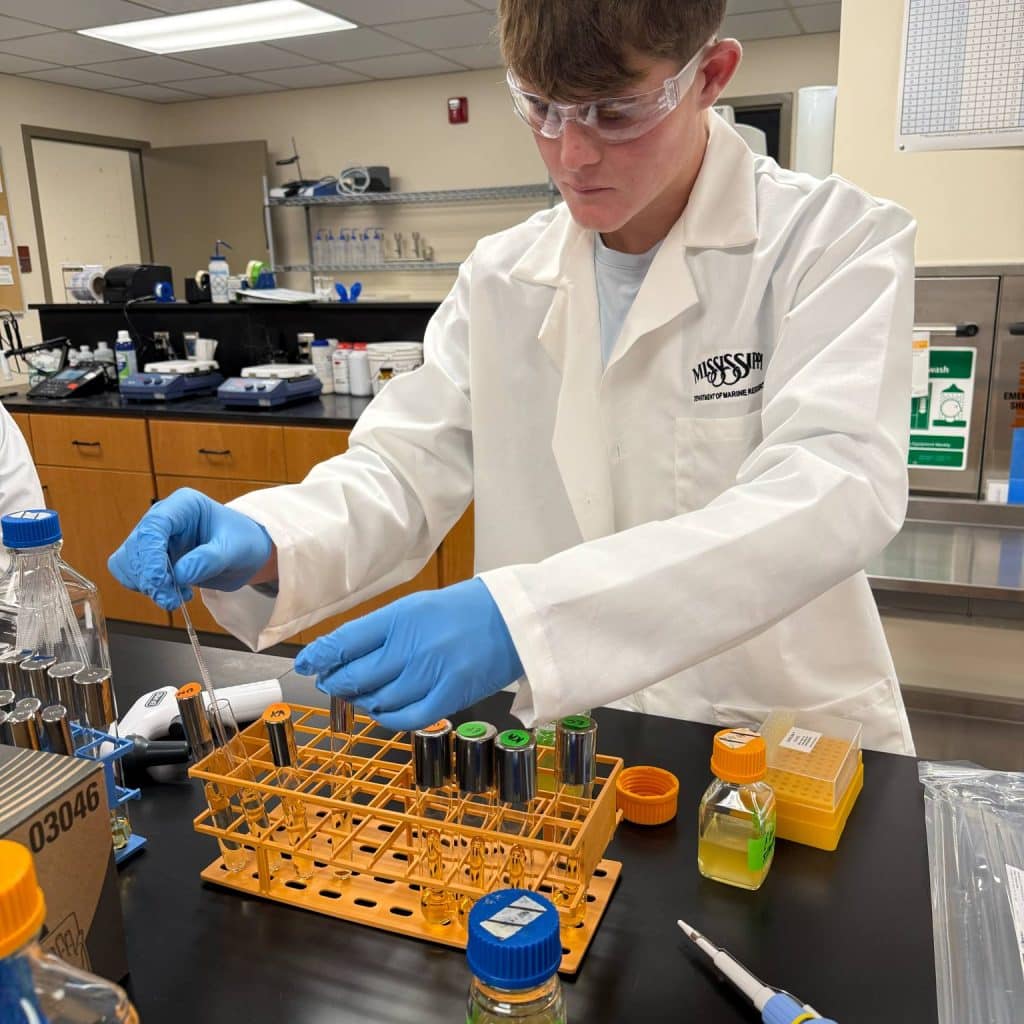
Collin collected water samples from locations across Mississippi’s coastal waters and tested them at the Mississippi Department of Marine Resources coastal research lab. He then analyzed the water-quality results, identified trends, and began developing a predictive formula.
What he found was eye-opening.
“The most surprising part of the process was realizing the prevalent danger; many of the waters we swim in and harvest seafood from frequently contain this bacteria,” Collin said. “Learning why this happens and understanding the full implications was entirely new to me.”
His work earned him a $1,000 scholarship from the Mississippi Department of Marine Resources, the Mississippi Secretary of State and the Grand Bay National Estuarine Research Reserve. The recognition will allow him to continue his research with more advanced and accurate testing.
The goal is practical: create a faster way to estimate whether water may be contaminated.
“The primary purpose of the formula is to have a faster way of knowing if the water is contaminated,” Collin said. “By plugging in simple, readily available numbers, you can get an estimated bacteria count instantly. Rather than having to wait for water test results to come back.”
Now, he is taking his research another step forward.
Collin is working toward publication in a scientific journal — at just 18 years old.
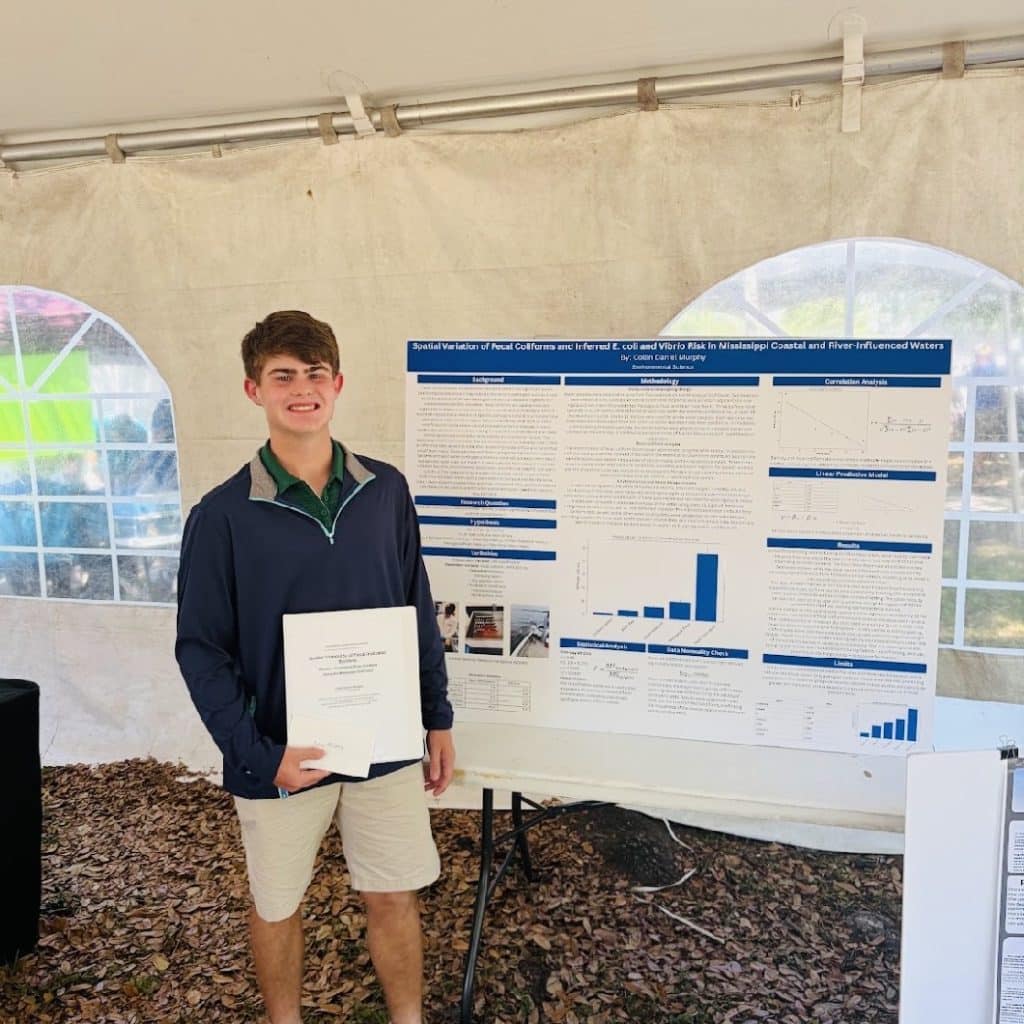
He has spent time reviewing previous experiments, studying scientific standards, verifying his findings with local professionals, and making sure his work is accurate and repeatable. He has now begun writing manuscripts and preparing official reports.
“Having my work published at 18 would be a tremendous honor and an incredible opportunity to share my research with the wider scientific community,” he said.
Next up, he hopes, is college.
Collin has his sights set on MIT or Georgia Tech, where he hopes to major in mechanical engineering and minor in computer science. Eventually, he would like to work in aerospace or the defense industry.
And he can trace that ambition all the way back to a summer camp in Jackson County.
“Ever since my first visit to the Fab Lab, I knew I wanted to be an engineer,” he said.
That is what makes Collin’s story — and programs like Chevron FABLAB Jackson County — so important.
Not every elementary school student walking into a STEM camp knows what they want to be someday. They shouldn’t have to. Sometimes, the opportunity lets them discover something they didn’t know existed.
For Collin, it was there.
Years ago, the FABLAB shared a photo of him as a young camper and described a “fire” for STEM that had been ignited. Today, that photo means something more.
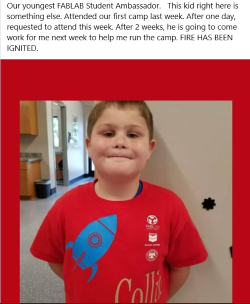
“I see how it was the start of everything,” he said. “It was the beginning of a passion that the Fab Lab introduced to me at such a young age. When I see that picture, I remember all the projects I completed and the challenges I overcame.”
His story is also a pretty good reminder of what can happen when Mississippi students are given access to technology, mentors, and room to experiment.
“I think programs like the Fab Lab provide critical exposure to new technologies that represent the future,” Collin said. “For me, the Fab Lab opened up a new world and shaped the activities I participate in today. These programs allow Mississippi kids to learn valuable skills and prepare themselves to build the future.”
And for the next Mississippi kid who is curious about STEM but has no idea where that curiosity might lead, Collin has some advice.
“I would definitely encourage them to explore that passion and curiosity,” he said. “Programs offered both inside and outside the state provide excellent exposure to experiences that can help students discover what they truly enjoy.”
For Collin, it started with a laptop, a 3D printer, and the freedom to see what he could create.
Today, he’s using those same instincts to study the waters of the Mississippi Gulf Coast, pursue published scientific research, and dream about a future in engineering.
Not bad for a spark that started at summer camp.
*All photos are courtesy of Collin Murphy
