


Skip to content
Close Menu

    Subscribe to Updates

    Get the latest creative news from FooBar about art, design and business.

    Most Viewed

    The Old Farmer’s Almanac Has Spoken on Mississippi’s Fall Forecast

    July 25, 2025

    Old Sayings Say It Best

    May 22, 2024

    Actor Jeremy London Calls Mississippi Home

    August 1, 2024

    The Julep Room: A Hole in the Wall with History

    January 8, 2024
    Facebook X (Twitter) Instagram
    Thursday, June 4, 2026
    Trending
    • Two-Year Effort Lifts 120-Foot Cross in Greene County
    • Railroad Crossing from the Past to the Present is offered at Chandeleur Depot Brew Pub
    • Stone County Library Starts No-Cost Summer Meal Program
    • Pull Up a Tailgate Chair: Chevron Launches New Podcast About the Energy That Powers Everyday Life
    • Rooted in Tupelo: Native Son Farm
    Facebook X (Twitter) Instagram YouTube TikTok
    Login
    Our Mississippi HomeOur Mississippi Home
    • Living

      The Best Things in a Mississippi Summer Are Still Free

      June 2, 2026

      Wisdom from a House Wren

      May 28, 2026

      The Echoes of Remembrance: Memorial Day

      May 25, 2026

      Biscuits, Conversation, and a Biloxi Morning Tradition

      May 24, 2026

      The Sweet Taste of Summer: Mississippi Peaches and a New Chapter at TSM Farms

      May 22, 2026
    • Arts / Culture

      Mississippi Humanities Council to Host Screening of Natchez at Palace Theater in McComb

      May 27, 2026

      Contest Seeks Pearl River youths’ Fair Book Designs

      May 26, 2026

      Gulf South Art Gallery: Big Art in a Small Mississippi Town

      May 26, 2026

      University Museum Opens Doors to Community Partnerships

      May 21, 2026

      The Spiral Continues: A Return to Ocean Springs and the World of Walter Anderson

      May 5, 2026
    • Entertainment

      Bay Fest Celebrates Gulf Coast Creativity in Bay St. Louis

      May 27, 2026

      Family, Community Focus of Forrest County Boxing Event

      May 14, 2026

      Inside McComb’s Exotic Animal Kingdom

      May 13, 2026

      Nearly Sold Out: Air Supply 50th Anniversary Coming to MSU Riley Center

      April 17, 2026

      The Forrest County Fair will return to Hattiesburg beginning April 17

      April 13, 2026
    • Food & Dining

      Biscuits, Conversation, and a Biloxi Morning Tradition

      May 24, 2026

      A Coastline Full of Flavor: Where to Eat Along Mississippi’s Gulf Coast

      April 28, 2026

      Sip, Stroll, and Stay Awhile in Ocean Springs

      April 8, 2026

      From Sound to Shell: The Story of Mississippi Oysters

      March 29, 2026

      From Hard Times to Po-Boys: The Flavors of Old Biloxi

      March 22, 2026
    • Environment

      The iNaturalist App – Helping with Qu’est Que C’est

      May 30, 2026

      An Ode to Maggots

      May 16, 2026

      Tips for Growing Tomatoes

      May 6, 2026

      Those Birds Under the Bridge

      April 25, 2026

      Help Create a Bird-Friendly Oasis in Mississippi

      April 24, 2026
    • Lagniappe
      • Business
      • Sports
      • Education
      • Health & Wellness
      • OurMSVoices
      • People
    Subscribe
    Our Mississippi HomeOur Mississippi Home
    Home»Arts / Culture»Mississippi History: The Apron Strings of Cotton that Tie Our State Together
    Arts / Culture

    Mississippi History: The Apron Strings of Cotton that Tie Our State Together

    Sarah BeaugezBy Sarah BeaugezApril 29, 20213 Mins Read18 Views
    Share Facebook Twitter Pinterest LinkedIn Tumblr Reddit Telegram Email
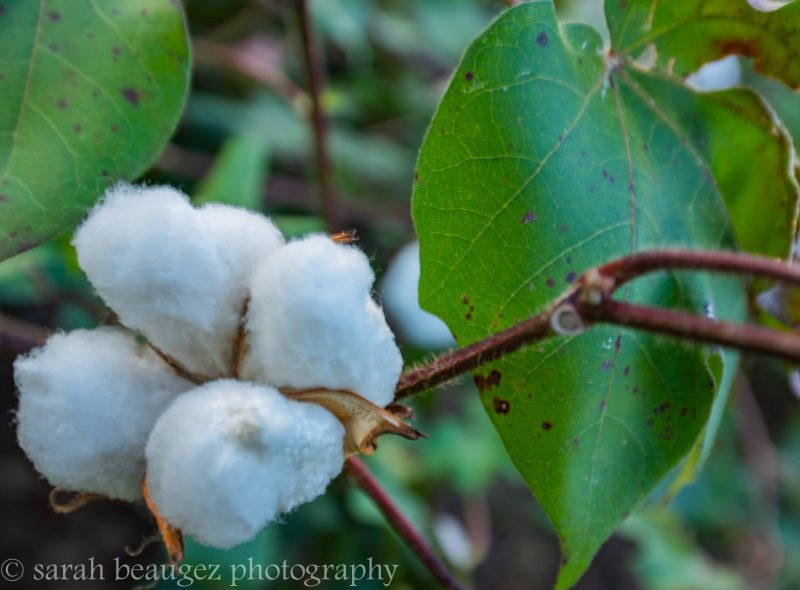
    cotton
    Photo by Sarah Beaugez
    Share
    Facebook Twitter LinkedIn Pinterest Email Copy Link

    It might not be apparent to most people the way in which Mississippians are knotted by cotton apron strings.

    “How?” you ask politely.

    Cotton didn’t become Mississippi’s number one cash crop by random sampling. It wasn’t even entertained as a cash crop until tobacco failed to bring in the high prices which it had been doing until the Spanish soldiers in New Orleans found a cheaper source and began buying from outside of the Mississippi River Valley around 1790. The Louisiana Territory was like a newborn baby and, at this juncture, was swaddled in protection by Spain, on the one hand, and ruled like a dictatorship on the other. Spain, France, and England took turns controlling the rich region until 1803, at which point the United States government purchased the territory that eventually gave birth to fifteen states.

    With the need for a new cash crop, the Natchez region decided to attempt growing indigo. (Indigo is primarily used as a blue dye). However, by 1793, growing indigo had ended due to pestilence and the crop’s harsh effect on the environment, especially for cattle.

    Enter cotton.

    The year was 1793. It was realized by growers that cotton grew easily in certain areas with particular soil composition. Eli Whitney applied to patent his cotton gin design in that same year; its easy replication made changes in the world of cotton growth, and production, which forever changed the world of textiles. Cotton had been grown, and ginned, in Jackson County, the eastern-most Gulf Coastal county, for at least twenty-five years prior to Whitney’s gin.

    U.S. census data reflects zero percent cotton production in 1800. But hold on to your britches … in less than sixty years, the U.S. became the world’s number one supplier of cotton fiber capable of being ginned, spun, and woven into textiles which could then be manufactured into garments. Mississippi produced one-third of the total amount of cotton in the U.S. in 1860.

    Mississippi’s one-third of the total U.S. cotton production in 1860, equated to 1,250,000 bales or 562,500,000 pounds of cotton (averaging a conservative 450 pounds per bale), according to historian Gene Dattel.

    Skip one hundred-plus years. For many reasons, Mississippi’s position as the center of a global economy had long since ended. Within that time period, massive changes had occurred within the practice and culture of growing cotton, including the end of the Civil War, sharecropping, and the mechanization of the crop, as well.

    If we look at a Mississippi production map on the eve of the Civil War, circa 1860, it is clear where cotton production was greatest: in the Black Prairie region on the north-central side of the state, Madison County, Pontotoc County, and the area on each side of the Mississippi River, south of Sharkey-Issaquena counties all the way to the Louisiana line. While there was some production in the Delta, it was minuscule compared to the other areas in Mississippi. Only 10% of Delta land was cleared for the planting of cotton in 1860.

    Cotton fiber affects most, if not all, of the people on the planet every single day. It is still expensive to grow in an iffy market that seems to crave synthetic fibers. However, if we look at how Our Mississippi continues to be a major player in cotton production, we must consider a serious glance at the historical context and pay attention to how far we’ve come.

    cotton Mississippi history
    Previous ArticleUSM Marine Education Center Offering Summer Camps, Teacher Professional Development Workshops
    Next Article Returning to normalcy: a good weekend in Oxford
    Sarah Beaugez

    Related Posts

    Arts / Culture

    Mississippi Humanities Council to Host Screening of Natchez at Palace Theater in McComb

    May 27, 2026
    Arts / Culture

    Contest Seeks Pearl River youths’ Fair Book Designs

    May 26, 2026
    Arts / Culture

    Gulf South Art Gallery: Big Art in a Small Mississippi Town

    May 26, 2026
    Add A Comment

    Comments are closed.

    Stay In Touch
    • Facebook
    • YouTube
    • TikTok
    • Twitter
    • Instagram

    Subscribe to Updates

    Get the latest good news happening in Mississippi!

    Most Popular

    The Old Farmer’s Almanac Has Spoken on Mississippi’s Fall Forecast

    July 25, 20258K Views

    Old Sayings Say It Best

    May 22, 20248K Views

    Actor Jeremy London Calls Mississippi Home

    August 1, 20247K Views
    Our Picks

    Two-Year Effort Lifts 120-Foot Cross in Greene County

    June 4, 2026

    Railroad Crossing from the Past to the Present is offered at Chandeleur Depot Brew Pub

    June 4, 2026

    Stone County Library Starts No-Cost Summer Meal Program

    June 3, 2026

    Subscribe to Updates

    Get the latest good news from Our Mississippi Home.

    Our Mississippi Home
    Facebook X (Twitter) Instagram YouTube TikTok RSS
    • About OurMSHome
    • Advertise
    • Community Partners
    • Privacy Policy
    • Guidelines
    • Terms
    © 2026 Our Mississippi Home. Designed by Know_Name.

    Type above and press Enter to search. Press Esc to cancel.

    Ad Blocker Enabled!
    Ad Blocker Enabled!
    Our website is made possible by displaying online advertisements to our visitors. Please support us by disabling your Ad Blocker.

    Sign In or Register

    Welcome Back!

    Login to your account below.

    Lost password?