



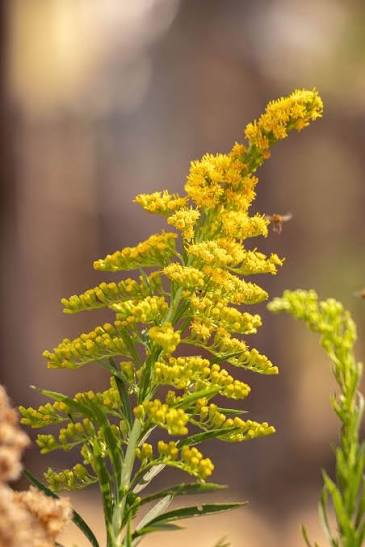
As August begins to give way to September, a familiar splash of yellow starts appearing along Mississippi roadsides, fields and fence rows. Goldenrod, with its tall stems and clusters of tiny golden flowers, is one of the first little signs that fall is on its way.
In Mississippi, goldenrod typically begins blooming in late August and reaches its peak around the third week of September. While many people think of it simply as a roadside weed, this native wildflower is much more useful than it might appear. (MSU Extension Service)
Goldenrod is especially valuable to bees, butterflies and other pollinators at a time of year when many other plants have finished flowering. Its large, sticky pollen grains are carried primarily by insects rather than the wind. That also clears up one of goldenrod’s biggest misconceptions: it usually isn’t the plant responsible for those miserable fall allergies. Ragweed, which blooms around the same time and releases large amounts of windborne pollen, is generally the real culprit. (MSU Extension Service)
Goldenrod also has a long history of being put to use. Fresh or dried goldenrod has traditionally been used in herbal teas, and certain species, such as anise-scented goldenrod, have leaves that can be used for tea. Goldenrod has also had a place in traditional folk remedies for centuries, although traditional use shouldn’t be confused with proven medical treatment. (University of Vermont)
For the crafty type, those brilliant flowers have another use. Goldenrod can produce a beautiful natural dye for fabric and other materials. Flowers gathered while they are fresh produce brighter yellows, while later blooms tend to create more muted shades. (University of Vermont)
It can also simply be enjoyed indoors. Goldenrod makes a beautiful addition to fresh or dried arrangements, bringing a little bit of the Mississippi countryside inside.
Anyone interested in harvesting wild goldenrod should first be certain of the plant’s identification and avoid plants growing where herbicides or other chemicals may have been used. And there is good reason not to take too much. What looks like a field full of free flowers is also an important late-season buffet for Mississippi’s pollinators.
So the next time you notice those unmistakable yellow blooms beginning to brighten a Mississippi roadside, take another look. Goldenrod isn’t just another weed. It’s one of those plants that quietly marks the changing of our seasons, feeds the wildlife around us and, if you know what you’re looking at, can even be put to use.
