



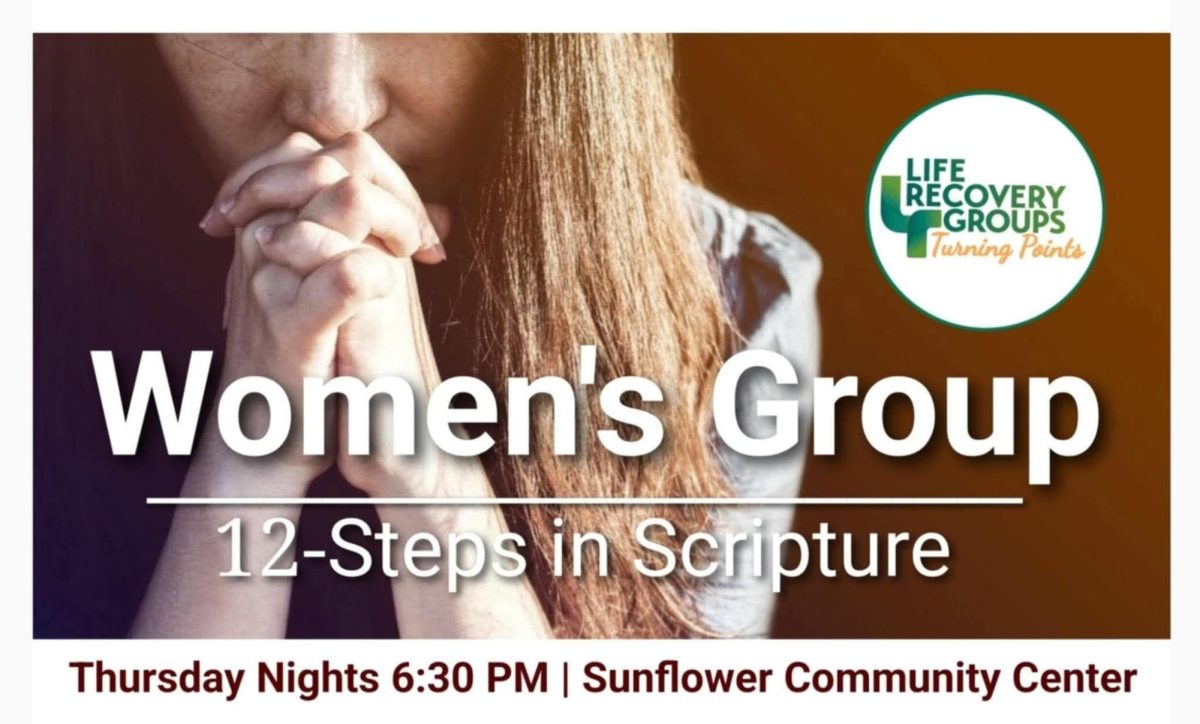
A women-only recovery program in Stone County is providing weekly support, accountability and recovery resources for women facing addiction, trauma and other life challenges.
The Church of Turning Points’ Life Recovery Program meets at 6:30 p.m. Thursdays at the Sunflower Community Center. The program welcomes women experiencing addiction, involvement with Child Protective Services, domestic violence and other personal challenges.
Originally offered as a combined group for men and women, the ministry later separated into gender-specific groups as participation increased and discussions became more personal, according to Marc Calvert, pastor of The Church of Turning Points and founder of the program.
“We felt that it was necessary to split the groups so women could share more personal things they would feel comfortable sharing with other women,” Calvert said.
Participants work through a Christian 12-step recovery curriculum based on the Life Recovery Bible. Each step typically takes about a month to complete and includes Scripture study, devotionals and group discussions focused on personal growth and healing.
Calvert said the program emphasizes addressing the underlying causes of addiction rather than focusing solely on substance use.
“Addiction is just a byproduct of a deeper issue,” Calvert said. “There is underlying trauma and other things that occurred beforehand.”
According to the Substance Abuse and Mental Health Services Administration, more than 50 million U.S. adults identify as being in recovery from a mental health or substance use condition.
In addition to weekly meetings, the ministry connects women with inpatient treatment programs, local churches and community organizations while helping incarcerated women transition back into the community after their release. Volunteers also provide child care during meetings, allowing mothers to participate.
The program also serves women referred through local Drug Court and other intervention programs while remaining open to anyone seeking recovery.
Calvert said some participants initially attend to satisfy court requirements, but many continue because of the relationships, accountability and encouragement they find through the group.
“We’re here, we’re available, and we walk alongside people through it all,” Calvert said.
